
Double Agent Double-Crossed
Blindfold Test #13

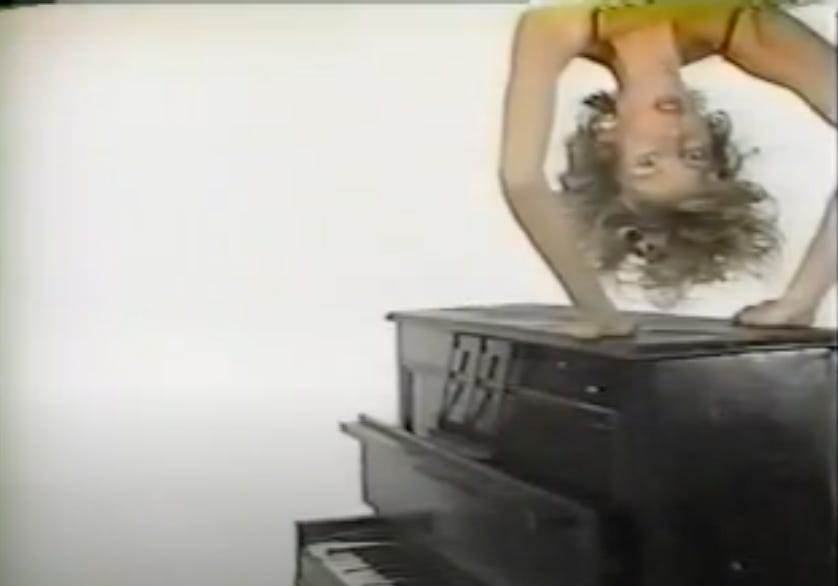
Recurring themes this time out: Catholicism, nonsense syllables, bands whose music here didn’t come out until decades after it was recorded (including a different Red Asphalt than the one in Test #2 though both were evidently named after a graphic scare-you-sober ’60s Drivers Ed film series produced by the California Highway Patrol), Central European art-rock waltzes from bands fronted by women (one of whom isn’t singing since her band’s doing an instrumental), and the startling coincidence that Kursaal Flyers came from Southend-on-Sea, Essex the exact same decade that Leo Sayer came from Shoreham-by-Sea, Sussex. Being an American, I have no idea what that means.
More disturbingly, there’s what the seventh and eighth selections have in common. Black Randy and the Metrosquad, as far as I can tell and despite his stage name, were fronted by a white person. The sleeve of his “Trouble at the Cup ” single, the record I consider below, is a 12-panel comic strip. The first three panels show him being raised by Black parents in the South Bronx, looking into his “first mirror” at age 12 and noticing “something is not Black” (someone next to him taunts “You’re not black”), then applying Black shoe polish to his face before heading out west where he engages in sexual acts with men, women and animals. Sometimes he has much darker skin than other times.
For context, note that this was a year before Lou Reed released “I Wanna Be Black,” two before James Chance (as James White and the Blacks) put out “Almost Black,” a song in which two women seemed to argue just how close to African American he was or wasn’t. (“He don’t have roots!” “Well he’s proud of it.”) Like Chance, who died of GI disease last year, Black Randy, who died of AIDS complications in 1988, had a history of covering multiple James Brown songs; unlike Chance, one Randy covered was “Say It Loud — I’m Black and Proud.”
I don’t think Germany’s Saragossa Band ever covered James Brown. But judging from several photos and record covers still visible on line, they may have outdone Black Randy another way; it’s pretty clear that one band member regularly appeared in blackface, with a top hat, exaggerated pink lips, and white-circled eyes right out of a 19th Century minstrel show. This was in the ’70s; in later years, at least by the late ’90s when they put out “Freedom Come, Freedom Go,” the band seem to have shelved the racially offensive costume. But it’s still pretty astounding to see blackface thriving so late in the 20th Century.
And I haven’t even mentioned how the all-white-woman percussion team Pulsallama named their song “Ungawa,” after a supposedly invented word from Tarzan movies that according to Google Translate also means “you can fall” in Zulu and “flour” in Swahili. Dizzy Gillespie had a much earlier song of the same name, and seemingly James Chance-inspired San Francisco frat-rock trio Chow Nasty a much later one. A 1967 George of the Jungle episode, named after a “gorilla god” also named Ungawa, abounds in ignorant African stereotypes from its first frame; I can’t help thinking of rockabilly Warren Smith’s similarly problematic, some would say racist, 1956 “Ubangi Stomp.” Whether all this puts Pulsallama in the same boat as Black Randy and the Saragossa Band is for you to decide. Just thought I should warn you.
Red Asphalt, “Fallen Angel“ (from archival album Move Than Alive, 2010; San Francisco band playing “Krautrock-inspired manic synth punk” [last.fm] between 1978 and 1982): Two-at-a-time electronic notes, climbing up the scale; happens a couple times. Slurred words – “have you seen my fallen angel?” Synth-punk, maybe, even if the lyrics remind me more of Poison. Actually the keyboards have a bit of ? and the Mysterians in them: Farfisa, Voxx, some analog electronic organ equivalent? Vocalist’s snarled harangue owes Johnny Rotten. 6
Charles Wright and the Watts 103rd Street Rhythm Band “Comment (If All Men Are Truly Brothers)“ (single and on In the Jungle, Babe, both 1969, and later best-of LPs; L.A. funk band): Ballad with incrementally positioned heavy piano notes and a bassline suggesting ’70s soul via early ’80s pop. Somebody non-country trying to sing country(politan) about how we need friends even if we can’t always count on them. Singer’s accompanied at points by a woman’s voice, and he busts a bombastic gospel gut a couple minutes in — as do those heavily banged keys of ivory, which occasionally interrupt the proceedings like the guitar in “Creep” by Radiohead. Mostly it’s more delicate, though: “I was born yesterday, nothin’ but an innocent babe.” Melody meanders, unsure of its destination. “Somebody please, second my emotion,” the singer pleads, quoting Smokey Robinson. Eventually he hits a climax where he’s calling out to us like a sermonizing preacher. “Tell me somethin’ — how many friends can you truly say you have??” Should I check my facebook wall? 6.5
Alex Chilton “Hey! Little Child“ (from Like Flies on Sherbert, 1979, and Document, 1984; Memphis-born powerpop progenitor and ex-frontman of the Box Tops and Big Star): Initial emphasis is on shuffling parade-march drums that suggest rock’n’rolling early ’60s pop. “Oh, you’re a pretty little thing, somebody must’ve been nice to you, oh, walking down the lane, comin’ back from the Catholic school.” Post-Lou Reed New York street rock, let’s call it — not Garland Jeffreys or Mink Deville, but somebody in their borough. Asks a “little fool” if she’s “learnin’ anything in school”; suggests she drop out to travel down south. Clearly called “Little Child.” Lots of punctuating “hey!”s. He leers creepily at her clothes: “Plaid skirt, flannel vest, [something] nubiles are the best” — ewww. Was this before or after the Stranglers? As somebody who attended Catholic school through eighth grade, I’m not unfamiliar with the appeal of uniforms. But boy, rock dudes prior to a certain vintage really had no shame about their fetish for jailbait, did they? (When did that finally end — after Sublime, or Britney Spears, or #MeToo even?) Can’t say I’m personally grossed out by the song, and can’t swear I’d dock it points if I was. But if you are, I get it. 7.5
Litfiba “Lulu’e Marlene“ (from Desaparecido, 1985, and subsequent collections; Florence, Italy new wave rock band): Spooky horror movie effects, hard drum propulsion — Goth rock, but paradoxically bright about it. Low moaning, probably in Spanish; in the Romance language world were Catholicism lives next door to Paganism, Goth always made a lot of sense. I’d categorize this with La Castañeda and Caifanes, from Mexico. The vocal has their romantic fanciness, holding no decorative frill back, way less stiff than a Brit or American would intone a dirge like this — all sorts of of “Oh-oh-oh-ohhhhh Aha-aaaaaah”s. Keyboard plinks along, drum turns martial during bridge, tempo picks up after a bit, almost to doubletime. 7
The Kursaal Flyers “Modern Lovers“ (from Golden Mile, 1976; Essex UK pub rock band featuring future Records drummer Will Birch):”We dined together but we danced apart, she breaks my records and I break her heart.” Under the covers it’s a make or break affair, he frets, whatever that means. She hates his friends but loves his car. Seems to be called “Modern Lovers,” and I don’t think I’ve ever heard a “modern love” song that convinced me there was anything uniquely modern about the love portrayed. He takes a minute and she takes hours. She says potahto, he says potayto. Let’s call the new wave off. Still, this can pass for cute, funkish bassline and all. 6

Kissing the Pink “Love Lasts Forever“ (single and on Kissing the Pink EP, 1983; London synth-pop band): Commercial new wave fake-funk bassline in a soft synthesizer ballad — Men At Work-like? Fixx? Duran Druan? Power Station? INXS? Thomas Dolby?…Oh wait, my second guess was right, it sounds just like “One Thing Leads To Another” by the Fixx. My wife, who was born in 1969 (nine years after me), might be the only person I know who has ever purchased a Fixx record. She was also in a Men At Work fan club as a teenager (I think they sent her a membership card and a monthly newsletter), which has always struck me as adorable for some reason. Anyway, these guys are either British or Americans trying very hard to sound British, and trying really hard to sound funky either way. Blasé male singer, joined now and then by a more whispery woman who mainly seems to talk about her hair, which as far as I can tell has nothing to do with the rest of the song, which makes her rather mysterious. Title seems to be “Love Lost Forever” — modern, no doubt. And it really does sound like a failed attempt to get onto MTV. Wonder what the video was like. 6.5
Black Randy & the Metrosquad” “Trouble at the Cup“ (1977 single, included on Pass the Dust, I Think I’m Bowie, 2009, and various-artist compilations such as Frontier’s 1991 Dangerhouse Volume One and Soul Jazz’s 2016 Punk 45: Chaos In the City of Angels and Devils; L.A. punk band known for their “surreal and smutty sense of humor, but also for their amalgamation of proto-punk, 1970s porn, pop and avant-garde music” [Wikipedia]): Harsh Brit-accent punk yelling, oi!-ish but lacking the all-important stomp element. Not much pushing it forward at all, so maybe pre-oi!? “They say the Boulevard is no place to be!” “I hate my parents more than they hate me!” “School and factories make me sick, I’d rather stand here and sell my dick!” Complaints about coppers, banter about his mates trying to look hard. “I got no use for drugs, I never get high, I wanna shoot a cop, I wanna see him die!” What a joker! Still, pretty rigid. And what’s this “trouble at the cup” stuff about, anyway? World Cup? Protective cup? Title rings a bell, but not sure from who. Eater or somebody? The Lurkers? Sham 69? Are they bald, or do they have mohawks? 7
Saragossa Band “Freedom Come, Freedom Go” (single and on Fly Away, 1997; Munich band mixing “pop with elements of calypso and samba,” “one of the most successful and busiest professional party bands in Germany from the late 1970s to the mid-1980s” [Wikipedia]): Fake Caribbean ska reggae Boney M disco lilt, but the bounce and energy are real. Goombay Dance Band? Or is this how “Sunshine Reggae” by Laid Back sounded? “Freedom come, freedom go, she tell me yes and then she tell me no.” Something about Daddy being a doctor in a mansion in the country, but mainly “freedom” stuff that might be a profound political statement if there were any indication they remotely understood what the word means. Well, it’s not like they’d be alone in misinterpreting the concept these days, and given that they’re almost definitely not native English speakers, at least they have an excuse. Unlike some people. “Freedom is a gamble, freedom is a happy day,” if they say so. But mainly: “Na na na na na na na na.” 7
Sonny Fisher “Hey Mama“ (1955 single included on Texas Rockabilly, 1979, and later anthologies; rockabilly singer/guitarist from Chandler, Texas): Dimestore-guitar rockabilly, with a standup bass, hiccupping vocal, beat and tune in the mode of Sun Session Elvis’s “Good Rockin’ Tonight.” “Gimme some (first lovin’, later money) anytime you choose, looky looky looky whatcha got to lose?” He imitates guitar noises — “dunka dunka dunka dunk” — with his mouth. Tells his “rich girl” he’s leavin’ town, which he assures her is a good thing since she probably don’t want him hangin’ around anyway. If she needs him, I’d wager his name is on the tail of his shirt. 7

Man Parrish “Hip Hop Be Bop (Don’t Stop) (Part 2)“ (single B-side and on Man Parrish, 1982 and Boogie Down, 1985; Brooklyn-born songwriter/vocalist/producer who “helped create and define electro in the early 1980s” [Wikipedia]): Rubbery blubbery dubbery synthesizer beats, almost tom tom-like, and odd goofy bouncing creature sounds. A zoo full of giant colorful dancing animals, clapping their electric paws to the rhythm. Bassline reminds me of “Electric Boogie” by Marcia Griffiths (the electric slide song), drums occasionally of “Wordy Rappinghood” (speaking of tom toms!) Interjections of “don’t stop!” might be the only words — So, basically an instrumental (version?) Electro funk, with synths zooming flightpaths over our heads. 7.5
The Flying Lizards “The Window“ (from The Flying Lizards, 1980; avant-garde UK new wave collective led by Northern Ireland-born producer David Cunningham): A high woman’s voice asking if we can hear somebody banging on her window is repeatedly followed by a more whispery woman warning that he’s now throwing stuff out of the window. “I don’t want to let him in, I wish he wasn’t twice my size,” the main lady continues, clearly concerned about the situation. “He’s making holes to drink blood.” She doesn’t say whose. She might qualify as post-Kate Bush; more likely post-Raincoats. Or maybe this is Maximum Joy, who I have confused for the Raincoats on previous tests. Whoever, the foreboding here feels legit. She’s hoping the doors are shut tight. And I hear shards of breaking glass, rattling china plates, in the percussion — or really, besides the reggae bassline if it counts, they are the percussion. I detect occasional sprinkles of keyboard, but seemingly no guitar at all. Very pretty but with increasing negative dub space that ultimately (and I’m perfectly fine with this) takes over the track, give or take a “doo-doo-doo d’doo doo” or two, and even more submerged voices barely audible to the human ear. 8

Brainstorm “You Are What’s Gonna Make It Last” (from Smile a While, 1972; Frank Zappa-inspired prog-rock/jazz-fusion band from Baden Baden, West Germany): AOR/classic rock piano intro opens what initially sounds like a fake concert recording. A manly blues-rocker ponders questions of past and future while his drummer plays basic polyrhythms, if not paradiddles. Nowadays they’d probably be called a jam band. (“Nowadays” meaning, well, 20 years ago I guess. Do people still talk about “jam bands” like they did, say, in the ’00s? I wouldn’t know.) Traffic? Steve Miller Band? Wait, could this be Miller’s “Children of the Future”? “You are what’s gonna make it last,” he assures the listener, which which would make sense if he’s talking to future children. Decent use of negative space in this one as well, but somehow manages to sound halfway anthemic about it. 6.5
Pulsallama “Ungawa Pt. II (Way Out Guiana)” (from archival Pulsallama album, 2020; “12-piece, then 7-piece all-girl bass and percussion band” [discogs] founded by performance artist and future film actress Ann Magnuson that released two singles while active in Manhattan, NY, between 1981 and 1982): Piles of what I’m sure somebody would have condescendingly called “tribal” drums layered over each other, and that’s all you hear until additional percussion that I’m sure somebody would have condescendingly called “tropical” comes in. Quasi-those adjectives or not quasi-, you decide. They’re chanting something like “Queyo, rihanna, yuba papa.” Anyway, I really enjoy all the multidirectional percussive implements in this one. Seems like a woman, or maybe women? Or girls, depending on their age? Definitely more than one, chanting in unison. Ends with “cowabunga!” (probably pre Simpsons, no less), and only then did it occur to me this might be no wave/Bush Tetras contemporaries Pulsallama, New Yorkers and apparently basically an all-female all-percussion band. 7
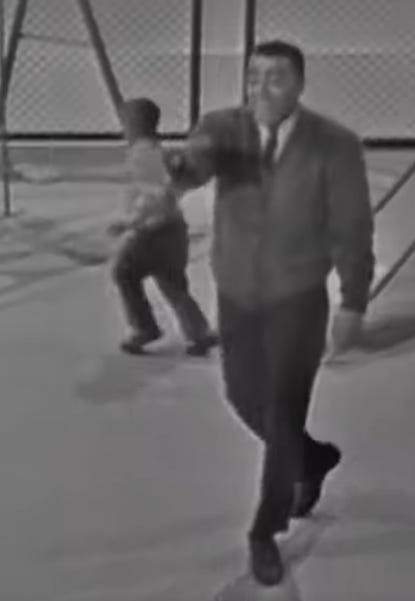
Oscar Brown Jr. “Watermelon Man” (on Sin & Soul, 1960, and later collections; Chicago-born “singer, songwriter, playwright, poet, civil rights activist and actor” [Wikipedia]): Folk tune, or maybe a field holler. The guy is definitely hollering: “A wagon and a horse in the summer sun, pretty little housewife let me sell you one,” interspersed with interstitial cries of “watermelon!!” Tells wives they know what to give their husbands when they come home at night, which strikes me as provocative. If this is a white person, the stereotyping is obviously straight-up racist. But I’m guessing more it’s a Black chapter of the folk revival, circa Harry Belafonte — he even starts “hey yo, haaaay yo” á la “Day-o.” Though this isn’t a calypso. Probably called “Watermelon Man,” though I’m not sure what connection it might have to Herbie Hancock’s presumably much later track of the same name. The peddler hawks his watermelonly wares from a cart in the old city street. Not much in the way of instruments, ’cause he doesn’t need them. 7
The American Dream “Future’s Folly“ (from The American Dream, 1970; Philadelphia “psychedelic rock band” [discogs]): Guitar-jangling country-rock hippies trampling on rotting wooden floorboards coming loose from the ground. “Too many women and too may liars, too many salesmen and not enough buyers.” Grateful Deadish rusticity and harmonies, about “another place in the nicotine dream.” I’m no smoker, so I’ve never experienced one myself. Still, pleasant. 5.5
Savage Rose ‘Bruden Pyntes“ (from Dødens Triumf, 1972; Danish art rock band): Convincingly gothic funeral processional at a 1-2-2, 1-2-2, 1-2-2 time signature, would go well with a candelabra though unlike the candelabra it’s not on a piano. Guitars play what feels like a violin part, unless those are actual violins. A slow, stately, courtly, semi-waltzing rhythm, pretty and polite but also dark…clearly a dance, but an extremely European one. Chamber music, so why do I hear it as some variant of rock? Specifically new wave/goth rock? It’s an instrumental, and reminds me of something I can’t place; closest I can conjure is the Christmas carol “Silver and Gold,” but it’s not that. Some old Catholic high mass hymn maybe? Gorgeous, no matter what. I commend them, whoever they are, for keeping their mouths shut. 7
Mr. Magic “Rappin’ With Mr. Magic“ (1980 single, included on 2004 Stones Throw compilation The Third Unheard: Connecticut Hip Hop 1979-1983; “early hip hop artist, producer, and radio station disc jockey from New Haven” [discogs]): Funky drum pattern, then a big fat “Good Times”/”Another One Bits the Dust”/”Flash on the Wheels of Steel” bassline — yep, old (old old) school rap, calling out “the brand new dance we call the punk rock,” which “is kinda like the dog and kinda like the duke,” which may or may not mean the Patty Duke (which tons of early rap songs mentioned but I’m still not sure how it goes, though I’ve always assumed it was inspired by how Patty used to dance.)The rapper tells all the B-boys “walking down the street with the box in your hand” (not on their shoulder?) that he goes “by the name of the double M Mr. Magic” — presumably the Connecticut one, not the more famous Bronx DJ from a few years later. On the basis of propulsion alone, this already blows every other track in this mix out of the water. Handclaps in the rhythm, instructions to throw hands in the air and rock to the beat, brags that he can “float like a butterfly, sting like a be” (see my previous blindfold test‘s Muhammad Ali songs.) “Me and the devil had a fight, I hit him in the head with a loopah light,” no idea what that is or if I heard it right. “Like Jimmy Carter with his big white teeth, like Little Bo Peep who lost her sheep, like Isaac Hayes he said he was amazed when I rocked the mike and put him in a daze.” Like Ginger Rogers and Fred Astaire, too. And Charlie Brown. Lots of call and response and audience participation, dedicated to cities and villages in the Nutmeg and/or Constitution State, which I’ve barely ever set foot in: New Haven, Norwalk, Bridgeport, Ansonia, Waterbury, Middletown, Hartford. The crowd confirms “we’re down!” after each one, and if he didn’t name your town it’s the time limit’s fault. And yeah, the rhymes and routines are all prefab hot butter on say what the popcorn and dip-dip-dize so-socaliaze readymades; doesn’t matter. He leaves his state, heads to Boston where “the punk rock was on and I rocked everybody to the break of dawn,” to “New York City where the women are so pretty,” up and down the coast. He revives Jimmy Castor’s Bertha Butt boogie, too, and Ricochet Rabbit and Droop-a-long, how’s that for an ancient cartoon nobody remembers? (Apparently Droopalong was a coyote.) And as rappers often tended to do way back then, Mr. Magic grows louder, faster, more intense and harder to follow as he goes on and on and on; he spins his mind into infinity, maintaining stamina for a super long time with no letup. It he was remotely original, I’d give him even more points than 8.5
Half Pint “One in a Million” (1983 single and on One in a Million, 1984, and later collections; Kingston, Jamaica “dancehall, ragga and reggae singer” [Wikipedia]): Reggae about a “one in a mill-ee-onn” partner (see also Aaliyah, Larry Graham, Guns N’ Roses, Platters, Romantics, Trixter, the Tubes though they named theirs “She’s a Beauty”), somewhere between lover’s rock and deejay toasting (not sure when “dancehall”‘s precise inflection point occurred.) Plenty of off-hand “Oh yaaay”s, “Oh lawwwd”s, and the like. The mic-man says he loves his lady because she’s always reliably there “in my weakness and in my strong,” plus also “she’s a scorcher” whose romance puts his body in a trance. Frankly, he says nothing interesting about her at all. Reggae can be so lazy! But he sounds pretty good doing it. 6.5
Michael Yonkers Band “Puppeting“ (fom Microminiature Love, a 1968 recording finally released in 2002; psychedelic rock band led by Minneapolis guitarist): Rubber-band-bass country clomper, turning round and round then loud like the Cramps — Cowpunk, psychobilly? Not exactly either (nor exactly the Cramps), but on their periphery. Not sure what to make of what seem to be two different lines about a “colored man,” much less about closing somebody’s eyes (and other holes on their face) with masking tape. “Rolling down the track, clickety clickety clack” — maybe it’s train song? High-decibel wah-wah wobbles over a primitive rockabilly-descended rhythm, appropriately augmented by some early rock’n’roll wildman yelps. And a random number, like “6-2-9-6-8-9-7-7”; what’s with that? 6.5
Dennis Alcapone “Guns Don’t Argue‘ (single and on Guns Don’t Argue, both 1971, and collected on Yeah Yeah Yeah Mash Up the Dance, 2002; Clarendon, Jamaica-born reggae deejay and producer): More reggae. “My name is Alcapone, and I’m defending the love of the common people,” later “living in the love of the common people” — are songs like this where guys like Paul Young and Jarvis Cocker learned it from? Also, this sounds like more than one gangster. “Its a good thing you don’t have a mustache,” ha ha, something about losing it in the snow. He doesn’t like being called Scarface by mistake. And the crazy high “yeeeeeeah!” squeals presage a generation or two of famously unhinged rappers, at least in spirit. 6.5
The Globetrotters “Put a Little Meat On Your Bones Lucinda” (from The Globetrotters, 1970; aka “Harlem Globetrotters, an US basketball team with artistic extras” [discogs], such as a Saturday morning Hanna-Barbera cartoon series whose voice cast included Scatman Crothers and Eddie “Rochester” Anderson, with Meadowlark Lemon the only actual basketball team member “adding occasional background vocals to some tracks” [Wikipedia]): A sort of circusy, merry-goround-ish rhythm. Post/sub-Coasters comedy about how Lucinda Brown lost about 300 pounds, there’s a lock on her icebox door and she’s got a figure like a tree and now she just eats cottage cheese and cucumber salad. If a good wind comes along, she’ll blow away! So they admonish to “put a little meat on your bones, Lucinda Brown” (!), offering her chocolate cake, milkshakes, a slice of pie. Must be the Globetrotters, just too silly and cartoonish to be anybody else. I assume they all had stand-ins on the TV show. 6.5
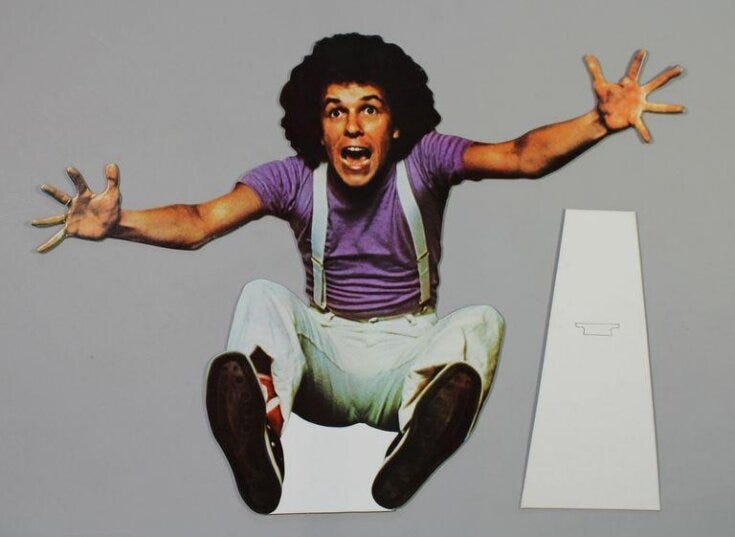
Leo Sayer “Easy to Love” (single and on Thunder in My Heart, 1977, and later numerous best-of albums; “soft rock/disco/blue-eyed soul” [Wikipedia] singer from Sussex, UK): Funk bassline, piercing Bee Gee falsetto, Chic-like string orchestrations, nothing lyrics. Seems more like a rocker making a disco move than a legit disco artist, if that makes sense. Probably cynically figured they could put one over on the Studio 54 crowd, and I bet it didn’t work. That said, it’s not bad — not quite easy to love, as the lyrics seem to say, but hard to hate. 6
Cardinal Point “I’m the Grand Pretender“ (single, 1973; compiled on Netherlands various-artist albums such as Bingo!’s 1974 16 Hits Voor Zomaar Een Zomeravond and Excelsior’s 2009 Clap Your Hands and Stamp Your Feet; “Dutch-based Italian pop group” [discogs]): Hard rocking ’70s boogie with a Robert Plant-reared high register about taking you in their arms hey baby baby. But then it turns swirly and weird, almost ragtimey; the switch make me think Frank Zappa, like it’s suddenly becoming a parody of itself. But it doesn’t, really. Ultimately it’s glam rock about an “underground pretender,” with faux-’50s “baah-baah baah-b’baah baah” doo-wops countering brief pinches of prog, atop Slade-style kicking up of bovver boots. 7.5
Boys Don’t Cry “I Wanna Be a Cowboy” (single and on Boys Don’t Cry, both 1985; London “pop-rock/new wave/synth-pop” band [Wikipedia]): Riding on the range, he’s got his hat on, and his saddle on his horse, the guy starts over some pretty music. His talk-singing sounds like a precursor of the dork in the ’90s band Cake, which for some reason isn’t bothering me as much as it probably should. This is “I Wanna Be a Cowboy” by Boys Don’t Cry, right? Whoever they were. Late ’80s? Girl voice: “Riding on the chuck…..wagon [okay that made me uh chuckle], calling my man.” Was this considered a novelty hit? Have any country singers ever considered covering it? Preferably a woman, flipping genders or better yet not. Honestly I bet a gay two-step bar, the kind of place where “Cotton Eye Joe” by Rednex is a crowd pleaser, could fill the floor with this one. Doesn’t seem that far from some of the more fun and less purist country dance singles these past couple years, and if Lola Kirke can revive Paula Cole’s old cowboy hit, why not this oldie? The singer’s phrasing also reminds me of Flash and the Pan in “Walking in the Rain”: “Looking like a hero, six gun on my side, chewin’ my tobacca, out on the horizon….” He sees smoke, upon which a Native American with a curiously British accent says white man speaks with forked tongue. “Yippy yippy yigh yippy yo yo yo” — a country-rap predecessor as well, with cartoon voices . Some dry Wall of Voodoo sarcasm in there too, and you can dance to it! 7.5
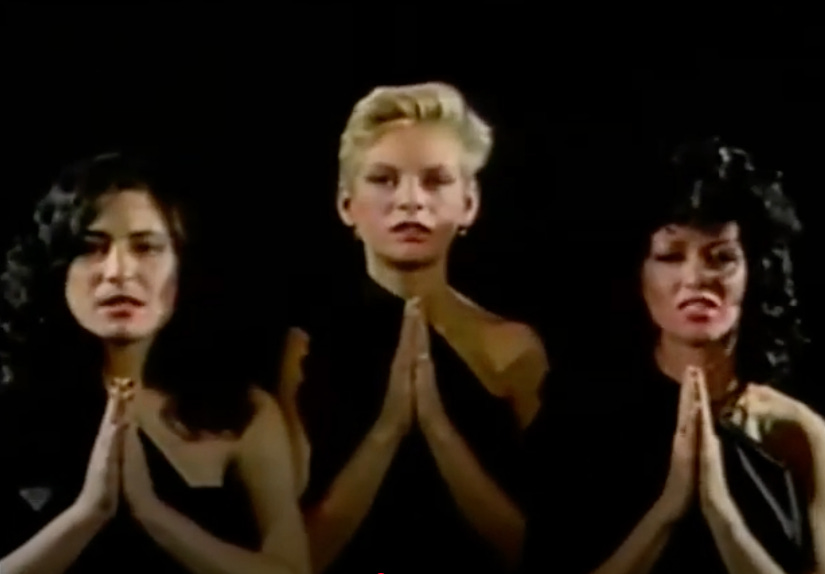
Slapp Happy “Casablanca Moon“ (single and on Slapp Happy, both 1974, then Slapp Happy or Slapp Happy – Acnalbasac Noom, 1980; “German/English/American avant-pop group” [discogs] from Hamburg who were fronted by future Art Bears singer Dagmar Krause and who later merged temporarily with Henry Cow): Decadent gypsy-cabaret piano waltz narrated by a woman with a well-mannered Continental European accent. She seems to be telling us about a spy, who now wears a fez and laughs behind his newspaper and speaks only in innuendos. “His cover was broken” so he moved on “to the Orient, a double agent double-crossed” There’s a cocaine stain, and something that “runs like semen through the cracks in his disguise.” Cool words, like something out of a film noir murder mystery or a game of Clue — “Better watch your step or sooner or later, you’ll finally find his body in a ventilator.” If only the music felt so singular. 6.5
Eliminated for Reasons of Space, 29 June 2024
Enjoyed.
I got as far as Pulsalamma and will come back for the rest.
Re: Pulsalama--I was reminded of Liquid Liquid (Cavern) maybe because I have been thinking about them and that song recently. Also, ESG. I imagine they were playing around at the same. The most commercial tip of this percussive punk rock moment was Malcolm Mclaren, right? Bow Wow Wow and Adam Ant... But that is another matter.
via facebook:
Edd Hurt
Chilton told me about Hey! Little Child in 1981; it’s a cha-cha, not a parade march (very different things!): “Sherbert‘s ‘Hey! Little Child’ was “a combination of about 10 different songs I can think of, like ‘Chain Gang’ by Sam Cooke and [Cordell Jackson’s] ‘Stranded on a Dateless Night.’ ”
Chuck Eddy
Well, at least I was at least partially right about early ’60s, then. (I know nothing at all about Cordell Jackson.) Did he say anything about the words?
Edd Hurt
Nope, but he was living around the corner from Immaculate Conception Catholic School in midtown Memphis when he wrote it, I guess. I’ve always heard it as a dig at entitled parochial-school girls, not so much as a sexist jape (it’s obviously a sexist jape, too, but Alex had a way of getting a certain politics into his dumb little readymade tunes, I think). Fwiw, this is also one of the last things cut for the Sherbert album, which was mostly done in 1978–recorded with drummer Ross Johnson at Ardent in August 1979, just before the album came out.
I saw Cordell Jackson, who had been in a Budweiser TV ad with Brian Setzer in 1991, play guitar in Nashville around 1993. She made Lou Reed sound like a poser, just incredible noise-rockabilly guitar. Anyway, she owned a label, Moon Records, in Memphis in the late ’50s and early ’60s, produced her own stuff, played guitar on it, and wrote this, I guess her best production ever.
Kevin Meehan
Edd Hurt, great stuff!
James Auburn Toole
Well, now you know two people who have purchased Fixx records: they’re one of my favorite bands. Why them and not, say, Ultravox or Aztec Camera, would likely be unconvincing to you. (I’d sign up for that Men At Work fanclub right now if it were still around, too.)
Chuck Eddy
Adorable!
James Auburn Toole
I used to own a 12″ single from 1979 of some act called Justice covering that Leo Sayer song on the b-side – which had more authentic Studio 54ness to it.The A-side? A disco cover of “Gimme Some Lovin'” which other than the flute solo – yep – sounds about like you’re imagining. (The singer’s good, though.)
Clifford Ocheltree
Sonny Fisher! His 6 or so songs on Sun are excellent. Savage Rose. Had the good fortune to see them live several times. The shows were always solid though little in common with their LPs.
John Ned
“Trouble At the Cup”’was about an all night coffee shop in Hollywood ( The Gold Cup) frequented by gay hustlers- which Black Randy (nè John Morris) sometimes claimed to be. Although John Doe of X said he was too ugly for that. Definitely a bit of a mystery man the best account is a chapter on him in We Got the Neutron Bomb. Brilliant dangerous (especially to his friends) and self destructive he died of a combination of AIDS, diabetes, alcoholism and drug addiction. That part he wasn’t faking.
Clifford Ocheltree
Ah, Savage Rose. Probably repeating myself. Early 90s I spent most of June and July on Fyn for a great music festival. The core members of SR were neighbors and I saw them often. Playing in local bars, or the festival. But most memorable playing with Johnny Cash at the residence Cash and I shared. Seems then knew virtually every song he could conjure up. Great fun.
René Spencer Saller
I'm always here for Slapp Happy content.
And weirdly, perhaps, for someone who believes herself to be a feminist, I am not grossed out by "Hey! Little Child," which is lucky because I love it more than oxygen sometimes.