Tribulations Such As Never Occurred
Blindfold Test #15


I apologize to the extent that my main stance in these things could be summed up as “ambivalence”; i.e., 16 of the 25 songs below land in the window of 5.5-to-6.5 points on a scale of 10, which means I’m not exactly getting excited about most of them, but I’m fine with them anyway. No songs get a rating lower than 5.5, but I can see how my grading scale might convince readers my primary reaction is “meh.”
On the other hand, the other nine all check in higher than 6.5, which is something, right? There are even two 8’s and an 8.5! Which makes for a decent batch. In 15 tests, I’ve only given a couple in the 9 range, if that many, and definitely no 10’s yet. Which doesn’t mean they’re not out there somewhere. One of these posts I’ll run a highest-scores-yet tally; considered doing that this time, but other issues came up.
Such as: Blues-rock, specifically the purist sort with no ties to punk garages or metal dungeons. There’s a bunch below, all in that ambivalent range, and maybe if I was even older than 63, I’d have more use for it. As is, I generally remain a skeptic. Didn’t even pick up that the Bonzo Dog one was probably a parody, which might well mean they’re skeptics themselves. Though maybe the problem is just that their satire doesn’t translate over time and space. For what it’s worth, I was never the biggest Monty Python fan either. Also forgot “I’m Gonna Be a Wheel Someday” was a Fats Domino song, oops. Not sure I ever knew “Ain’t Nothing But a House Party” came from the Showstoppers.
Another pressing issue might be that three of my higher scores went to numbers that are, let’s say, racially problematic — one from almost 100 years ago, as I explain below, one from South Africa when apartheid was still in full force, and one from Belgium that wouldn’t be suspect if it wasn’t called “Pygmee” and didn’t contain chants that I guessed might be “legitimately Afro-Caribbean” but, um, apparently weren’t. If it’s any consolation to any short-statured people from the Congo Basin who might be reading, I’m pretty short myself actually. Not that that excuses what might be some brand of Belgian minstrelsy (or whatever you call what the Residents did to First Nations folks on Eskimo.)
Both that song, by Two-Man Sound, and the highest scorer below, by Dschinghis Khan, are the sort of Europop trivialities that I’m obviously a sucker for. It’s also possible they both were re-recorded or at least versioned multiple times, Europoppers apparently not having many qualms about cannibalizing their past work. Which can confuse their discographies. So if I messed up any details, by all means let me know.
Also want to mention that two more tracks this time that I’m more or less ambivalent about, by Brian Briggs and The Beginning of the End, are apparently lost disco cult classics of a sort. Which may or may not go to show that the context and environment make a big difference. Just because I don’t love something doesn’t mean somebody else won’t, somewhere and sometime. And vice versa. So listen to them all!
(PS: Though Fludd do the final song here, The Beginning of the End do the third-to-last song. Which, you could say, does indeed make them the beginning of the end.)
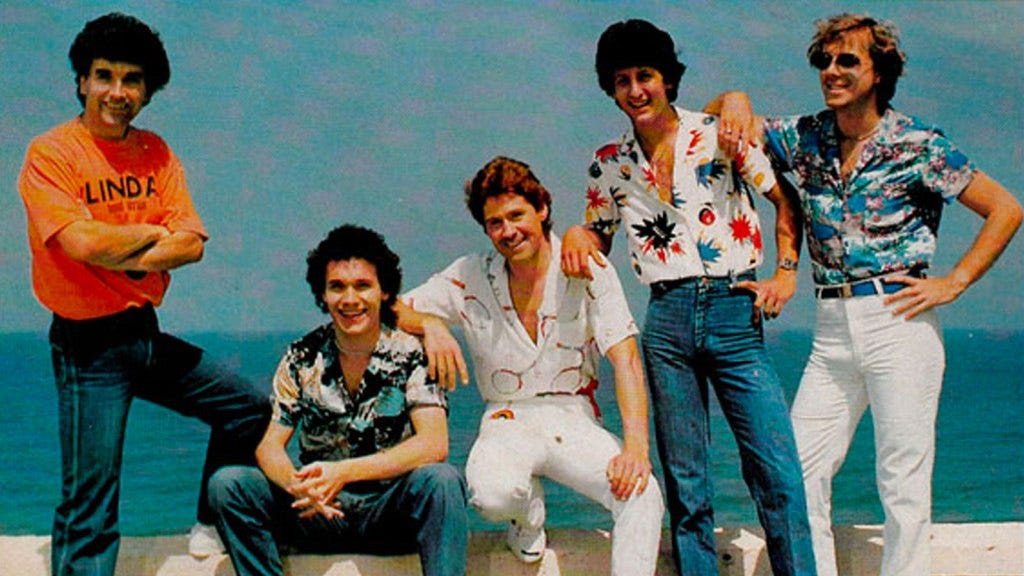
Ballyhoo “Man on the Moon” (single , 1980, and on 1981 repressing of 1978’s Man on the Moon; Johannesburg, South Africa, pop-rock band): Sparkling instrumentation builds suspense while a witchy woman lies alone in her bed, moon shining brightly from her window, wondering if there’s really a man who lives up there. Country goth? Amerigotha? Gothicana? “If there’s a man on the moon, can you hear me calling you?” She’s exploring outer space, at least its lunar level, in her mind while confessing she’s torn between two lovers, which for some reason I picture being women as well. The throaty voice amid a eerie midnight sense of space reminds me of Terri Gibbs, doing “Ashes to Ashes” or “Somebody Knockin’.” Also of Crystal Gayle’s “Midnight in the Desert,” which for years was the theme song for Art Bell’s Coast to Coast AM syndicated radio show, back in those not-so-distant days before Alex Jones two decades ago, when conspiracy theories still seemed more goofy than dangerous. I’m also thinking Stevie Nicks, or wondering if this was Kim Carnes’s followup to “Bette Davis Eyes.” A burst of blues rock guitar, out of the spacey night. “The grass is always greener on the other side,” “there’s plenty of fish in the sea”: Is it suddenly a contest to see who can pack in the tiredest clichés? 7.5
Yeah Yeah Noh “Hands Up For Happiness“ (on 2001 archival collection Leicester Square: The Best Of Yeah Yeah Noh; ; Leicester, UK “‘unpop’ group” from the mid ’80s “DIY post-punk era” [Wikipedia]): After some ringing and plucking Brit Invasion guitar, male goth singing that sounds quite glum. “In Your Eyes,” a phrase he repeats repeatedly, seems to be the title. Strange little crooked piano runs in the bridge are probably the best part; the rest just kind of wilts, stuck on the same monotonous notes over and over. More late night music — if it had a color, it’d be midnight blue. An ethereal woman’s voice joins in, and by the then the front goth has mentioned happiness, though you don’t hear any until he starts in on some “la la la la-la-la-la-la”s and winds up singing a kind of round with himself. 5.5
Mid City Crew “Get Right” (obscure act’s only single, 1985, distributed by San Diego International Records and later included on 2023 Soul Jazz compilation Space Funk 2 [Afro Futurist Electro Funk In Space 1976-84]); Hip-hoppy electro beat, and then a nerdy street-corner preacher ranting about impending “tribulations such as never occurred since the beginning of the world until now” — which, judging from the sound, presumably means the early to mid ’80s, the prime of Twilight 22 and Egyptian Lover and Man Parrish, or maybe Maggotron a few years later when only Miami kept electro-hop alive. He tells us we’re “the lucky one,” at least for now, but life’s about to get tougher. Predicts an apocalypse of famines and earthquakes and falling stars, when “the sun will be dark, and the moon will emit no light.” But he lacks the passion to conjure armageddon, and his voice doesn’t have much flexibility. Also doesn’t help that the funkiest beats in the whole song were right at the start, before the rapping even started. 6.5
Bengt Hambraeus “Doppelrohr 2” (recorded 1955; included on archival various-artist compilations such Phono Suecia Sweden’s 1988 Electro-Acoustic Music From Sweden and Chrome Dreams UK’s 2011 Forbidden Planets Volume Two [More Music From The Pioneers Of Electronic Sound]; “Swedish composer, musicologist, radio producer and organist,” [discogs])” Electronic experiment from the chemistry lab that feels like a “composition,” if maybe a randomized one. Probably extremely early in the electronic music timeline, when musical scientists were trying to figure out what synthesizers could do. Notes open up to penumbras, halos and shadows of sound. Static gets sculpted. Your stereo and other appliances are all on the fritz. 6.5
Phil Fearon “Ain’t Nothing But House Party” (single, 1986, compiled on All the Hits, 2001; Jamaica-born, North London-bred r&b singer, musician, producer, and Galaxy frontman): Yaz(oo)-style electrobeats, bordering on hi-NRG. A cover of “It Ain’t Nothin but a (House) Party,”, the old r&b song (I forget by who) that the J. Geils Band covered in the ’70s. The singer here doesn’t, maybe can’t, sell the song like Peter Wolf could. Cute electrobeats though. “You can do the boogaloo, anything that you wanna do/I know it’s cold outside/come on in I’ll keep you satisfied/All you gotta do is move/Any time that you feel the groove”: The words are still effective for house parties, but this just comes off as a cornball post-disco update. All the r&b’s drained out, which isn’t necessarily a bad thing — ’80s synth-pop didn’t need soul to have fun. Still, given the title, shouldn’t this sound more like house music? 6
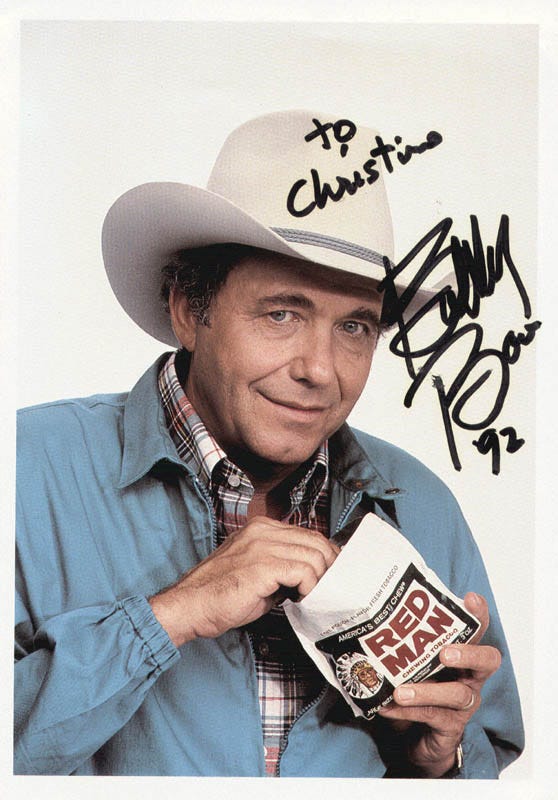
Bobby Bare “The Streets of Baltimore” (single and on The Streets of Baltimore, 1966, and numerous later best-of collections; Ironton, Ohio-born country singer and songwriter): A man sells his farm and leaves his kin and friends behind back in Tennessee because his wife wants the urban life and thinks nowhere’s prettier at night than the streets of Baltimore. Like if Green Acres wasn’t a comedy. And he doesn’t refuse to change: “A man feels proud to give his woman what she’s longing for/And I kind of like the streets of Baltimore.” His new factory job leaves his muscles sore, but buys him a cottage home in serene neighborhood. Before long, though, he learns the Missus loves the bright lights more than she loves him; eventually, his “baby walks the streets of Baltimore” — implying she’s, well, a street walker. So he heads back south without her. Country music’s eternal urban vs. rural battle, but it doesn’t make him angry or resentful, just sad. He never blames the big city, or its people. Maybe not quite as good as Randy Newman’s Baltimore song, but it’s not far off. Bobby Bare, I think. 7
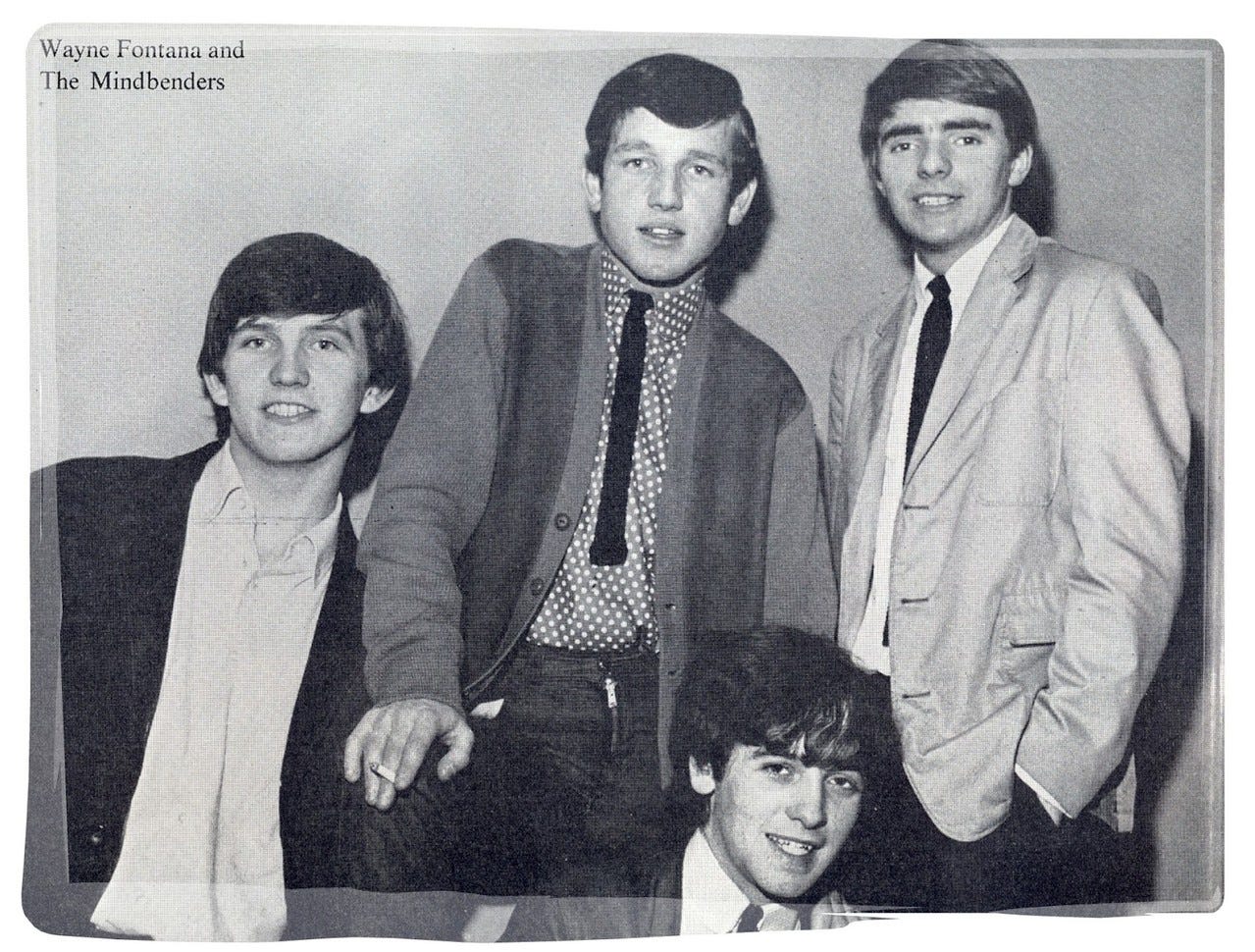
Wayne Fontana & the Mindbenders “I‘m Gonna Be a Wheel Someday” (from Wayne Fontana And The Mindbenders and The Game of Love, both 1965; Manchester, UK “beat group” [Wikipedia]): Bouncing ’60s rock’n’roll, not far from the more blue-eyed-blues side of what later in retrospect got named garage rock: “I’m gonna be a wheel someday, I’m gonna be somebody, I’m gonna be a real gone cat, and then I won’t want you.” Then a bridge/break that sounds like Sun Studios Elvis rockabilly. Another old r&b cover, maybe originally done by Junior Parker or somebody like that, unless I’m confusing it with a different wheel song? Also makes me think of Wheels, Arthur Hailey’s early ’70s best-seller about big wheels in Detroit’s auto industry. Pretty sure this is Wayne Fontana. He’s gonna be cooler than her, then he won’t need her anymore. I dunno, might be wishful thinking. 6.5
Robert Nat Young “Hot Stuff“ (artist’s only single, 1977, compiled on President UK’s 2001 Hey! 1970s Rock ‘N’ Glam From The President Jukebox; possibly the champion surfer, author and actor from Sydney, Australia?): Blues guitar wailing, with a bit of jump in it. Saturday night, whiskey on ice. Vocal lines trading off with more macho guitar lines, which are clearly the main event; the song’s just their vehicle. Singer’s got a constipated grunt, and if anything the guitar gets in the way of his “hot stuff I can’t get enough of your luuuuuuuvvvvv” routine. Still, there’s a thick, cloddish crawl to it. Like say George Thorogood. 5.5
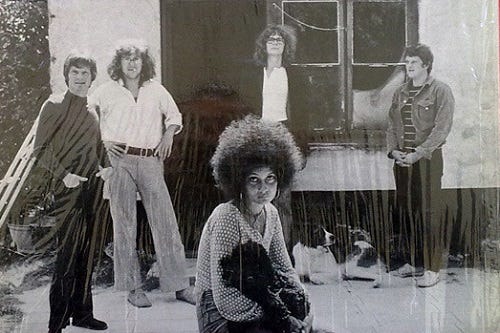
Savage Rose “Byen Vågner” (from Dødens Triumf, 1972; Danish art-rock band):Jingling wind chimes or their equivalent sound particularly high-pitched after that last song. Prog or space rock or jazz fusion, with plenty of flutes and/or other woodwinds swirling almost in a sort of Paul Mauriat “Love is Blue” rotation at points. Drums seem to be engaged in a sort of clave pattern, but they’re hidden way down in the mix, barely even there. Still, more beautiful than you’d expect. Airy, a little soundtracky, a little early Genesisy maybe, though it could be any number of prog bands from the ’70s. Mostly instrumental, though finally a vocal intones an extended vowel sound, followed by a few rolls of the drum in an empty room. Then it picks back up. Not enough Black influence to be fusion, maybe — unless the slight Latin influence counts. Climbs to a (European) crescendo of sorts. 6.5
Mother Earth “Cry On” (from Living With the Animals, 1968, and compiled on The Best Of Tracy Nelson / Mother Earth, 1996; “eclectic American blues rock band” from California [discogs]): Deep blues, probably as sung by an r&b woman, or maybe even a pop jazz woman. “All my tears are in vain, I just closed the door, lost my man.” Despite all he’s done, she still loves him and she’s gonna cry all night long. She should feel lucky, sounds like he was a total cad and loser. Good riddance, jerk! Saxophone enters, which affirms my pop jazz theory. Almost an answer to “I’m Gonna Be a Wheel Someday” a few tracks ago, where the singer threatened to make his ex cry cry cryyyy — And here she does, except she stretches it even longer. 6.5
Siren “Sixteen Women” (on Siren, 1970, compiled on Dandelion Years, 1980, and Ruffstuff, 2003; British blues-rock band featuring Kevin Coyne and former Bonzo Dog Band member Dave Clague): Jump blues/rockabilly/swing rhythm, with boogie-woogie piano runs…Another blues (eight bar I think), but this one hints that it might have more life in it. “16 women live in my hometown,” the singer tells us twice for emphasis. One of them doesn’t call his name but blames everything on him anyway, poor guy. He heads home to rest and talks to his sister to get things off his chest, occasionally screaming and wailing. Maybelle (as in Big?) loves him, but Lucille (as in B.B. King’s guitar, or the Little Richard song?) hates him. There’s momentum here that picks up at least a little more as it goes, and halfway intriguing lyrics that make me wonder if I’m missing something. But on one listen, at least, it still feels farily run of the mill. Blues can be like that. 6
Brian Briggs “Aeo 1” (on Brian Damage, 1980; alias of John Holbrook, UK-born “mixer and sound engineer who worked, produced and recorded on Todd Rundgren’s Bearsville Records” [Get On Down]): Gurgly, almost underwater electronic beats, sort of a subliminal Africa via Bohannon rhythm, albeit an extremely mellow and subdued version, as approximated by Westerners I bet. What do water drums sound like? Somebody lightly chants “daaaay-aaay oh daaaay-aay oh,” á la the calypso song. And did I mention how gurgly it is? 6.5
Genesis “Wot Gorilla?” (on Wind and Wuthering, 1976): More wind-chiming electropercussion, this time under a drum that could almost be the beginning of “The Mexican” by Babe Ruth. Then it turns slightly semi-classical, like something on the cusp of prog rock and Disney soundtracks — if there was ever that big a difference between the two to begin with. Bright and bombastic, and ends on more chimes, but doesn’t really take off like the previous prog instrumental did. 6
Two Man Sound “Pygmee (To Eva Robbin)” (from Oye Como Va, 1977, and Basic Tropical, 1990; Belgian trio combining disco with Brazilian rhythms, featuring two songwriter/producers of Plastic Bertrand’s “Ça Plane Pour Moi”): Right off the bat, the most danceable polyrhythms in this mix so for. And the mix’s second “dayo” chant — namely something like “beyama, beyama, beyama-dayo…,” repeated several times. More likely to be legitimately Afro-Caribbean than previous dayo tune, a couple songs ago. Extremely propulsive and rhythmically layered and swinging in multiple directions, playfully exploring variations on the same shimmying vamp; could totally imagine it getting spun by early disco DJs. Two vocalists trade “yama huna huna” back and forth, then one returns to the earlier “beyama, beyama, beyama-dayo…” A ways in, it curdles in on itself. 7.5
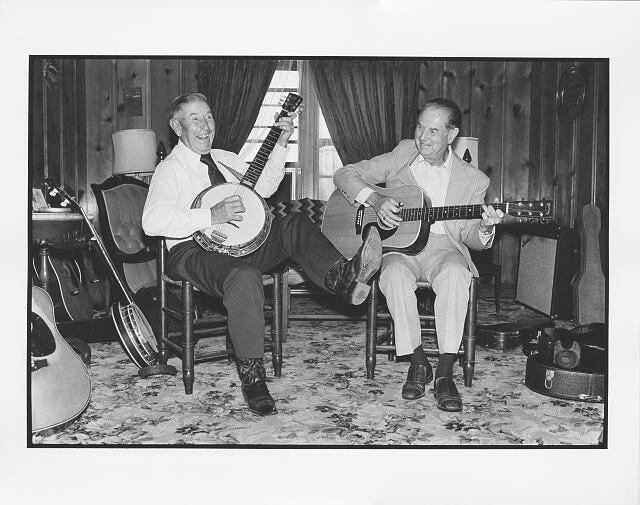
McGee Brothers “C-H-I-C-K-E-N Spells Chicken“: (10-inch 78-rpm single, 1927, compiled on Shanachie’s 2001 Ghost World soundtrack and credited to Kirk McGee and Blythe Poteet on Old Hat’s 2006 Good For What Ails You [Music Of The Medicine Shows 1926 – 1937]; old-time sibling duo who “picked up slide-guitar and other blues techniques from African-American railroad workers and street musicians” [Wikipedia]): Old-timey barn-dance music, probably from the (19)20s. Doesn’t take long for it to get offensive: “In the little old country schoolhouse where the donkey (?) used to go, there lived a little n***** by the name of Ragtime Joe” A teacher asks Joe about chickens. Not sure why he’s called “Ragtime”; this isn’t ragtime music, though maybe they thought it was? In the second verse somebody named Johnson seems to be putting together a (ragtime?) concert in the old church house, so he finds himself “a lot of talent” (used as a noun like I remember business reporters doing at Billboard) that could play and “recite” (poems? prayers? political speeches? doesn’t say.) And maybe Joe’s one of the reciters? Recording seems to be a single take; I love the devil-may-care way the singer loses track of the beat. At one point, he starts spelling out a word, and what each letter stands for. “That kind of a bird was a chicken,” he says, and apparently so is the word he’s spelling. He comes up with a sort of mnemonic device to remind you (or Joe) how to spell it: “‘H,’ that’s the next letter in, ‘I,’ that am the third” (note racist Black dialect), “‘E,’ I’m near the end,” etc. Does it a few times, but so fast it’s hard to catch all of it. A century later, the song is undeniably derogatory and hurtful, but also funny and beyond weird, packing heaps of stomp and swerve into just a couple minutes. I’m guessing Gid Tanner & his Skillet Lickers (featuring Riley Puckett), since I remember they were not averse to using the “n” word. Though then again, back in those days, they sadly weren’t alone. 8
Bonzo Dog Band “Can Blue Men Sing the Whites“ (from The Doughnut In Granny’s Greenhouse, 1968, and various best-of LPs; “group of British art-school students…combining elements of music hall, trad jazz and psychedelia with surreal humour and avant garde art” [Wikipedia]) More George Thorogood-style muscleman guitar-blues bluster, another axeman proud of his heavy tone kicking things off with a big flatulent explosion. Singer has a fat tone, too. Brags about heading downtown in his brand new Cadillac, smoking big stogies, wearing a mohair suit with dirty jeans — playing the pimp ages before rap music, though pimps might not brag about their trousers needing a wash. “I gotta keep my strength, gotta do a show tonight. I gotta sing the blues!” Again, just a vehicle for the guitar, a genre I almost never get. Odd part, in the middle: a mumbling sort of on-stage intro. 6
Asher Senator “One Bible” (single, 1995, included on the Soul Jazz UK compilations Rumble in the Jungle in 2007 and Life Between Islands [Soundsystem Culture: Black Musical Expression In The UK] in 2022; “British DJ and rapper, who rose to fame on Saxon soundsystem” [discogs]): Reggae toaster with a big voice starts out reciting the 23rd Psalm — the “Lord is my shepherd I shall not want” one — over a hard insistent drum rhythm that drops down into some really deep dub. There seems to be another guy with a grumbly, maybe congested, voice, though I’m starting to get the feeling that some dancehall songs that sound like duets to me are done by just a single guy with a couple different modes. Either way, here’s a toasting record with as much going on underneath the toasting as with the toaster(s) above, which doesn’t happen as much as I’d hope. The voices even drop out for an extended instrumental section, which also doesn’t seem to happen nearly as much in this genre as it ought to. 7
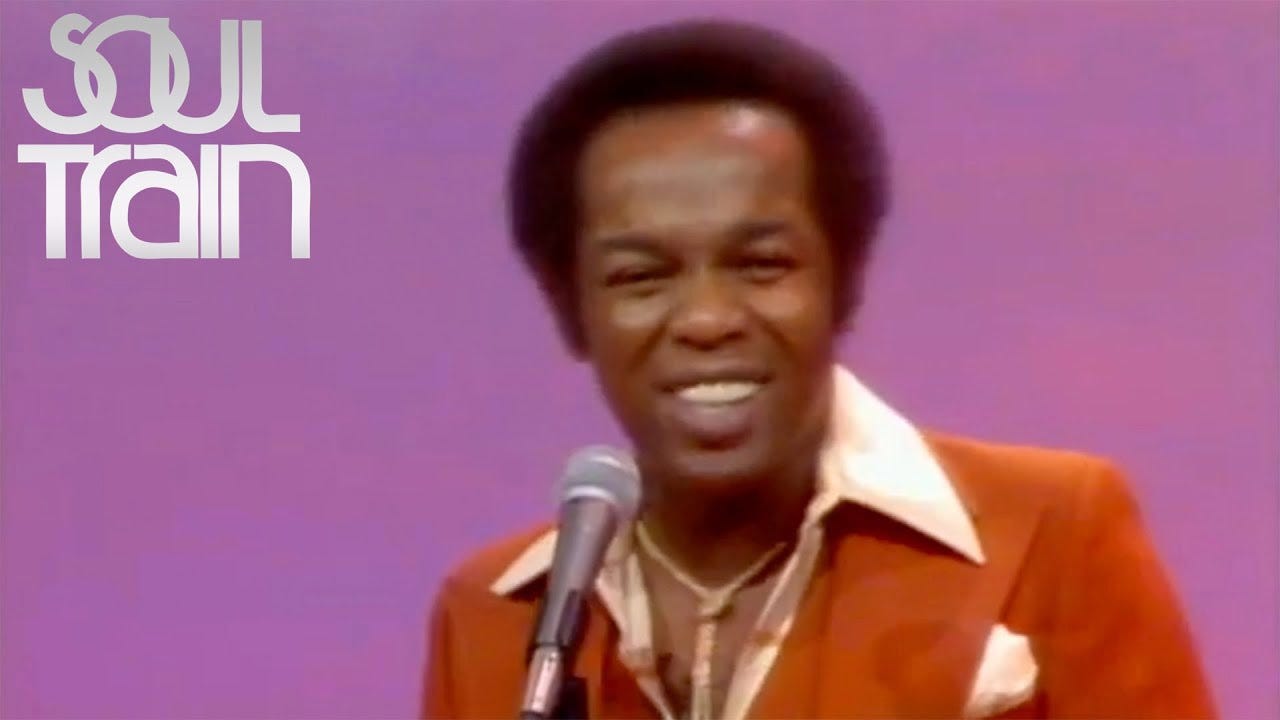
Lou Rawls “Trade Winds“ (from When You Hear Lou, You’ve Heard It All and the Philadelphia International compilation Let’s Clean Up the Ghetto, both 1977, and various later best-of sets; Chicago-born “gospel/r&b/soul/jazz/blues” “baritone singer/record producer/ composer/actor” [Wikipedia]): Smooth-jazzed yacht r&b with a strong and self-assured male supper-club soul vocal, a sort of latter-day sepia Sinatra. (When I google that phrase, the first singers who come up are Billy Eckstine, Nat King Cole, Bobby Blue Bland, Jesse Belvin, and Rubel Blakely.) He’s looking around himself at the tradewinds of his time, whatever those are. He sees hatred and jealousy, young girls in the night becoming street walkers (in Baltimore?), young boys itching for a fight, small children looking for the truth. So this is clearly meant to be a “current events” statement. There was a time I would have dismissed a record like this as way too genteel. He says love is the answer but nobody’s buying, and obviously the message is corny, but it somehow clicks for me anyway. Can easily imagine it being used in a period movie, whatever period this is…’70s I bet, probably early? But it could be any time from the late ’60s through the early ’80s. 7.5
Maximum Joy “Dancing on my Boomerang“ (from Station M.X.J.Y., 1982, and Unlimited [1979 – 1983], 2005; co-ed Bristol, UK post-punk band): Skippity funk played by mechanical zoo animals, another good dance rhythm where my feet start moving while I’m sitting before my brain even senses what they’re up to. Goes into a blatting yackety sax part — Reminds me of the band Pigbag. So post-punks, post-no-wavers even, doing post-funk rhythm. Material, maybe? Blurt? Gets more subdued toward the end, though the sax keeps blatting. 6.5
Indian Ocean “Treehouse/School Bell (Part 1)“ (single, 1986, compiled on Strut UK’s 2000 Disco Not Disco [Leftfield Disco Classics From The New York Underground] and Octave Lab Japan’s 2002 reissue of Dinosaur L’s 24 –> 24 Music; one of many aliases of Iowa-born, New York-based minimalist avant-garde and dance music producer Arthur Russell): Cool cats scatting mellow over a bongo-type rhythm. Seems like two guys who keep saying ” tree house” then maybe “down town” — beatnik poets? But not necessarily coming from the punk or alternative world, I don’t think. Then something like “scoop bay,” then a second electronic rhythm starts in. For some reason it reminds me of “Set it Off” by Strafe, or the Peech Boys, that general era, which also includes Arthur Russell’s less ambient stuff. Early ’80s downtown NY dancefloor eccentricity. Music for forward-thinking rock discos. Burbling Brazilian vocal percussion babbles, whatever they’re called, sounds that you might hear on a Jorge Ben record, get denser and busier and better and better. Odd random hoots and toots work their way into the rhythm, eventually almost becoming the rhythm. Wonderful, and I’ve no clue what it is. The burbling returns to a whispered “tree! house!,” then back to “down! town!” I’d be fine if the bongo beat went on forever, but eventually it had to stop. 8

Dschinghis Khan “Huh Hah Dschinghis Khan“ (single and on Huh Hah Dschinghis Khan, both 1993; Munich Eurodisco band formed for the 1979 Eurovision contest, “where they placed fourth; their songs were themed on historical figures and exotic cultures and locales.” [discogs]): Okay, this sounds an awful lot like Boney M’s (rah rah) “Rasputin,” must be some version of “Dschingis Khan,” by the Eurovision group of the same name, probably the best thing ever to happen to Eurovision, at least that I know of. “Hoo!! Ha! Hoo!! Ha Ha!” weight-lifting grunts , ridiculous “Muskow, Muskow” and “pistelero” history lessons, silly laughs and “hey! hey! hey!” polka/oompah chants, call-and-response parts, all worked into the irresistible Yurocheezedanz rhythm. I know they did something called “Son of Dschingis Khan” once; hell, how about let’s just say my score stands in for all possible versions? Actually, this one might be some kind of medley of all their hits (whatever count as “hits” across the continent and other non-U.S. territories), strung together by “hoo!! ha!”s. 8.5
Half Pint “Mr. Landlord” (single and on Money Man Skank, both 1984, and subsequent best-ofs; Kingston, Jamaica “dancehall, ragga and reggae singer” [Wikipedia] More thickset reggae, “the roof is leaking and the people without water,” oh okay it’s a Jamaican toaster’s message to his landlord. Funny, I was just reading the part in Tricia Romano’s Village Voice book about when the paper instigated its 10 Worst Landlords feature, journalists like Tom Robbins remembering working on that article surrounded by buckets catching water leaking from their ceilings. I’m happy to report that we actually sued our own previous landlord here in Austin and got our deposit back in court. We had lived there six years, model tenants, always acted friendly with him, and he wanted to charge us hundreds of dollars for a few scuffs and scratches (floor, kitchen appliances, counter tops) that were obviously just normal wear and tear. We got every penny back. Don’t get the idea this reggae fellow delves much further into the topic. Though it’s a fine topic, as Jello Biafra (“Let’s Lynch the Landlord”) and Eddie Murphy (“Kill My Landlord”) would undoubtedly agree. 6.5
The Beginning of the End “When She Made Me Promise“ (from Funky Nassau, 1971, and later collected on compilations such as Harmless UK’s 2005 Pulp Fusion: The Harder They Come [Original 1970’s Ghetto Jazz & Funk Classics] and Loft Classics’ bootlegged 2012 Loft Classics Vol. 7; Nassau, Bahamas funk band including three brothers): Stax-soul proto-funk rhythm, maybe just a rhythm section — Hey, is it my imagination, or are there way more instrumentals this time than in previous blindfold tests? They are a lot harder to write about, you know. Anyway, to my ears, this is just a pleasantly funky jam. MGs, KGs, MFSB, some initial guys? (Actually I might be confused about the Kay Gees.) And at least this instrumental is one you can dance to. Though to be honest (true confession time) I never really got the Meters, either. Their songs always hit me as half-done, part of something, never quite finished. This one seems even less so. 6
Sir Lord Comic and his Cowboys “Ska-ing West (Riding West)” (single, 1966, collected on various-artist compilations from WIRL UK’s 1967 Club Ska ’67 to Trojan UK’s 2007 Rough & Tough [The Story Of Ska 1960-1966]; “one of the original Jamaican deejays,” whose “Ska-ing West” “is considered the first deejay recording” [Wikipedia]): First line –“Adam and Eve went up my sleeve and then never came down ’til Christmas Eve” — made me laugh. “C’mon you cats we’re going west.” Okay, this is super early reggae toasting, like ska era, and mostly better for it. Moseying horse-trot (heading west like a cowboy) rhythm, slow for ska maybe, but I dig those sour trumpet lines. “Okay Daddy we are going west, that’s it, that’s it.” To be honest after his funny opening line he doesn’t spend much time actually toasting, by which I mean rhyming. Probably the form hadn’t quite coalesced as such yet. Horns seem to reference some famous tune I can’t place — from a Western movie maybe? Which I know Jamaicans were fans of. 7
Fludd “C’mon C’mon“ (single and on …On!, both 1972, then later band anthologies; Toronto rock band whose members later helped found Goddo and Saga): Starts like “Last Train to Clarksville” by the Monkees, singer’s got a yelp and wine, his band come up with a sort of rustic choogle without sounding remotely country. The guitarist revs up a little, and the singer squeals a little. An updated hoedown for hippie dancing, maybe. A few different lines recur — especially “Oh you’re so much older,” and stuff about chains and hanging around. Bands like Blind Melon (probably decades later) were aiming for such a sound, which in turn was probably aiming for the Grateful Dead. 6
Eliminated for Reasons of Space, 19 July 2024