
Too Loud in Here Anyway
Blindfold Test #20


World history lesson: Turns out the Rational Youth number I thought was set in Siberia is actually set in Silesia, which Wikipedia informs me is “a historical region of Central Europe that lies mostly within modern-day Poland, with small parts in the Czech Republic and Germany” — as you’d expect, it has changed hands repeatedly over the centuries. Yet though I also erroneously hypothesized that Montrealites Rational Youth came from central Europe, I was actually correct in associating their selection with the Cold War — which is literally in their album title.
Then again, that song is followed by Spagna’s “March 10, 1959 (Memories of the Taste of Freedom),” which I didn’t even begin to guess probably has a whole lot to do with (again Wikipedia), the “Tibetan uprising…when a revolt erupted in Lhasa, the capital of Tibet, which had been under the effective control of the People’e Republic of China (PRC) since…1951.” Overwhelming Chinese People’s Liberation Army response to initially nonviolent demonstrations ultimately left thousands of Tibetans dead. Typically banal Europop subject matter!
(PS, to those adamant that only smokers deserve to review Brownsville Station: Sorry, not a defense or castigation of anybody else, but to suggest opinions should be limited only to music marketed to one’s specific demographic is just goofy. If that was the case, some of us would have nothing to write about at all! And if you’re perfectly fine with that, I suppose you’re not in my target demographic either.)
Utopia “Swing to the Right“ (from Swing to the Right, 1982, and on The Collection, 1988; band formed in NYC by Todd Rundgren that “gradually abandoned progressive rock for more straightforward rock and pop”): Boogie riff into choral voices backed by horn-rock. Somebody shouts “Swing to the right!,” answered by more somebodies expanding on the thought, ornate like Supertramp or City Boy — or, while maybe not as clever or arch, conceivably even 10cc. Choir and lead guy keep swapping lines, sometimes repeatedly, “tables turning round” answered by “hear a different sound”, “Stop the hands of time” by “Save my place in line,” or later “looking out for mine” — that ’70s cliche about number one, signifying a rightward swing indeed. As do “let ’em eat cake if you feel that way” and “I gotta work so why should I have to pay for that,” presumably as in some sort of societal safety net. I assume they’re ironically mocking the right-swinger, though I could be wrong. The leader keeps turning into Billy Joel, then changing his mind. Eventually a finger-snappy bridge, then a tasty, almost “jazzy,” guitar solo, hint they’re trying to be Steely Dan. 7
SRC “No Secret Destination“ (from Milestones, 1969, and on Black Sheep, 2000; Birmingham, Michigan, psychedelic band): Zooming light-psychedelic space-age Byrdsish guitar buoying an initially flat-ish male singer who gains oomph and personality as his cosmic malarkey picks up steam, from “100 thousand moments passing every single day” to “We continue through the miles, ever constantly on trial” to “There’s no secret destination, as we end the masquerade.” Guitars thicken like the voice, raving up so Byrds become Yardbirds. Guitarist is clearly the star — nothing overly complicated, but he gives the music body you might say. Mid/late ’60s, I bet. 6.5
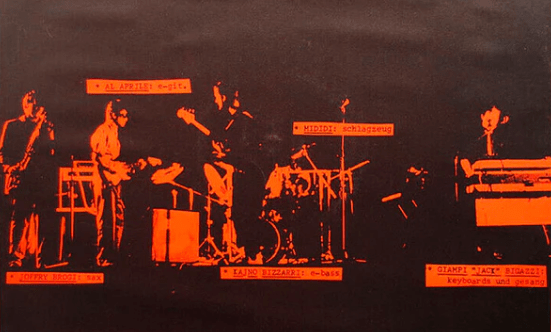
Naif Orchestra “It’s Your Ass That’s on the Line“ (from split 7-inch EP Invito A Cena Con Monofonicorchestra / Invito A Letto Con Naif Orchestra, 1982; synth-pop/Italodisco act centered on brothers Arlo and Giampiero Bigazzi): Piano jazz like in some weird old horror movie, under a voice so doctored that at first I missed that they’re not singing in English; the clickity clack of it all had me leaning toward figuring this was somebody on Ralph Records. French, maybe? Or Italian? At times he yawns. A legitimately odd art record — would not call it rock, despite what seem to be intermittent spurts of guitar. 6.5
Mathematiques Modernes “A + B = C“ (single B-side, 1980, and on Les Visiteurs Du Soir, 1981; Paris synth-pop duo): Pac Man arcade synthesizers, into a clear but rubbery electronic beat. More romance-language furriners, judging from their apparent words and accents — my best guess is French. The rhythm stops and goes, almost cut-up; a whimsically cute keyboard break is soon supplanted by a tinkling xylophone or marimba maybe, or even wind chimes. The singing’s not exactly thin, but it’s light enough to be carried off by just a breeze. 6
Xeerox “Excerpt Number Four“ (fourth untitled track on 2020 archival collection 1979-1981 Recuerdo Espectral De Un Viejo Decorado Eléctrico; post-punk experimental electronic band from Barcelona): A wall of noise transported by a locomotive chug deep in the factory’s bowels, with the chaotic speed and density of rush hour traffic. Even with sundry species of sturm and drang (and klang) entering from multiple directions, I’m not sure it counts as anything but background din. But as I’ve said elsewhere, I find this kind of stuff relaxing to read to — at low volume, admittedly. To me it’s ambient sound, though more Metal Machine Music than Music for Airports. 6
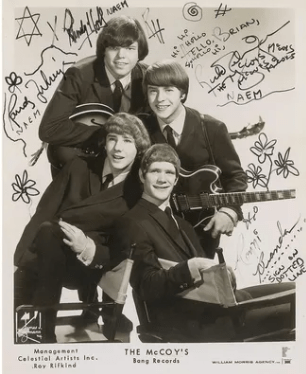
The McCoys “You Make Me Feel So Good” (single and on You Make Me Feel So Good, both 1966, and later compiled on Hang On Sloopy: The Best Of The McCoys, 1995; Union City, Indiana rock band fronted by guitarist Rick Derringer): Lead singer with a blue-eyed soul group behind him, calling and responding to finger snaps: “You and me got something, baby…Good, good, you make me feel so gooooooood.” Now, this one has to be from the mid ’60s, since it’s not like the harmonies of the Young Rascals or whoever were ever revived since. Well okay, by the Osmonds maybe. Occasionally the backup singers, who I bet also play instruments since this soul group seems to pound (albeit gingerly) like a rock band, do “doo doo doooooo” falsetto stuff. The sound grows thicker as the lead singer grows gruffer. He may well be aiming for “Blacker,” but he builds intensity, either way. 6.5
Doop “Doop (Sidney Berlin Ragtime Band)“ (single, 1993, and on Circus Doop, 1995; “Dutch producer duo combining Eurodance and old genres such as Charleston and lounge music”, their “single ‘doop,’ reached #1 in the UK” and “can be also be read upside down” [discogs]): A marching-band drummer clatters all over his entire kit as a polka transforms into some kind of Dixieland Charleston — a really fast one, with horns. Thing is, the beat turns out to be so metronomic, so ooonzt-ooonzt-ooonzt insistent, that I wonder if what came before were samples. There are chattery scat parts, and big rimshots on the drums. Seems like a ’90s or early ’00s dancefloor novelty, aimed at fans of Lou Bega and Scatman John and Hampton the Hamster. 6.5
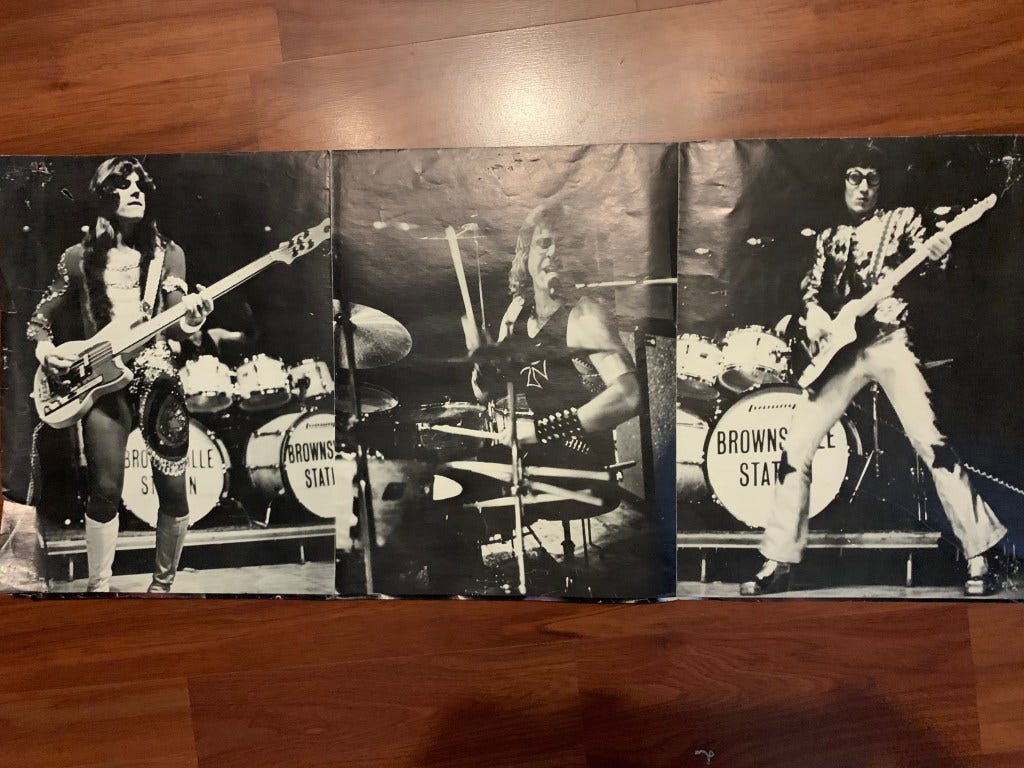
Brownsville Station “City Life“ (single B-side and from No BS, both 1970; Ann Arbor hard rock band): Burly blue-collar biker choogle with slow, dirty, oil-under-nails blooze chords and tough guy during tough times grievances to match: “Working in a steel mill, only way I could get along. ‘Til I come back home, find out my woman’s got me wrong,” he grumbles. “City life, it can drag you down.” But though the singer’s right in there, it doesn’t really matter what he says, since this is mainly about the band, who pump up the rhythm under badass riffs á la early ZZ Top. Not to say it’s as good as them — just the same outlook on life, until they close with exactly the blues notes you’d predict. 6
Papaya Paranoia (パパイヤパラノイア) “Taiko No Emerlard (太古のエメラルド)” (from Rosepink, 2002; Japanese punk rock band whose members all or mostly appear to be women): Eerie, cloudy atmosphere introduces a repetitive electronic rhythm that somehow subliminally recalls the talkbox opening of Bon Jovi’s “Livin’ on a Prayer” — as covered by Underworld, maybe! Which might not be that bad an idea! Turns into a post-Kraftwerk train trek, with chipmunks deep in the gears who turn out instead to be a middle Eastern woman like say Ofra Haza or Natacha Atlas crossed with an early goth queen like say Lene Lovich or Nina Hagen. Sounds like she’s saying “wish you were here” (though she probably isn’t), then “la-la-la-la”-ing. The concrete but comprehensive song structure comes as a surprise in such a technological context, as does the extent to which Ms. Haza Atlas Lovich Hagen totally starts blasting. She’s repeating a chorus, more and more intensely, that I can’t repeat myself here because I don’t know the language. Manages some of the emotion of praise/worship music, maybe from a mosque — not that I know anything about Islamic hymns; just feels like it could be, or maybe at least influenced by it. When the rhythm section steps up, the voices become more subdued, almost Kate Bush-(or somebody like that)-like. But it’s a false calm because the (apparent) middle Eastern woman comes back, now clearly singing dead on the beat, loud, accentuating the rhythm while eventually shifting toward what seem to be non-word vocal notes. Then there’s a passage with somebody, possibly a different woman, talking, buried six feet below the increasingly tripped-out mix: At one point she almost sounds like she’s counting “40 thousand, 50 thousand, 60 thousand,” faster and faster toward a climax before it finally all cools off. 7.5
Skoolboyz “Can We Do It Again” ( single B-side and from Skool Boyz, 1981, and This is the Real Thing, 1985; Chicago funk band): Chants of “can we do it, can we do it?” to muscularly (though not rockishly) funky music. Then a man and woman having a spoken conversation: “It’s been a long time hasn’t it?,” he says, and she answers — somewhat ambivalently, to my ears — “Yes.” Just a one-word reply; he doesn’t exactly draw her out. The loudest guy in the band yells “Can we do it again??,” shouting exuberantly like in go-go from Washington, D.C. His bandmates answer “can we do it again?” in a smoother, more soulful tone. The couple return, and he invites her over to have a glass of wine and do things they used to do, which I don’t believe he specifies, though I have a hunch one of them is the “it” that everybody wants to “do again.” Whole thing’s mainly just an excuse for putting a hard funk vamp to use. “Have you thought about it?” he asks, getting a bit pesky. “Wellllll…….” she answers. He strikes me as pushy, even creepy, though I get the idea the mood they’re trying to convey is something more like “persistent.” “Let’s go,” he pleads, “it’s getting too loud in here anyway.” At his place they can take off their shoes and whatever else and put on some softer sounds. Which will not appear in this song, thank you very much. 7
Deutsche Wertarbeit “Auf Engelsflugein” (from Deutsche Wertarbeit, 1981, and on the Totally Enormous Extinct Dinosaurs DJ mix album Get Lost VI, 2013; “one-off project by Dorothea Raukes, the lady synth/keyboardist from [Düsseldorf] German rock band Streetmark” [discogs]): Slight light synthesized orchestrations making like a bright sunny day in a Disney movie, in conjunction with a second synth disseminating a Eurodisco pulse, which does in fact carry the pretty melody along and aloft. The tune is more or less an electronic version of a repetitive piano figure that goes “six note part” then “same six note part” then “eight note part” then “same eight note part” (technical terminology!) and the more Eurodisco one is lovely in its own right. It’s an instrumental, almost definitely earlier than techno vintage. Or so the analog synths lead me to believe. 6
The Unclaimed “Deposition Central (The Acid Song)” (from The Unclaimed EP, 1980; L.A. garage rock band, initially featuring two future Long Ryders): Slowish, fuzzy rock. “I went to a party where I took a little fizzy, something happened to me where I started to get dizzy.” Room starts spinning, objects turning, he goes a little nuts: “Everything was a whirl, and I see my girl. When I look in her eyes, there’s that thing I despise.” Everybody thinks he flipped on a psychotic trip, then he hears police sirens, everything’s confusing, can’t they leave him alone, can’t she take him home? Either a mind-altered mid ’60s punk reaction or an expertly studied if rather obvious ’80s dressing-up-for-Halloween imitation of same. Bass and guitar propel a basic driving groove until the organ sneaks in. For a little bit, he talks rather than sings. Think Music Machine, Count Five, 13th Floor Elevators, or years later the Angry Samoans in one of their less hardcore moments — or some patient in the same asylum. 7

The Screamers “Anything“ (from archival 2021 Demo Hollywood 1977 EP; L.A. “electropunk band” formed in 1975, revolving around “a drummer and two keyboardists,” cited by Jello Biafra as “one of the great unrecorded groups in rock history” [wikipedia])”: Sparkling astronomic electronic sonics, then a seemingly incongruous gruff and grumpy punk-rockish growl: “If I can’t HAVE, what I WANT, I don’t WANT, annnnnnyTHING!!” — blurted a few times, in a very short song. Another convincingly cuckoo-for-Coco-Puffs punk, but this record can’t be from the ’60s due to its highly mechanical underpinnings, which amount to a subterranean rumble and brief intermittent organ doodles. “Wanna have you, wanna sex action,” some other guy recites at one point, in a less severe voice. But at the end it’s back to the main man of few words: “Anything!! Anything!! Anything!! Anything!!” 7
Bonzo Dog Band “Shirt“ (from Tadpoles, 1969, and later several band anthologies; “group of British art-school students…combining elements of music hall, trad jazz and psychedelia with surreal humour and avant garde art” [Wikipedia]): Rustling leaves, which might be lettuce leaves since somebody’s talking about Roger’s wah-wah rabbits (despite no wah-wah being audible). From the start, it’s almost painfully quaint. A newsman is conducting on-the-street interviews, asking some innocent bystander about shirts. A lady comes by with a “charming little kangaroo,” and the newsguy asks her about “the problem with shirts, are they necessary?” He’s got a British accent, of course. A third subject hops in (apparently an underlying theme here, given the rabbits and kangaroo), and answers that “You’re not dressed if you ‘avent got a nice shirt on guv’ner, are you?” Then we’re taken to attend some sort of shirt-related special event. First there are just traffic sounds in the news report’s background, then a woman doing easy-listening tra-la-la, then eventually an Elvis imitator singing rockabilly (though his music sounded older than rockabilly at first) about, of course, shirts, which turns into a mini handclap hoedown. It’s all very Monty Python, which I guess also means post-Hard Days Night/Help!, so I’d be shocked if this isn’t the Bonzo Dog Band. Who, as far as I’ve been able to establish, despite being totally wacky and quirky, were really not all that funny. I also wouldn’t be at all surprised if they were close buddies with Firesign Theatre. 6
Look Blue Go Purple “Days of Old“ (from This is This EP, 1988, later included on Compilation, 1991 and Still Bewitched, 2017; five-woman “alternative pop-rock band from Dunedin, New Zealand” [discogs]): A woman sings a murky, barely decipherable ditty that has to do with “you always gotta run.” There’s a pinch of psychedelic garage organ behind her, and maybe folk rock guitars. Not that I’d call this folk rock — closer to the Poppy Family, or Nancy Sinatra with Lee Hazlewood, does that genre even have a name? “Pop noir,” maybe? Whatever the opposite was of what people call “’60s sunshine pop,” but from roughly the same era. Nightshade pop?? 6.5
Cher Lloyd feat. Becky G “Oath“ (from Epic CD version of Sticks & Stones, 2012; pop singer and rapper from Worcestershire, UK, who placed fourth in the seventh season of The X Factor, assisted by bilingually recording Mexican-American Latin-pop/reggaeton/hip-hop singer from Inglewood, California): Jangling guitar starts out playing the doo-d’doo-d’doo-doo-doo notes from “Walk on the Wild Side” (which at first my crossed brain wires tricked me into thinking might be “Lola” instead — interesting given their shared trans themes), then a woman starts rhyming about sneaking into houses and getting into trouble with her best friend: “Crushed your dad’s new car,” and so on. Teen comedy stuff. What seems like a rap record turns out more like a pop record that just happens to employ rapping. So first I thought early ’70s (as in Lou Reed or Kinks), then late ’80s or early ’90s (pop rap), then maybe the Radio Disney era. One clue it’s the latter is how the singer delivers the chorus “this is my oath (?) to you-eww“; it has the fizz and bounce of, say, Len’s “Steal my Sunshine” or Vitamin C’s graduation song or the Veronicas. But it’s still definitely about being BFF’s: “We’re never alone, we’re birds of a feather.” And I’d take it over either Billie Eilish’s birds of a feather hit or Sabrina Carpenter’s feather hit. What is it with feathers lately, anyway? 7.5
Genesis “Watcher of the Skies” (from Foxtrot, 1972, and sundry best-of collections): Another movie-score melodrama introduction, almost Jon Williamsish, super souped up and schlockily bombastic, going on and on and on. But then once again, not unlike in the similarly soundtracky song a few songs ago, an electronic pulse starts striding, pulsing, coiling in on things. Except then this time singing starts, and I’m thinking it’s either Peter Gabriel or Peter Hammill, but definitely some prog rock Peter or other: “Now the rain has gone to end. Life has destroyed life.” Definitely leaning toward Gabriel, circa Genesis — whose music I’m pretty sure I compared to Disney kitsch last time they came up here! Halfway interesting, though, how the music bunches up into little bloodclots and then stops for regal sort of Procol Harum piano pomp. Lyrics about “creatures, when you’re dead!”; “the end of man’s long” something or other; “Think not now, your journey’s done”; “Though your ship be sturdy, have mercy on the sea.” If you say so, Pete! Musically, though, it undeniably does switch up quite a bit, if that’s the sort of thing you’re into. Eventually there’s even a sort of “Here Comes the Bride” piano processional part. There’s almost nothing in it I’d associate with “rock music” — well okay, maybe Phil Collins’s drums here and there, though not by any means consistently even with him. There’s a part where drums and keyboards seem to converse with each other or fight a battle, with one playing a theme and the other trying to match and top it. And you can tell when it’s getting toward the end, thanks to “getting toward the end” music. 6
Ruth White “The Clock“ (from Flowers of Evil, 1969; Pittsburgh-born composer and “electronic music pioneer, owing to her early explorations of sound using the Moog synthesizer” [wikipedia]): Extended ominous organ line, one looooooong note. Some semblance of poetry about, let’s see here and who needs punctuation anyway: Evil terrible fighting inscrutable bond whose menacing finger merits us crying your quivering heart pleasure will vanish like clouds over the horizon a person could be male or female talking 3060 times an hour the second whispers…” Or maybe it was 3600, since that’s how many seconds are in an hour? Whatever. I’d call it goth, but it’s really just spooky programmed noise behind ooky poetry, and you can tell how slow it is by how many words I’m able to type, on the first try no less! “Time is a greedy gambler, wins at every turn of the wheel without cheating.” All in all, insufferably pretentious and not in a particularly entertaining way. End: “It’s too late.” Hey, she got one thing right! 4.5
Hawkwind “Kerb Crawler“ (single and from Astounding Sounds, Amazing Music, 1976; long-lived psychedelic space-rock band from Ladbroke Grove, London): Jumpy T-Rexy riff and soul women behind what seems to be glam rock singer, either celebrating or criticizing “eight tracks” and “FM radio.” Maybe some Ian Hunter in him too; hard to tell, given the extent to which his vocals drown beneath the burble. He seems to be saying something about the Autobahn, and something about high heels. Which’d make sense; not so sure how the insects and skyscrapers fit in. Small-label dimestore ash-can glam, I guess, in that it’s barely produced (no “no static at all” here, FM haters!) but you can detect signposts of the genre. Backup soulsters seem to repeat some chorus about “staaaaaag corona,” which I’m no doubt hearing wrong (even if it does presage “myyyyyy Sharona” by a few years). Better fidelity might well have earned it another point. 6
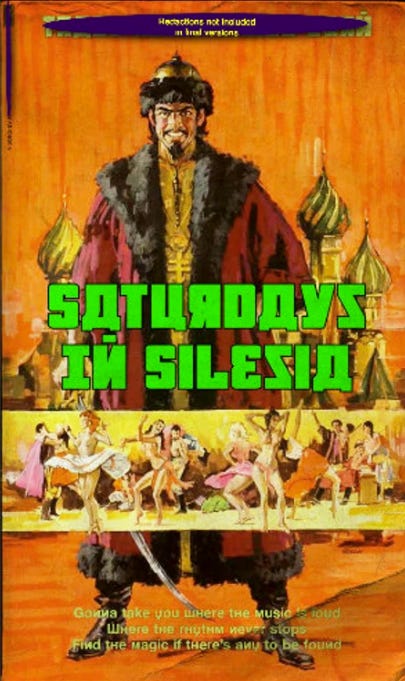
Rational Youth “Saturdays in Silesia“ (single and from Cold War Night Life, 1982, and All Our Saturdays [1981-1986], 1996; Montreal synth-pop band): Icy morose herky-jerk techno pop. “Working in the graveyard, waiting for the axe to fall..when the day is over, call you on the telephone.” Seems to be called “Saturdays in Siberia,” where the city nights are apparently not like Broadway but he’s going to take us “where the rhythm never stops” regardless. Literally cold war pop. I bet they are from West Germany or Austria (or Switzerland or Belgium or Luxembourg or…), somewhere just this side of the Fulda Gap before Mr. Gorbachev tore down that wall. I get the idea there was a lot of this sort of thing coming out of continental Europe back then; in fact, as a Signal Corps cold warrior stationed over there from 1982 to 1985, I no doubt heard some of it. (Heck, I may have even lived some of it.) I wouldn’t be surprised if the Pet Shop Boys heard some, too. 6.5
Spagna “March 10, 1959 (Memories of the Taste of Freedom)“ (from You Are My Energy, 1988; pop and Eurodisco singer and songwriter and former half of the duo Fun Fun, from Valeggio sul Mincio, Italy): A machine’s approximation of a European approximation of a Native American approximation of a wolf howl, then a woman starts singing in what I at first assumed was a foreign language, that’s how foreign ( in the European sense) her accent is. Power ballad schmaltz, a woman situated midway between Laura Branigan and Celine Dion belting her lungs out about magic mystic lands and other such romance. It is mush, but vaguely familiar mush. And it’s not hard to tell, as mush gushes, why this mushpuddle might have been a hit in Europe (assuming it was — but not in the U.S., no way.) Gets interesting when she begins to repeat “gotta walk it out,” or maybe “gotta work it out,” with soldiers marching while chanting in cadence behind her. That last part actually added half a point. 6
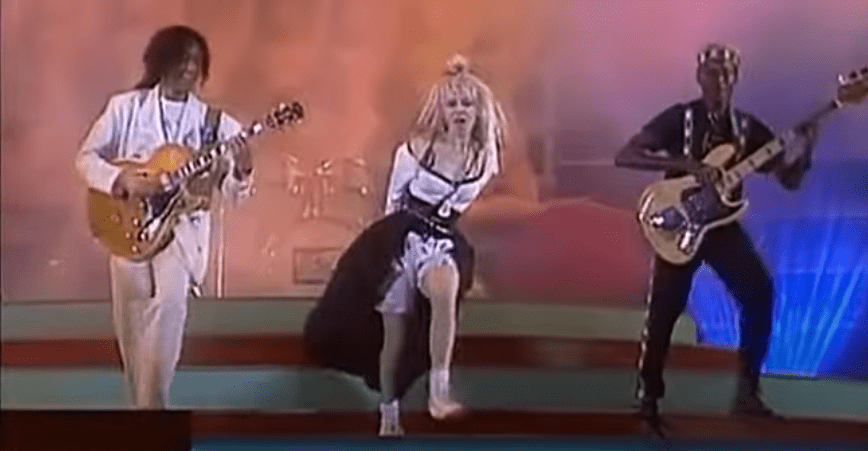
Walter Coleman “Mama Let Me Lay it On You“ (78-rpm single, 1936, collected on compilations such as Yazoo’s 1974 Mama Let Me Lay It On You 1926-1936, RST Austria’s 1988 Cincinnati Blues [1928-1936] – Complete Recordings Of Bob Coleman’s Cincinnati Jug Band and Associates, and World Music Network UK’s 2018 The Rough Guide to Hokum Blues; Cincinnati blues singer/guitarist who also recorded as Walter Cole, and possibly as Bob Coleman and/or Kid Cole as well): Okay, this is from a long time ago. “A mama lemonade on you”? Or maybe “mama let me laid on you, ooh ooh” (or is it “mmm mmm”)? Reminds me of the kid’s joke about what the baby chicken said when its hen mother sat on an orange one day: Look at the orange mama laid! (Marmalade might be old-timey in its own right; do people even eat in anymore? To be honest I’m not even entirely clear on what it is. Probably way too sweet and sticky for my own taste, but you do you.) Anyway, this guy, who also seems to be rhythmically strumming a guitar possibly sitting alone, is clearly referring to a different kind of laying. There’s a connection to the blues, or maybe a hillbilly’s interpretation thereof. “Any woman can get a man now-day” and something about a dollar; is she a prostitute? Tells her to replace her dress with something more comfortable. Interjects at end “Aaaaah stomp that thing!” (Not the dress, I hope.) 6.5
The Chillie 3 MCs “Shake Your Boody“ (from 1982 Tri-State compilation Mr. Magic’s Be-Bop Convention and 2004 Stones Throw compilation The Third Unheard: Connecticut Hip Hop 1979-1983; early Bridgeport, Connecticut rap trio that recorded only one song): They call themselves the Chilly (or Chile?) Three (later the Chilly Three MCs), and their names appear to be Alley D (“I’m the A to the L…”), Kool Z (I know it’s Kool with a K not a C because he spells it out) and Butchie B; they “don’t start no trouble don’t raise no hell, when we come to the party we turn it out, show all the people what we’re all about.” And especially once the semi-familiar but absolutely booming and banging bassline kicks in, this is ridiculously propulsive; the production is a tad muddled (recorded live in the studio I bet), but somehow with old old old school rap the mud actually helps. (Think, say, “A Year and a Day” on Paul’s Boutique.) I’m also catching stuff about cheebah cheebah and def OJs (which it took me literally decades to learn were fancy Hertz rentacars, duh!) and “our bags are filled with cash mun-knee” and “look whatcha done did” (a line also in “The Message,” which could’ve been either before or after) and “fly girls, shake ya booty” so maybe they liked K.C. and the Sunshine Band too. (Who didn’t?) Plus background voices doing that “ho-woe, ho-woe, ho-woe” thing. So much stamina, so much energy, so much high spirit; after just a few years of rap like this, where did it all go? 8
Japan “Visions of China” (single, 1981, and on Japan, 1982, and assorted best-of sets; Catford, South London, “new wave/art pop/synth pop/glam rock” band [Wikipedia]): A brighter, lighter style of funk, Solar Records-style, what DJs later in retrospect named “boogie.” But wait, this is a post-Bowie singer, probably British, and the second he barges in the funk gets lost, or at least hidden. This was so much better before that pompous dork started singing! I do like the middle Eastern-esque female backup wails though. Last time I had this kind of feeling about a singer (previous blindfold test I think), he turned out to be David Sylvain in Japan, so I’ll go out on a limb and guess this might well be him, too. At one point the music comes to a false stop, and then it returns like a D.C. go-go band doing their drumline routine, which again sounds fantastic until the singer comes back: “We walk… backwards…saying…nothing…” Oh wait, he’s also saying “viiiizhins of China,” so I know it’s Japan, ooof. How Asiaphilic can you get? 5.5
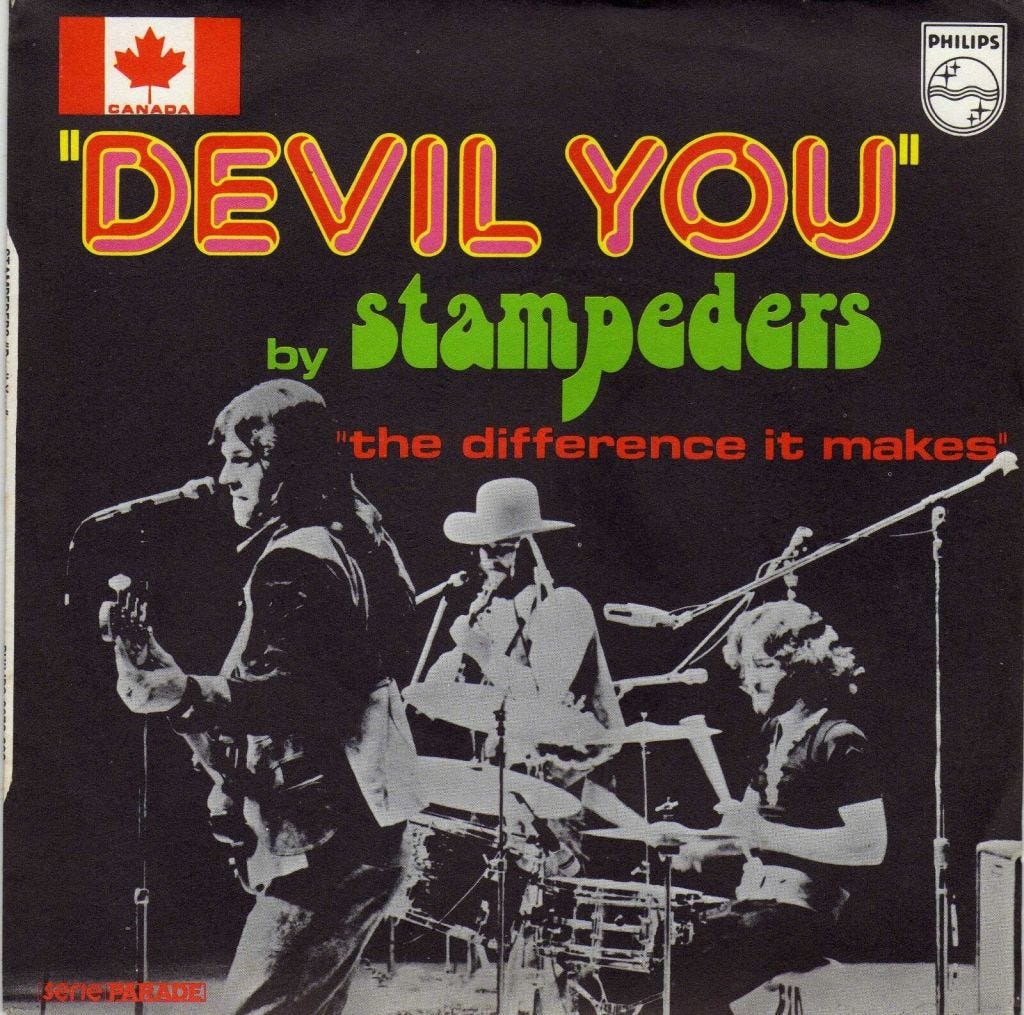
The Stampeders “Devil You“ (single and on Carryin’ On, 1971, and later best-of LPs; Calgary rock trio): Sprightly beat, hopped up and dancing around, “when will you ever learn,” and maybe “devil you”? Party people clapping along to a skiffle-ish pre-disco ’70s Top 40 rhythm — Mungo Jerry maybe? (Apparently they had several hits in England.) The singer, especially the hitches in his voice and maybe also how he occasionally pole-vaults to falsetto high notes, reminds me a lot of early ’70s Elton John, say circa Honky Chateau. Super catchy, goofy, fun. Glam-boot stomping underneath; just a good-timey good time for everybody. Almost definitely called “Devil You,” given how many times the singer says that. Music made for 45 rpm. 7.5
Eliminated for Reasons of Space, 30 September 2024
via facebook:
Edd Hurt
I always liked “Watcher of the Skies,” a cheap imitation of Holst? Sibelius? one of those guys. First Genesis track I ever heard, the version on “Genesis Live” (1973).
Clifford Ocheltree
Not sure the Bonzo Dog Band was intended to be ‘funny’ but they were an excellent live act. I when to my diary and it is nearly 55 years on the nose (10 Oct 69) that I saw them live and the memory (scar?) remains. The kind of bill common at the Kinetic Playground ($5), Pacific Gas & Electric, Lee Michaels, Lonnie Mack & Bonzo Dog Doo Dah Band as they were billed at the time. As the lights came up the stage was filled with wind-up baby dolls wailing and waddling, soon to be kicked into (at?) the audience. Roger Ruskin Spear (of Trouser Press fame) with a grocery cart filled with comments in comic book ‘bubbles’. “Legs” Larry Smith in a tutu behind the drum kit. Vivian Stanshall in skin tight striped tights and a bright red beret. AND, last but hardly least, Neil Innes who looked ‘normal’. (Innes, you may not know wrote nearly all the music for Monty Python and masterminded the Rutles. He was also in a long forgotten but excellent band. Grimms, with Andy Roberts (a whole ‘nother story) and Paul McCartney’s brother. Their LP Rockin’ Duck is excellent.
Chuck Eddy
Interesting, though it seems odd to suggest that a band whose recordings were largely comedy skits (not to mention one who led directly to Monty Python and the Rutles) weren’t trying to be funny. Or at least, it might be hard to convince me of that.
David Everall
The Bonzo’s were definitely intending to be funny and from a British perspective they certainly succeeded. Maybe the surreal edge doesn’t resonate with American listeners. I’m generally not keen on overt humour in music but there are still a few stretches of the Bonzo’s album I can remember by heart. Their very British eccentricity, especially Stanshall’s was what made it work.
Clifford Ocheltree
I shall steal a tad from your reply. I never found them ‘funny’ but ‘surreal’ certainly fills the bill for me. More so than say The Mothers or just about any ‘minor’ group from that period.
Chuck Eddy
Of course it should go without saying that comedy is in the eye (and ear) of the beholder — it might be even more subjective than music, if that’s possible. And I freely admit that I have never been the most receptive audience for “veddy British” humor, even back in the ’70s when my fellow high school newspaper geeks were nerding out over Monty Python, who (give or take The Life of Brian) I tended to shrug shoulders at. I actually liked The Goodies more at the time, if that still means anything to anybody. Did wind up, years later, vastly preferring the UK Office to the US version that spun off from it. But I’m about as far as you can get from a “whimsy” fan — never got the appeal of Robyn Hitchcock, either.
Edd Hurt
I find Monty Python holds up well. I think they had enough pop snark in them to do the highbrow-lowbrow thing right. The UK Office is indeed a horrifyingly funny masterpiece I watch often. I’ve never been a Robyn Hitchcock fan myself either, though I do like the album he did in Nashville, his most straightforward and satisfying work since Soft Boys days.
I’d never seen any footage of the Stampeders. Wow. Sort of like a cross between Lee Michaels and Marc Bolan? Or Christie? Great.
Chuck Eddy
Everybody’s name-checking Lee Michaels today!
Edd Hurt
I learned how to play the keyboards for “Do You Know What I Mean” (not hard at all and fun) a few months ago and went on a Michaels jag. Renee Geyer’s version of the song is incredible!
Clifford Ocheltree
Michaels first two or three LPs were frequently played in my household back then.
James Auburn Tootle
Figures that the first (though not the best) cut on one of my favorite albums gets the lowest score here – accustomed to that at this point in my life. Ruth White’s “Flowers Of Evil” is an ideal soundtrack when life seems as bleak as the eerily silent, snow-covered winter night outside. (So I would imagine.)
Chuck Eddy
Serves me right for listening to it on a 98°F day.
James Auburn Tootle
I’ll forgive it.
The album’s also on Limelight, a 60’s label I was once completely obsessed with, as I believe I’ve relayed to you before. Much of its output was indeed various levels of pretentious, I’ll concede.
Oh, and the bassline (at least one of them) you praise on the Chillie 3 MC’s cut was, as was customary, nicked from this.
Forget about the Bonzos being funny and think of them as sad clowns barely holding it together, then listen to Keynesham as their dark night of the soul album, there's less of the vaudeville and more moody pop on it. let's Make Up and be Friendly has a similar vibe and Viv Stanshal's extended Rawlinson End skit is the best of their humour.
Also very nice blindfold reading of lbgp, they'll like it.