
Let Kama Sutra Guide You
Blindfold Test #24

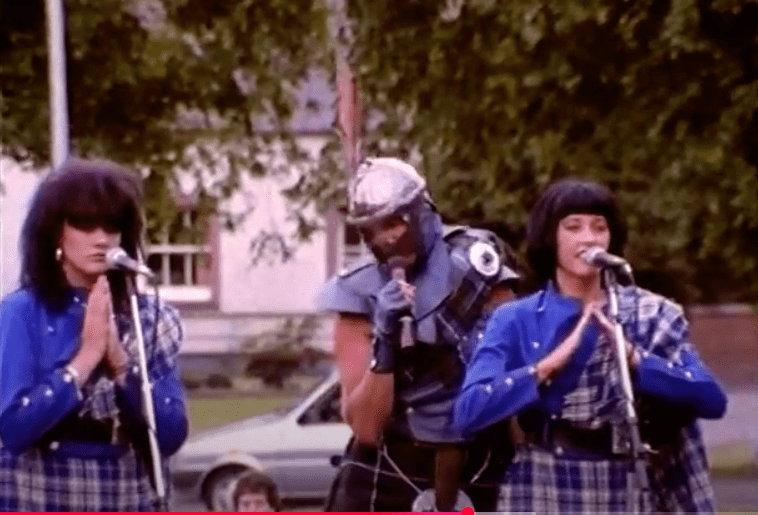
This installment has the distinction of including both a song and its sequel by the same artist, which overcame seemingly insurmountable odds to both wind up within the same 25-song selection (actually only 14 songs apart) culled from a randomly shuffled 5000-song playlist.
For the record, Barbara Mason’s “She’s Got the Papers (I Got the Man)” reached #29 on the U.S. R&B chart in 1981, while her “Another Man” got to #68 on the same chart (not to mention #45 in the UK) four years later. (Richard “Dimples” Fields’ “She’s Got Papers on Me,” the first single from his 1981 Dimples LP and the song Mason’s “Papers” was an answer to, did not chart.) Songs below by George Benson and Mr. President were even bigger hits on some charts (#5 and #21 respectively on the U.S. Hot 100 for instance), while the McCoys and Tams selections at least creased lower reaches of America’s pop tally.
At presstime, I’ve been unable to establish how much airplay Airplay got. Their single didn’t hit the Hot 100 in the U.S., and their album didn’t reach the Billboard 200. Interestingly, Southern rock band Point Blank’s second album, also called Airplay, had at least made it to #174 on the latter chart in 1979, a year before Airplay’s Airplay came out. By 1980, perhaps AOR programmers saw past such subliminal flattery.
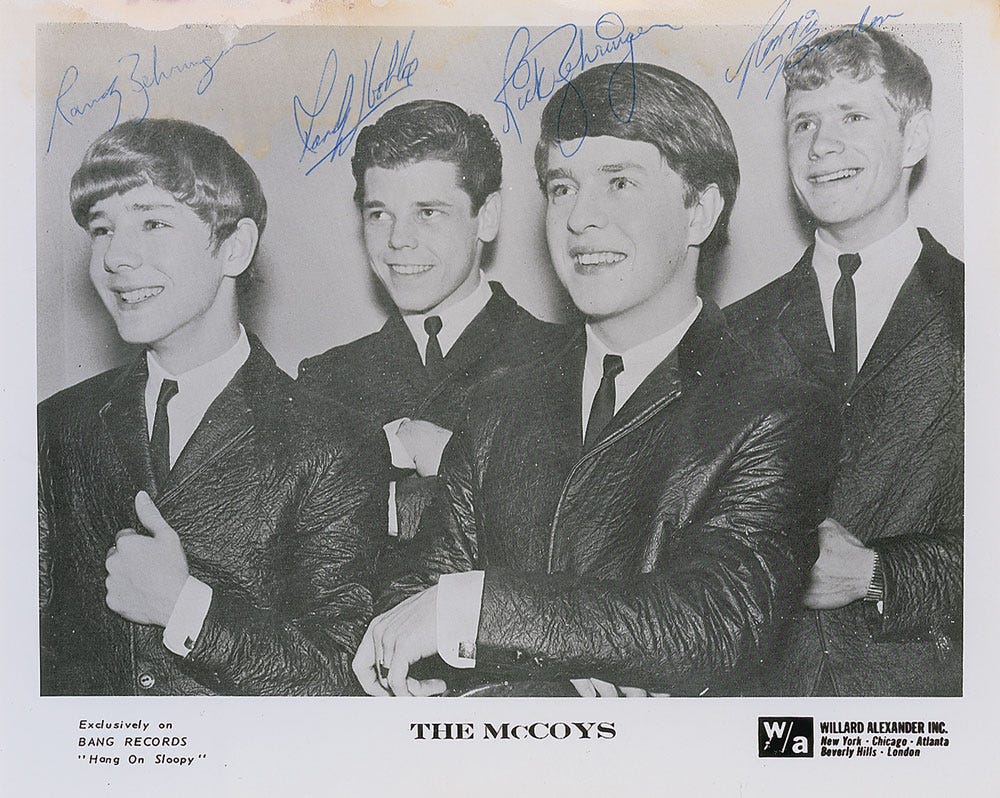
The McCoys “Beat the Clock“ (single, 1967, and on Hang On Sloopy: Best of the McCoys, 1995; Union City, Indiana rock band fronted by guitarist Rick Derringer): An agist tinkly-piano tune about the denial of getting old, of biological clocks ticking — “How long will it take until you finally realize that the carnival is over and you’ve seen better days… beat the clock, try to make it stop.” Not as good as the Sparks’ “Beat the Clock” off their album with Giorgio Moroder, but sung in a high pitch of indeterminable gender nonetheless. Turns more prog as it, well, progresses, a melancholy organ entering, followed by an actual clock ticking to fit the title. You could also sing the chorus of “Mr. Blue Sky” by Electric Light Orchestra to a lot of this. 5.5
Pyrolator “Happiness“ (bonus track added to 2012 reissue of 1981’s Ausland; alias of Düsseldorf electronic musician/producer Kurt Dahlke): Gruff throaty spoken male voice, an intercepted shortwave announcer: “Let us leave the BBC now and pick up the antenna and twirl it around and see what we can find, uh….I think we picked up Radio Moscow.” The Eurosynthpop diddling strikes me as more Far Eastern than Eastern European actually, which might make sense since, after the ham operator wishes Soviet families Happy New Year, he suggests we “hang on, as we try to find Red China,” leading the melody still farther East. “Hang on, we’re going to get them, uh, any minute now.” Then more staticky transmissions reminding me of my ’80s time in Germany circumventing the Armed Forces Network, adding up to a sort of (proto?-) “Pump of the Volume” DJ collage. 6.5
The Magnificent Four “The Closer You Are“ (single, 1961, later included on numerous doo-wop and oldies compilations; NYC doo-wop quartet that recorded only one 45): Morse code “nah-nah-nah-nah-nah-n’nah”s (with “ooo-whee”s in the background), doo-wop, probably from post-Dion Italian toughs, somehow extremely loose and precise at the same time. Their hearts skip a beat whenever we meet, but there’s a blurriness to the way their voices congeal. The highest-pitched guy, who for some reason I also imagine is the youngest, gives us his best wail, but it’s still Triple A ball in that it doesn’t quite scale any skyscrapers. I thought this was gonna be the one about “ma-ma-ma-ma-ma-ma-maginayyytion,” but it wasn’t. Also it’s really short. 6
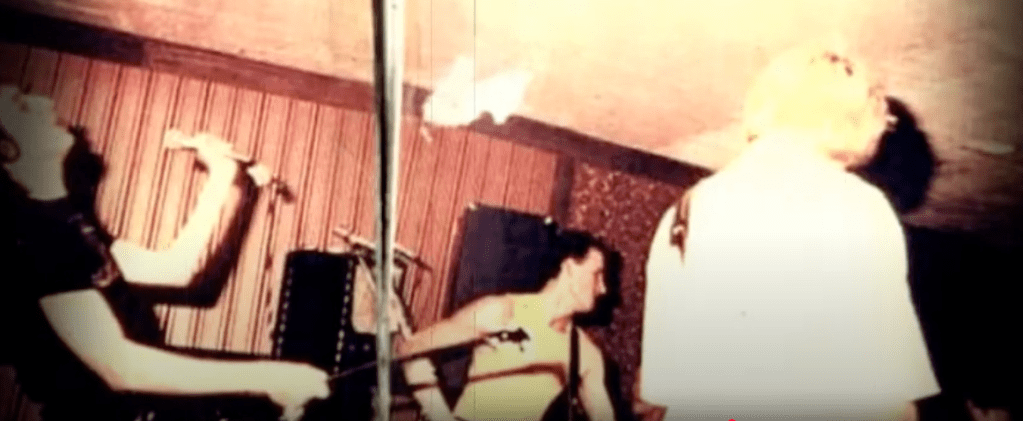
Negative Trend “Black and Red“ (from Mercenaries EP, 1979 and We Don’t Play Riot EP, 1983, and on 2013 Super Viaduct compilation Songs From the Edge of the World; San Francisco punk band featuring future members of Flipper and Toiling Midgets): Slow, primal powerchord chug, crawling and drawling, convincingly sleazy and fearful — “paranoia creeping up on me, just like the end of the night” and something about living lives of suicide. The frontguy’s vocal pitch plummets into its onomatopoetic “dooowwwn” like Johnny Rotten. He’s never had blood on his hands, but he “always liked the color red because it looks good on my arms.” So I’m confused when he also says “it looks like a black leech”; make up your mind, guy! “I’m no hero, and I’m not God, but it makes it hard to be yooo-man.” Guitar goes a little scritchy and off-kilter, seems to be some sort of post-punk death kitsch/horror rock thing. Probably from L.A., Flesheaters-adjacent. 6.5
Cymande “Dove“ (from Cymande, 1972; London band “featuring musicians from Guyana, Jamaica and Saint Vincent” whose so-called “Nyah-Rock: a mixture of funk, soul, reggae and African rhythms” [discogs] has been sampled on scores of hip-hop records): Another baleful beginning, slithering in while crickets click and snakes rattle, film-noirsih bongos under an attempt at western guitar. Grows more complicated as instruments accrue, into a dark hippie blues shuffle. Derek & the Dominos-style I figured at first, with the rhythm really just providing a frame for the guitar’s main show, maybe getting gradually speedier and louder but taking its sweet, stutter-stepped, repetitive- tranced time doing so. The soloing’s digestible enough but might have worked better emerging from a song instead of the other way around — the vocals mostly just recite a group mantra, without much in the way of words. Maybe there are two guitars, more likely just one, but either way it goes on and on and ultimately gets tedious. The vocal chant basically repeats the same note sequence that the guitar winds up on. A flute or something comes in and swirls and twirls a bit. Guitar tone reminds me of Carlos Santana, and everything quiets down near the end. Nothing here really grabs me on an emotional level. 5.5
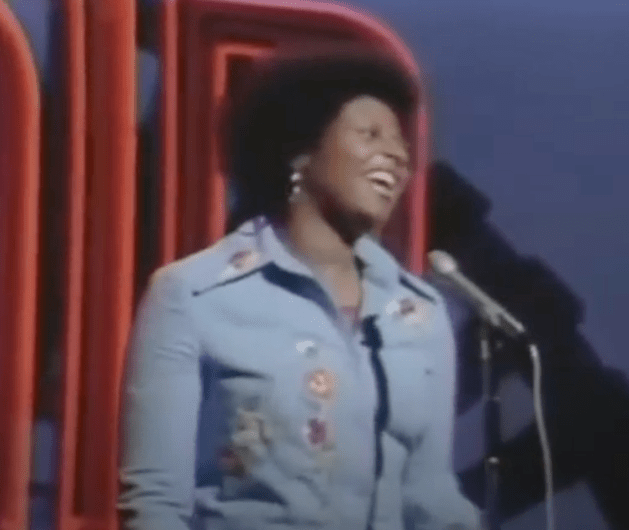
Barbara Mason “Another Man“ (single, 1983, included on Another Man, 1995; Philadelphia soul and r&b singer): Over thick slow funk basslines, lightened by surrounding technology, she identifies herself by name almost right away (“This is Barbara Mason”), though to be honest I’d already figured it out by then. She’s doing a followup to an earlier r&b hit: “Do you remember when I said she got the papers, and I got the man?” Well, surprise: “The man I took from her, is not the man we thought he was.” At which point, let’s not mince words here but hey this was more than 40 years ago, she gets somewhat unabashedly homophobic, stereotype-wise, about the gent she took away. “There’s another maaaaaaan, in my life… another man is loving mine…There was a little bit too much sugar, and you were too sweet.” Her spoken monologue parts — what used to be called “raps” when people like Millie Jackson and Shirley Brown and Isaac Hayes recited them before rap music happened — get layered atop each other. A simple soul bassline, wobbling and maybe electronic, propels it ahead. “You know, I start to notice a definite…. strangeness.” He’s changing his stripes. She buys a sexy new dress and it disappears from her closet. “I passed him on the step one day, and he was switchin’ (or ‘swishin’?) more than I was.” Glimpses him holding hands with an apparent boyfriend, sees him walking down Market Street (presumably in Philadelphia, where I guess there is or was a popular gay neighborhood — I’d forgotten that if so, though it sounds vaguely familiar.) His voice skips up and down the scale when he talks, not steady like if he was hetero apparently: “There must have been a defect, not when he was created, but somewhere along the line, somethin’ went wrong.” So she’s blaming nurture not nature, which is offensive. She makes the story compelling and (I’m sorry) amusing regardless, possibly establishing (unless there were precedents) a minor deep soul sub-sub-subgenre where women deal with male partners living on the down-low, later typified by Peggy Scott Adams’s “Bill” in the ’90s. I hope there weren’t too many other examples, though come to think of it I wouldn’t be surprised if a couple dated way back to the blues. I also wouldn’t be shocked if they had camp appeal to certain gay audiences; I can sense a direct line to deeper strains of Chicago house music, just a few years later. 7.5
George Benson “Turn Your Love Around“ (single and on The George Benson Collection, both 1981, later included on various best-of anthologies; Pittsburgh r&b/funk/soul/smooth jazz singer/ songwriter/gutiarist): Light disco funk, or ’80s post-disco “boogie” to be precise, bassline; the superlative smoove groove reminds me of something very specific from that era — Luther Vandross’s “Never Too Much,” maybe? The lyrics — “You got the love, you got the power” — and the singing remind me of Luther too. Such palpable warmth. “I remember when you used to be the talk of the town” (so I guess she’s not anymore?), then the chorus: “Turn your love arowwwnd /don’t you turn me dowwwwn/I can show you howwww,” all of which turns the music in the song around itself. Repeatedly, with effortless ease. The deflowering seduction aspects — “It’s time a girl became a woman/Every woman needs a man/I love the girl, I love the woman” — don’t come off creepy at all! Well, not to me anyway. Admittedly I’m not a girl somebody wants to deflower. If not post-Luther, then certainly post-Teddy Pendergrass. (Now watch it be somebody obvious.) 7.5

General M.D. Shirinda and Gaza Sisters “Mabazi” (from Nghena Shirinda, 1981, included on 2024 Strut compilation Kampire: A Dancefloor in Ndola; South African group backing “traditional shangaa sing (a male-female call-and-response style) with a synth-powered disco rhythm” [discogs]): What at first seems to be a rockabilly-bordering blues guitar reveals itself as more likely (or also?) African, albeit not far from “La Bamba.” Soon it falls into a deep, repetitive Afro-Caribbean groove, with multiplex-layered vocals. The rhythm is obsessive, downright inexorable. Lead vocal is high and nasal in the tradition of lots of African music; other vocals are tracked on top of each other, singing lines related to each other but not always exactly the same. Sometimes the backup chorus sounds clearly female; other times I’m not so sure. So many voices at once, like they’re all having a party — or parties, plural. Still, I have no idea how distinctive it might or might not be, within whatever its genre is. 7.5
Maximum Joy “Let It Take You There“ (from Station M.X.J.Y., 1982, and included on 2015 On-U Sound UK compilation Sherwood At The Controls Volume 1: 1979 – 1984; co-ed Bristol, UK post-punk band): Keening and clippity-clopping pachyderm horn and/or amphibian hellbender funk bassline comes in over a big echoing beat, bass imitating sax or vice versa, within seconds flashing me on something off Bowie’s Let’s Dance I think (when I stopped paying attention to him) — or maybe some other ’70s Britosaurus (Rod Stewart, Robert Palmer, Peter Gabriel?) going the new wave funk route. Then tons of dub echo (upon echo) ((upon echo)) (((upon echo))). So it’s dub funk, basically, before long taking the form of electromechanical handclaps with reams of reverberation trailing behind. Amorphous voices, high and presumably female and eventually proliferated, chatter in the mix, though not so you can reliably make out words — Once I thought I heard her whisper “it’s hot in here” or “it’s hope in here” or “it’s soap in here” or “it’s open here.” The drunken bulbous tuba or sax or bass equivalent resurfaces. Beats climb up and down spiral staircases, knock into each other then send each other flying off at odd angles like on a billiard table or pinball machine. Wound up way more instrumental — aimless, beginningless, endless – than I had originally expected. 7
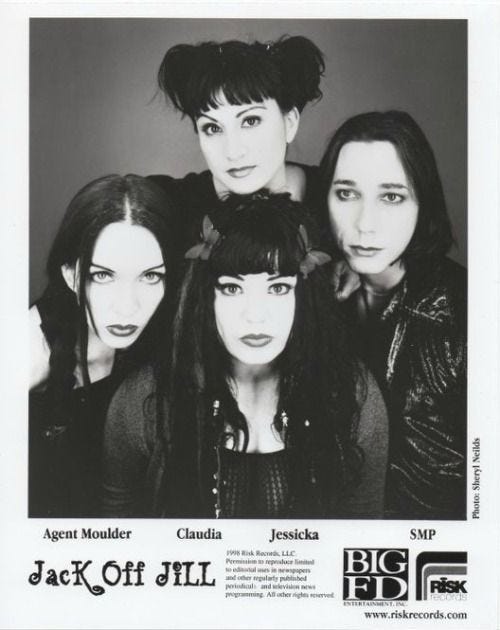
Jack Off Jill “Poor Impulse Control” (from Sexless Demons and Stars, 1997, Fort Lauderdale alt/goth/riot grrrl band, initially comprising four women, frequently an opening act for Marilyn Manson): Okay, at least this one sounds like a genuine self-contained band — well, at least a clattery drummer and billowing guitarist, and now a dreamlike woman singing. Could be all women of course. “Cover me with makeup”? (At first I thought “marigolds,” which I’d prefer.) “I envy your demise with all the guilt you hid away.” She is at least somewhat mushmouthed. “Seven hundred and fifty degrees…..it’s scorched, looks a lot like me.” She’s fairly demure as the kids say (probably meaning something different than I would) up to that point, but then she starts blasting, getting a little hot (750°F?) under the collar and tantrumy, as in “WAAAAAAGH!!” Almost projectile vomiting, so possibly Satanic. And there does seem to be an actual song here. 6.5
Twilight 22 “Street Love“ (single and from Twilight 22, both 1984; San Francisco electro-funk act): Again with the echoing beats and funk basslines. “When you’re walkin’ down the avenue at night, you’re runnin’ where the neon lights are briiiiight/you see that girl you know she’s the one, let’s have some fuuun.” Sounds organic and accessible, professional studio funk. Title, voiced by a man then answered in kind by women, is clearly “Street Love.” His desire is a brickhouse lettin’ it all hang out, a super freak you don’t take home to mother, a bad mama jama with body measurements perfect in every dimension: “34, 22, 35/Your body makes me come alive.” Sweeter than strawberries, and “skintight” (then a bass voice: “you know what I mean.”) Singer’s a clown, but his voice has push to it. A ways in, rock guitar and electro vocoder, plus at least one bench-pressed “hunnngggh!” interjection, approximate sonic variety. “She’s so freaky deke, I can feel her love comin’ down, I can never get enough. I hope and I pray that you don’t take my street love away.” Addressed to the vice squad, maybe. 6.5
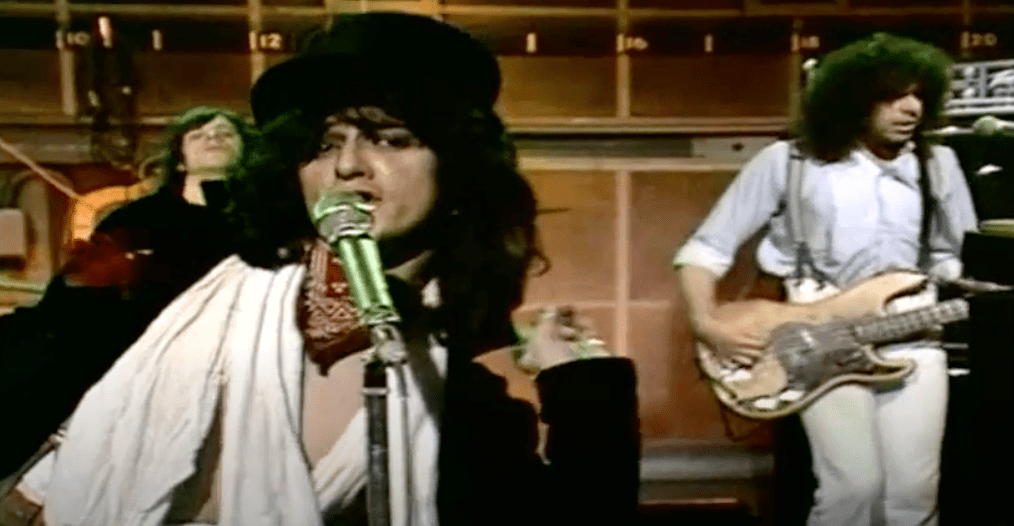
Heavy Metal Kids “Chelsea Kids“ ( single and from Kitsch, both 1977; London glam/hard rock band): Elton-like booger wooger ragtime’n’rolling of ivories, just a two-note pattern repeated fast, under halfway suspenseful rock guitar. Then turns into a true jam session, very hard charging. Vocal comes in, and he’s almost Geddy Lee high — or okay, maybe that Surkamp dude in Pavlov’s Dog. “White ice sniffin’ by sniffin’,” over and over again. Glam hard rock, with one pinky toe in prog — Heavy Metal Kids or Silverhead, say. “They play guitar like Russian roulette….Give me money you can do it again.” I gather “got girls who do better than that” is some kind of insult. Oh, seems to be called “Chelsea Girls,” which I think is a HM Kids song. Or maybe “Chelsea Kids.” About hoodlums and droogs and rapscallions causing trouble, no doubt. Then a little pinch of prog fanfare at the end. 7.5
Stavely Makepeace “Smokey Mountain Rhythm Revue“ (single, 1970, included on The Scrap Iron Rhythm Revue, 2004; 1969-’83 Coventry, UK band): Big drums, march beat, happy good-time pop vocal, hints of Vaudeville throwback. “Smokey Mountain rhythm and blues.” I’d place this in the mid ’70s UK, maybe not so much glam as Top of the Pops/Old Grey Whistle Stop pop — though if it’s Brit, shouldn’t it be more music hall than Vaudeville? I don’t really hear the former, at least not in this track, not that I’m an expert. Though I do have an untested and probably entirely wrong theory that Vaudeville merged music hall and minstrel shows like rock’n’roll would later merge country and blues. “Square dance to the band” — if it’s Brit, shouldn’t it be more contra or Morris dancing? A second, screechier, shriekier voice near the end. Silly and lightweight, but it’s well aware. 6.5
Manfred Mann Chapter Three “One Way Glass“ (from Manfred Mann Chapter Three, 1969; South African-born keyboardist Manfred Mann’s short-lived “British experimental jazz rock band” [Wikipedia] between Manfred Mann and Manfred Mann’s Earth Band): Dark drums, if drums can be dark, lure you in anxiously. Vocal is male but faletto- pitched and delicate. “Window is one way glass, to look at the world as people pass.” Five notes of horn fanfare, followed by louder honking. Maybe the former is a trombone and the later a sax? I dunno. Either way, horns are the lead voice; the flimsy little vocal is almost incidental. Again, maybe yet more eccentric mid ’70s Brit pop, though this time either earlier or later is possible. It’s not like much else I can think of. Could use more assertive singing, but interesting nonetheless. 7
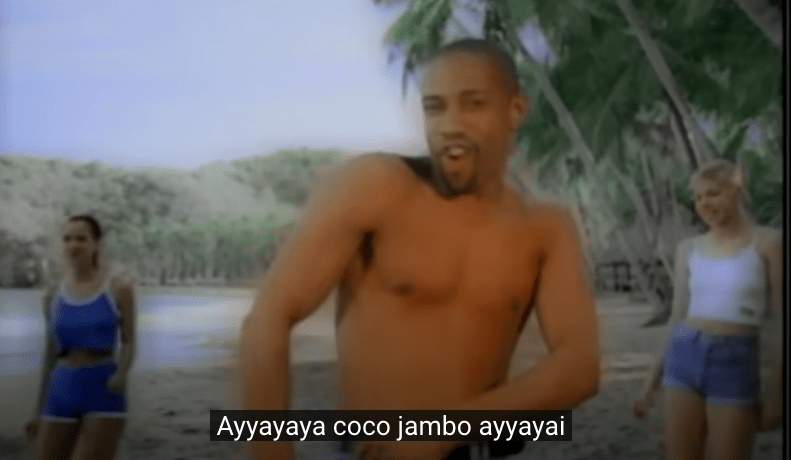
Mr. President “Coco Jamboo“ (single and from We See the Same Sun, both 1996, and on Mr. President, 1997; Eurodance trio from Bremen, Germany): Opening Swedish reggae notes presage “All That She Wants” by Ace of Base, so from the start I’ll say Europop, probably post-Boney M somehow…Oh wait, I know! Actually an Ace of Base contemporary (more or less) called Mr. President, “Eurodance” more than “Europop” if we have to split hairs, and this is their mid-level (at least in the U.S. — bigger elsewhere else I bet) pop hit “Coco Jamboo.” The house diva chorus yells “Put me up, put me down, put my feet back on the ground, put me up, fill my heart and make me happy.” Also there’s a fun and energetic if no doubt technically inept rapper similar to fellow from Snap’s “The Power.” His rap parts are pretty brief, but he also does a chant that goes “Ya ya yuh Coco Jamboo, ya ya yeeah.” Which I’m sure I took personally in the ’90s since my daughter Coco (aka Cordelia) was born in 1989; Thurston Moore and Kim Gordon had a daughter named Coco a few years after I did, and I always wondered whether something I wrote gave them the idea. (I doubt it, but you never know. They were definitely known to read my Village Voice reviews, at very least.) As for Mr. President, they repeat all the same elements over and over again, a few times — His chorus, her chorus, the rap. And there’s a smidgen of tropical feel, which probably just means they’re from a cold climate and wish they were from a hot one. Like the Jamaican bobsled team in reverse. 7.5
Autosalvage “Land Of Their Dreams“ (from Autosalvage, 1968; one-album NYC psychedelic rock band): Hippie experiments lead off — sustained electronic noise, a stab at psychedelia, a pinch of Middle Easternness. Then a mellow post-folkie sings way off key (and I never notice things like that.) He clumsily harmonizes with himself, like a wilted flower crushed by shoes. He tries to keep up with the mini classical section — “You’ll be lost without feeling,” but he’s the one who sounds lost. Some potentially interesting bits, especially early on, but this is a mess, and not in a good way. Like a pile of soggy random trash somebody left in the gutter. On a bright day, maybe. But still. 5
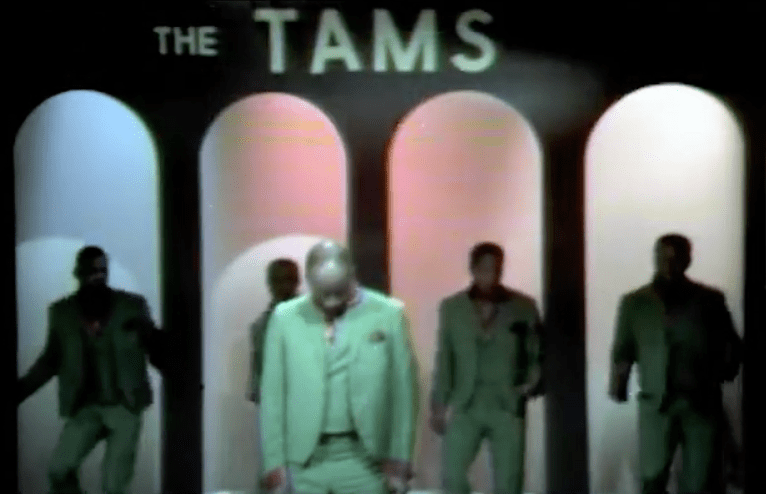
The Tams “Be Young, Be Foolish, Be Happy“ (single and from A Little More Soul, both 1968, then Be Young, Be Foolish, Be Happy, 1970, and The Best of the Tams, 1971; Atlanta soul/r&b vocal group): Atop soul horns a deep rough Southern r&b vocalist offers life advice to his youngers, as lighter, higher, airier group members back him up with “doo doo dooo dooo”s. Accomplishes that seemingly impossible early ’70s soul thing where it sounds amazingly sunny but overcast at the time. I expect whoever this is (Main Ingredient?) had bigger hits, but the lead singer’s excellent. “Same old story all over the world, girl meets boy and boy meets girl.” Slight, partly because it’s short. 7
Jesse Rae “The Lass That Made the Bed Tae Me“ (adaptation of Robert Burns poem included on The Best O’, 2012; St. Boswells, Scotland funk-pop singer who mostly recorded in the ’80s): Opening blared notes on ??? instrument somehow echo Parliament’s “Give Up the Funk (Tear the Roof Off the Sucker).” Then there’s what sounds like a little cartoon theme. Then a vocal, sounding more new wave, probably British, than any legit funkateer — my first and best thought is sometime George Clinton collaborator Thomas Dolby. Amid flatulent synthesizer notes, the horn or whatever keeps vamping that same P-Funk loop. “Winter’s winds were blowing cold, to the north I bent my way…” His vocal isn’t much, seems like art-rock. Which would make sense if it’s Dolby, who was about as prog as new wave came. Actually, this also reminds me a little of early Was (Not Was) without the punchlines and with a less arresting sense of rhythm. Something repetitive about drifting snow, and somebody making a bed for him — it’s like he’s reciting poetry more than singing . Really doesn’t go anywhere, and my mind wanders. “Interesting,” I guess. Though not really all that interesting. “The last that made the bed to me,” he keeps saying over and over. Could use somebody shouting “SCIENCE!!!” 6
A.R. & Machines “Come On, People” (from Die Grüne Reise – The Green Journey, 1971; Hamburg “Kraturock project of ex-The Rattles guitarist/vocalist Achim Reichel” [discogs]): Shuffling jungle bongo polyrhythms, deeply if distantly indebted to Bo Diddley (by way of Strangeloves/Bow Wow Wow Burundi beats maybe), with crashing synths or something — beating on the bongos like a chimpanzee as Dire Straits put it in one of their more colonialist if not racist moments. “Come on people, people come on” — That same phrase, chant, incantation, recited over and over, ad nauseam, sometimes with a “hey people people” added in for punctuation. Obviously more hippie ridiculousness, another nothing voice, and the beat doesn’t carry it; it seemed more useful before the guy started chanting. Probably some experimental collective, conceivably on ESP-Disk — Cromagnon or the Godz or Hapshash & the Coloured Coat. Perhaps designed to induce meditative trances. Possibly associated with an incestuous harem-like religious cult in a Pacific Northwest commune. 5.5
Barbara Mason “She’s Got the Papers (But I Got the Man)” (single, 1981, included on Another Man, 1995): “The story I’m going to tell you is very true, only the names have been changed to protect me and you” — wow, is this Barbara Mason again? “I know he may not be able to marry me, it’s going to cost him too much to be free.” A woman-to- woman phonecall in the Shirley Brown/Barbara Mandrell tradition, but it’s the mistress calling the spouse this time, and the sidepiece doesn’t know yet about his secret down-low identity. “I’ll let you be the one who’ll always have the papers on him, but I’ll be the one who’ll wind up with him in the end.” Catfight souI. I feel this in turn may have been the answer record to a Richard “Dimples” Fields track — and sure enough, she mentions “Dimples” in passing. Less strained than the followup above, and I like the smooth jazz (quiet storm, whatever) backing more, too. “Girl, he can’t help but call out my name” when he’s having sex at home. “I hope he don’t make a mistake and call you me!” Barb’s “never been in the position to give him any material things,” but she’s always on his mind because she gives him “what he wants, when he wants it — and that’s love.” It’s only partially addressed to the guy’s wife (who she calls Betty at one point — as in Wright I guess? Did soul divas have mock beefs then like rappers do now?), partially to ladies in the audience who she warns to take heed. For them, it’s a sermon about the law, and money, and who belongs to whom. What was the last soul soliloquy like this to hit it big? Not sure when Millie Jackson’s last one was. Maybe “The Rain” by Oran “Juice” Jones, or would something by R. Kelly count? (I hope not, but he was trapped in the closet.) Barbara sure does make a ton of excuses for the philandering cad. His wife bought him seven suits, and Barbara’s been seen with him in all seven, on seven different days, in seven different places. “I have his slippers, his bath robe.” She bumped into her rival in the drugstore “and everything was out of place…I didn’t get him by wearing no war paint on my face.” Comedy and tragedy in one. 8
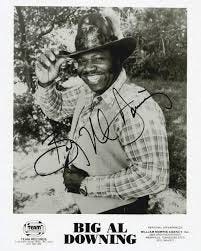
Big Al Downing “Bring It On Home“ (single, 1980, and from Big Al Downing, 1982; Oklahoma-born Black blues, country, disco, gospel, rockabilly and soul singer): Hard countryish honky tonk twang, and somebody drawling and sobbing like George Jones — “When you’re tired of all the cheating, and the lying things you do.” The bright lights and the barrooms and the backstreet rendezvous. Just bring it on hoe-woe-woe-woem, he’ll “take you back and love you one more time.” Appropriate followup to Barbara Mason, especially because I’m pretty certain this is the Black country singer (who also made rockabilly and disco records) Big Al Downing, who’s barely been mentioned in all the discussions I’ve read about country and race over the past few years. “In a lonely room where the neon lights shine through, when all of your tomorrows turn into yesterdays, and you walk the streets for money…” So apparently she’s a prostitute (see also the “Street Love” funk number a few songs up, or Bobby Bare’s “The Streets of Baltimore” several blindfold tests ago.) And Big Al’s a forsaken man, but he’ll be waiting there to take her back, whenever she’s ready. A decent sorry-for-self tears-in-beer weeper, if musically just an ordinary one. 6.5
Abwärts “Softly Softly” (from Amok Koma, 1980; Hamburg Neue Deutsche Welle band that provided two members to Einstürzende Neubatuen): Shivery jittery little twangings — pedal steel? Country jamming, regardless. Plus “Telstar”-ish satellite sparkles, except then the guy starts mouthing reggae-style “hey mon”s and something in what I’m pretty sure is a foreign tongue as the music transforms toward a simple ska/surf beat. Then “Softie Softie, hey hey hey!” — a group chant. Sometimes the lead voice gets nasal and he makes goofy grunt sounds for punctuation. Weird! Ends: “Hey, Softie Softie!” 6.5
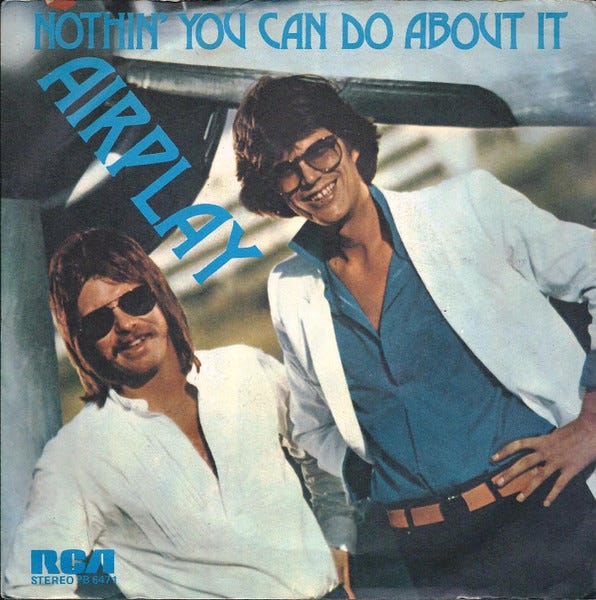
Airplay “Nothin’ You Can Do About It” (single and from Airplay, both 1980; L.A. AOR band): Horn bleats followed by keyboard evoking Earth, Wind and Fire’s version of the Beatles’ “Got to Get You Into My Life.” At least borderline yacht-rockish. Late ’70s or early ’80s. Singer wishes he was Donald Fagen. “Nothing you can do about it, relax enjoy the ride…Can’t you see we’re all the part of some eternal plan? So give up, give in….stop resisting.” Cleary a song about pre-determination triumphing over free will, with seduction (if not coercion) involved. Lie back and think of….Malibu? The musicians dealing all those delectable horn charts and buttery guitar licks are probably studio hotshots, the same ones who played on everybody else’s yacht rock hits. “It’s bigger than the both of us, we’re each other’s history.” So clearly he’s saying a love affair is inevitable. Could be more propulsive, and less repetitive, and I suppose maybe less rapey. Definitely tastes nice though. 6.5
Deepak Khazanchi feat. Asha Puthli “Bass Fire (On and On) (Turbotito & Ragz Remix)” (on 1992 Arishma UK compilation Snake Charmer [Gonna Bite You] and 2024 Naya Beat compilation Naya Beat Volume 2 [South Asian Dance And Electronic Music 1988-1994]; Kashmir-to-Uganda-to-UK bhangra and Indi-pop producer with Mumbai-born pop, jazz and dance singer): Semi-industrial funk with clacking beats and electronic hand claps. Sometimes I wonder if “Don’t Go” by Yazoo spawned its own global dance-music genre. An Indian, maybe even Bollywood, tinge to the vocals, confirmed by (or despite) the English-language lyrics: “On and on and on and on, let Kama Sutra guide you.” Multiple levels of driving polyrhythmic synthesizer lines augment the Yazoo-like ones. “Ancient love will guide you,” Ms. Kama Sutra goes on to promise, clearly aiming to come off both mystical and erotic. Piano does some early house music boogie woogie stuff and the rhythm grows louder and louder; in fact, the complex layering of female vocals and dance rhythms kinda remind me of the great Latin freestyle hits, even if this doesn’t quite pull my heartstrings the way great freestyle often did. And of course Latin music always had connections back to Asia, via the Mediterranean. 7.5
Prince Charles and the City Beat Band “Cold As Ice (N.Y.C. Blues)” (from Stone Killers, 1982; Boston electro-funk band): “Cool! As Ice!” But not Foreigner; it’s dense early ’80s electro funk, namely Prince Charles & the City Beat Band. At first I thought this was their song that went “Cash! Money! Doll-ar Bills! HUN-dred Dollar Bills!,” but nope, it’s about “melting in the heat, cause your loving is so sweet.” The stretched-out funk brag about being “cool!” is a close cousin to the 10-minute one on the Time’s debut LP from around the same era (presumably played entirely by that other Prince from Minnesota); pretty sure the Time came first. A guy with a lower voice interjects, several times in a row (and he does this a couple times in the course of the song) “love stinks! love stinks! love stinks!,” as in J. Geils. No disguising of influences here! “You say that I’m fickle, I’m a real ice-sickle” actually made me laugh, though I have no idea if they were trying to be funny or not. Noisy synth solo comes in (unless it’s a guitar or flute), along with Pac Man/Space Invader/Asteroids (no I’m not sure which) explosion effects, á la D.C. go-go bomb-droppers Trouble Funk in 1982. “I’m too cool, Baby Bubbah, I’m an icicle, too cool to be messin’ around” — The near-rap cadence there reminds me of yet another funk hit around then, Junie Morrison’s “Rappin’ About Rappin’” I think. Too cool to be funkin’ around, too cool to be pushed around. I’m told Prince Charles is now a music professor at Berklee. Wonder if his students know how cool (and derivative) he was. 7.5
Eliminated for Reasons of Space, 24 January 2025
via facebook:
Edd Hurt
“‘Cause in my case, we had spent the entire weekend together and there wasn’t no need for me to call,” I’ve always loved “She’s Got Papers.’ I don’t recall hearing Airplay anywhere. Maybe somebody played their version of “After the Love Is Gone”?
Chuck Eddy
That occurred to me too. But why does this song sound so familiar?
Edd Hurt
I heard it via Manhattan Transfer’s 1979 version which is pretty great Dan-meets-Brazil MOR.
Clifford Ocheltree
The Tams were BIG on the Carolina beach music scene until about 20 years ago. Always an excellent evening live. “What Kind Of Fool (Do You Think I Am)” made #9 on the Billboard charts in ’64. Their 1990 “15 Greatest Hits” on Ripete is one fine soul album.
Chuck Eddy
So, the beach music scene is almost entirely an oldies circuit, right? I tend to equate it with the “northern soul” scene in England, though I suspect that’s an imperfect analogy. Does it still even exist? And do (or did) any of the scene’s favorite acts ever record new records that hit with that crowd, or did they rely 100% on old stuff to shag to?
Clifford Ocheltree
Likely more than you desire to know. FYI note the first award, Joe Pope Pioneer Award. Pope was the lead vocalist of the Tams.
Chuck Eddy
Richard Nixon Award!!
Jesse Ciucco Velo
In this shitty world, there are people like you who still never fail to amaze. Gracias
Isn't the great Ring of Gold a story of the Another Man type? It's not nearly as explicit, but this always seemed a likely reading.