
Devil's Cigars in My Backyard

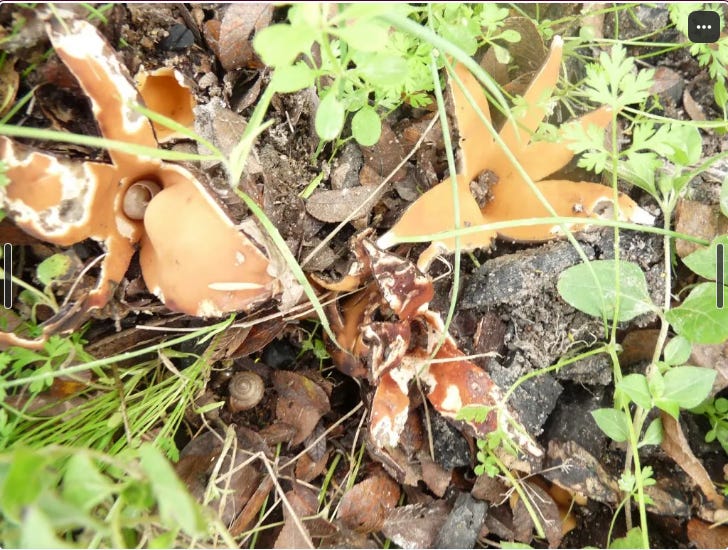
Texas star mushrooms, or devil’s cigars, or Chorioactis geaster— named Texas’s first-ever state fungus in June 2021 — are a species that has so far been discovered growing only in select parts of southern Japan (in the Myazaki prefecture on the island of Kyushu and then in 2006 in a Nara prefecture forest on main island Honshu) and select parts of (mostly Central, occasionally Northeastern) Texas (and as of 2017 Choctaw County in the southeastern corner of Oklahoma.) In my imagination these locales would be directly on the opposite side of the world from each other, thus indicating just one gigantic fungal organism extending in inverse directions from the center of the earth.
That’s obviously not quite the case, though the latitudes are comparable — we’re talking approximately 29.6477° to 33.9851° N and 95.5197° to 97.8722° W in the (duh) Western Hemisphere, 32.6036° N to 34.2976° N and 131.4413° to 135.8280° E in the East. But that the species’ two geographical homes are almost 7000 miles divergent is still remarkable if not miraculous. A 2004 Harvard DNA study concluded that the Texas and Kyushu populations forked off from each other some 19 million years ago, during the Budigalian stage of the early Miocine Epoch. Victoriapithecus macinnesi, a distant anthropoid ancestor of ours (or at least of old world monkeys) weighing a mere nine pounds, was still a couple million years from being born. So it’s not like spores just fell out of some tourist’s pocket.
For years and years Chorioactis was classified in the family Sarcosomataceae of the order Pezizales, i.e, “operculate cup-fungi.” But since 2008 phylogenetic testing has led to its re-taxonomication in Chorioactidaceae along with three other genuses: Desmazierella (“a frequent colonizer of pine needles” per Mycologia), Neournula (known in its pouchetii species for a “shape resembling a small urn” says A Field Guide to Western Mushrooms), and Wolfina (found but not terribly often collected from Ohio to Connecticut in its aurantiopsis variety with “solid flesh, a yellow upper surface that is only rarely orangish, and a decidedly hairy and woolly outer surface,” as mushroomexpert.com puts it.) According to the journal Mycological Research, “the six species recognized in these four genera all have limited geographical distributions in the northern hemisphere.”
If available literature is trustworthy, Chorioactis generally grows from the decomposing stumps and roots of dead cedar elm trees in Texas, and dead oaks in Japan, where it answers to the name kirinomitake (キリノミタケ). Scientists have had no success growing the Texas strain in laboratory conditions. I’ve talked to foragers who trample through woodsy areas in late autumn just to glimpse a specimen, in either its pre-bloom fat-and-bulbous cigar-poking-out-of-the-ground stage of development or its spewing-spores-all-over open-tentacle star phase. Or better still while cracking open, said to occur under dark of night.
But since moving to deep south Austin in 2015, I’ve been lucky enough to have said ‘shrooms within a minute’s walk from my backdoor three times — first time, I wondered if they were alien beings! This year, starting in late November, they’re in five different spots (which, for keeping-track purposes, I’ve filed under labels “rocks,” “pig,” “fire,” “studio” and “shed,” based on backyard landmarks near to each.)
I’m inclined to believe that each of these locations is more like what we’d think of as an appendage than a discrete individual; i.e., I have no doubt that they’re all somehow interconnected, down there feet if not miles below ground level somewhere. Mycelium’s holistic conjoined network ultimately approaches infinite. It’s not for nothing that Merlin Sheldrake named his fungus-exploring, allegedly international-best-selling 2021 winner of the Wainwright Prize for global conservation Entangled Life; sadly, Chorioactis gets zero index mentions in it. I’m even more shocked at their apparent absence from Susan and Van Metzler’s seemingly comprehensive, 350-page, University of Texas Press-published Texas Mushrooms: A Field Guide (1992 edition).
Why my own stars of Texas shine only every few years is another question; I’ve figured it might have something to do with optimum levels of temperature, precipitation and lack of sunlight. Sure enough, Forrest M. Mims, in a 2016 science column in Guadalupe County’s Seguin Gazette, posited that demonic stogies “appear during late fall and early winter only during relatively wet years,” so droughts are out. Likewise, Jorge Garcia, in the River Legacy Foundation of Arlington’s Nature Notes, 2018: “The devil’s cigar fruiting body usually appears between October and April since it prefers somewhat cooler and wetter weather.” A fairly wide window, so keep your eyes peeled!
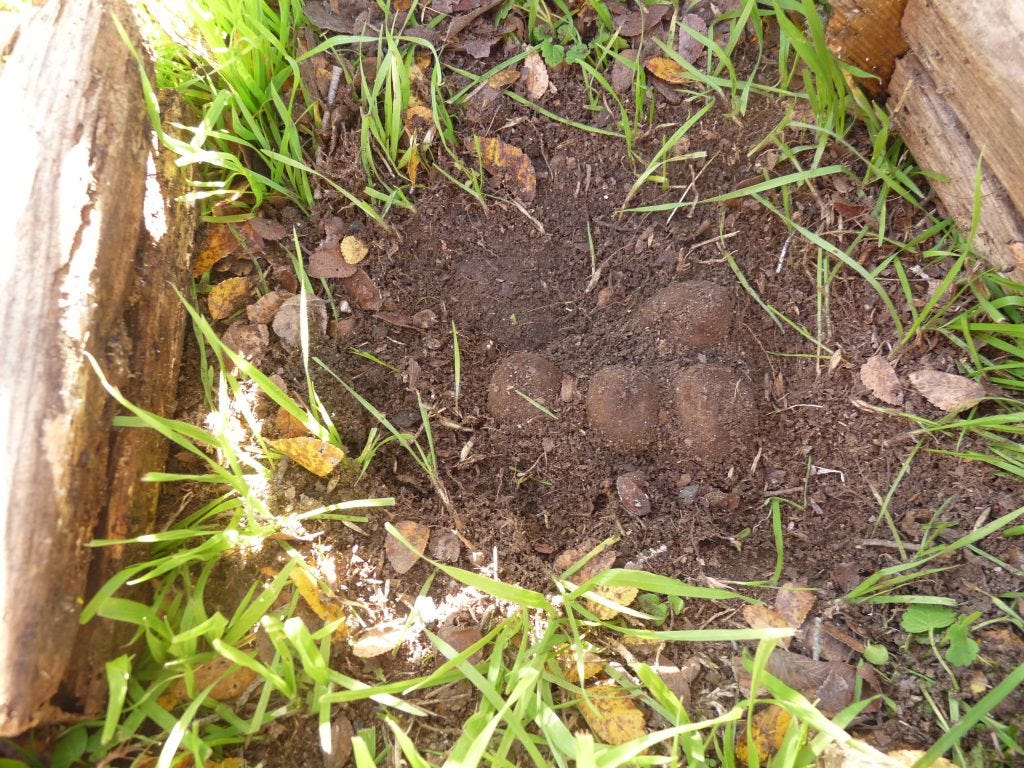
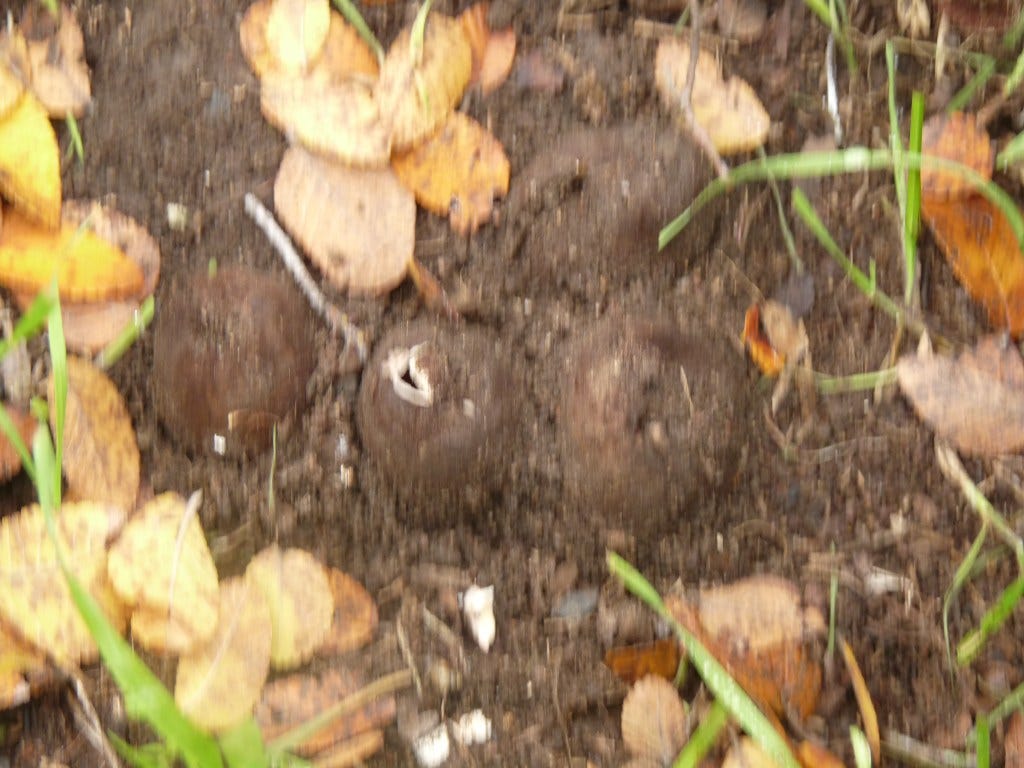
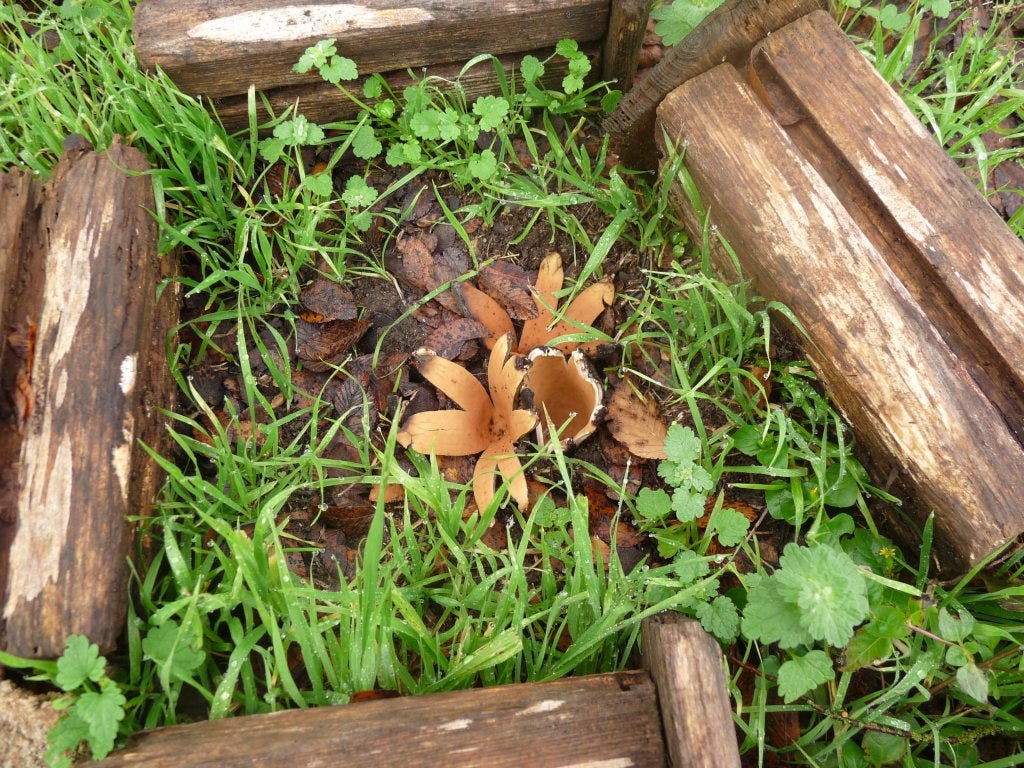
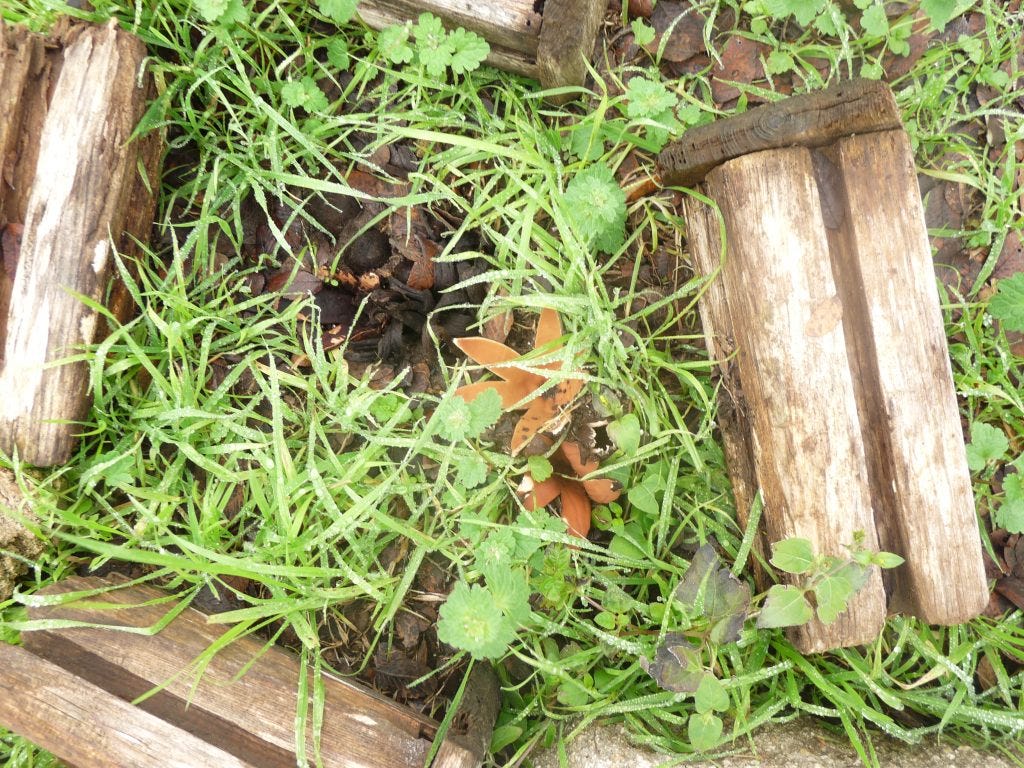
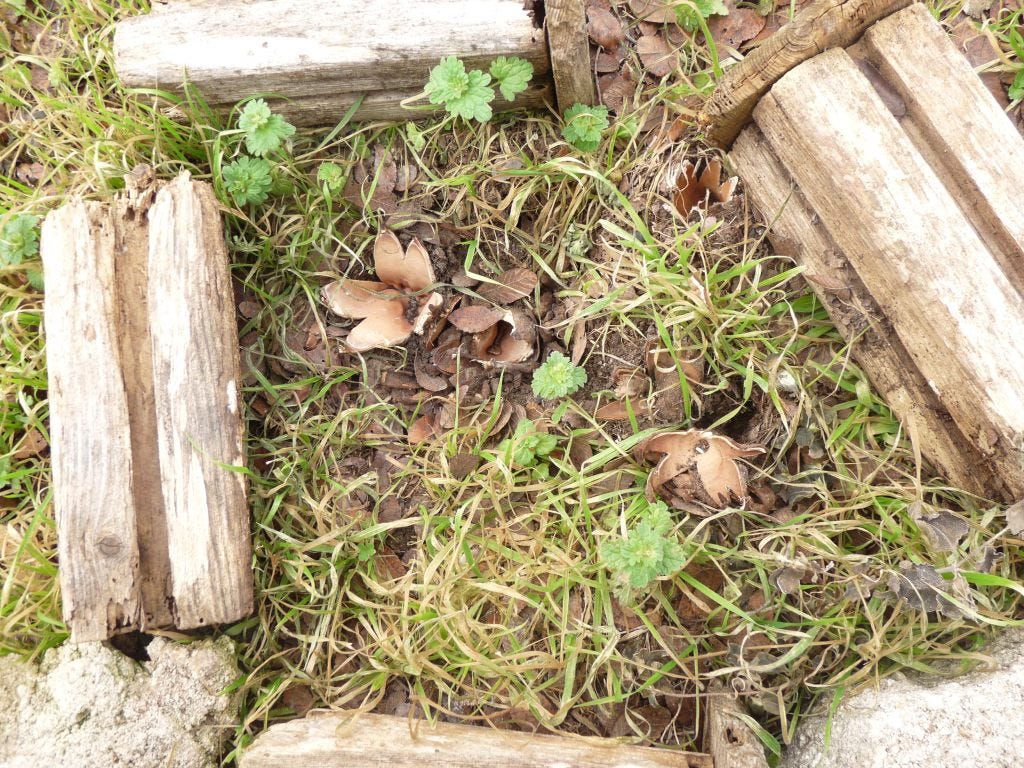
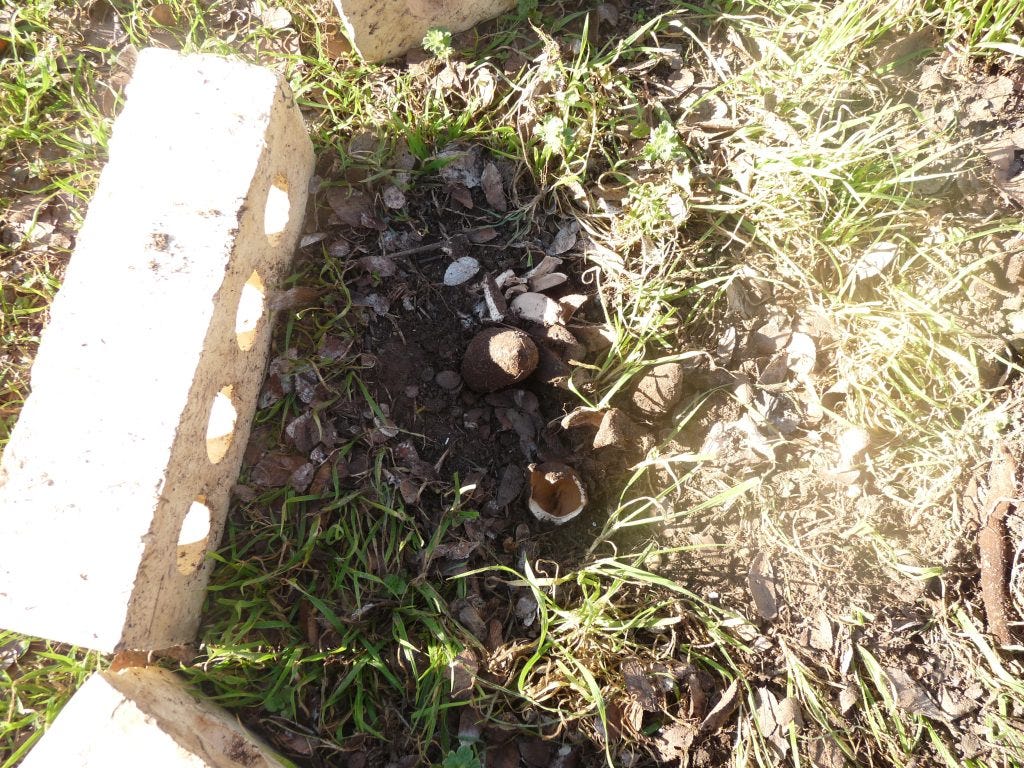
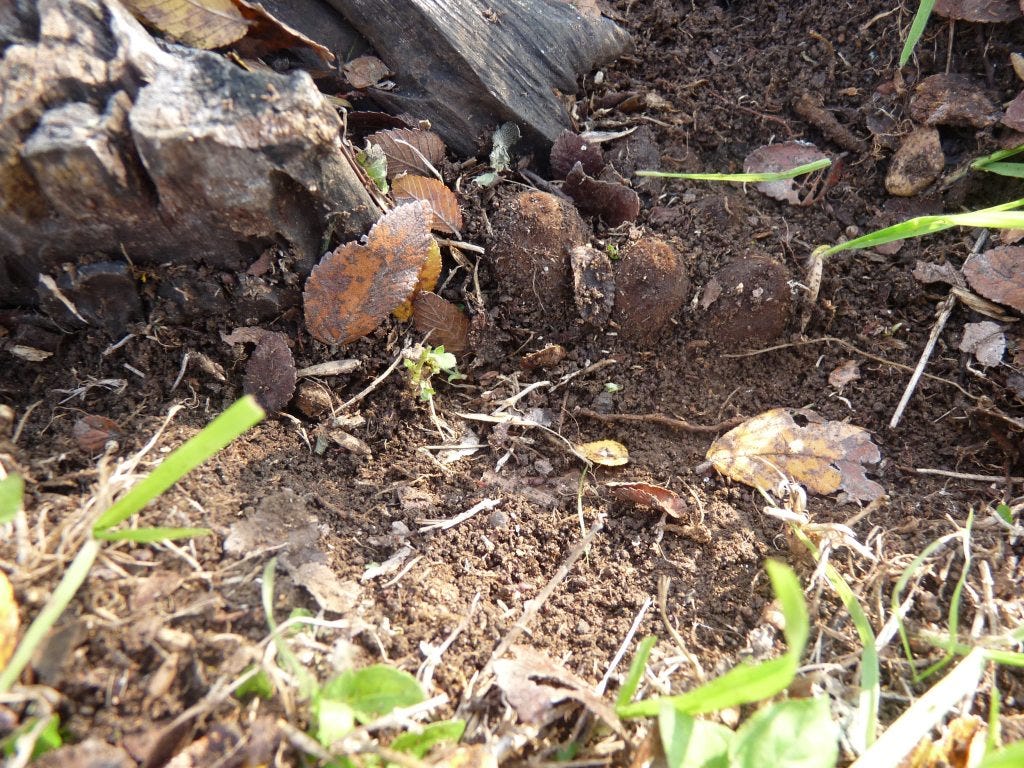
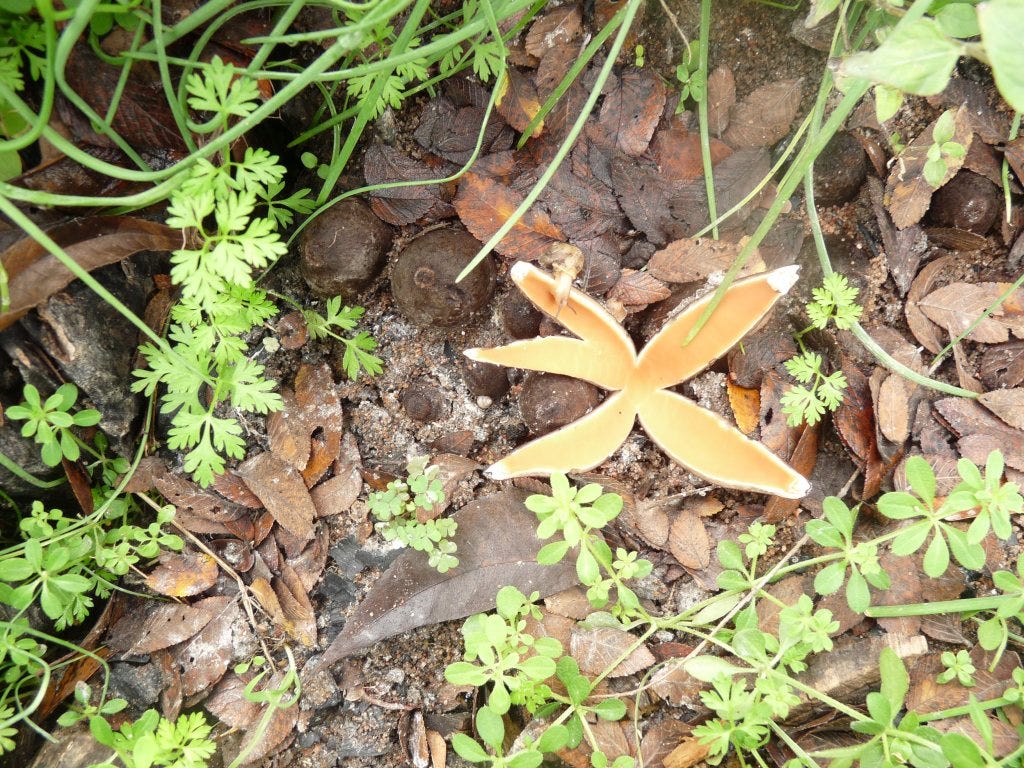
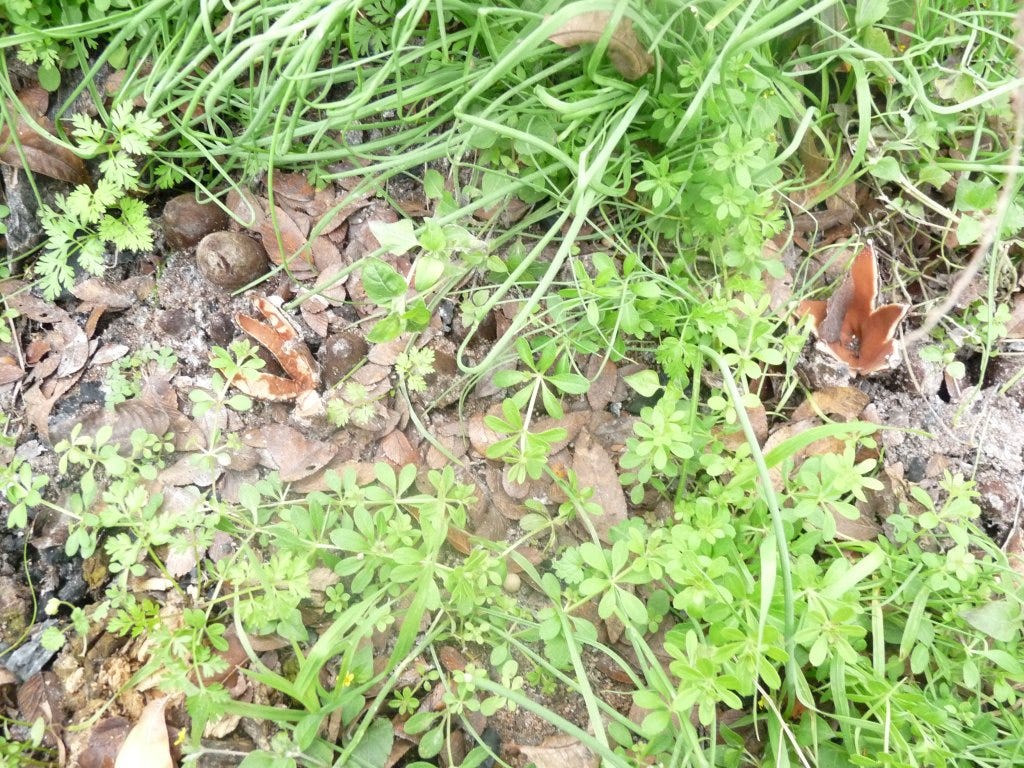
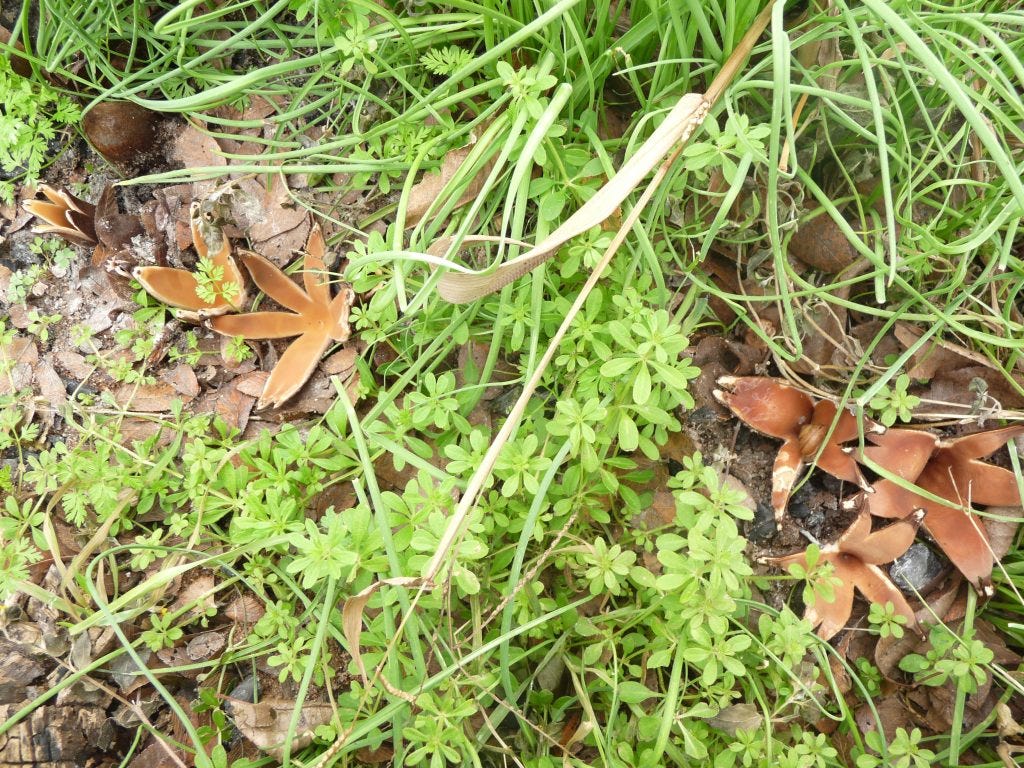
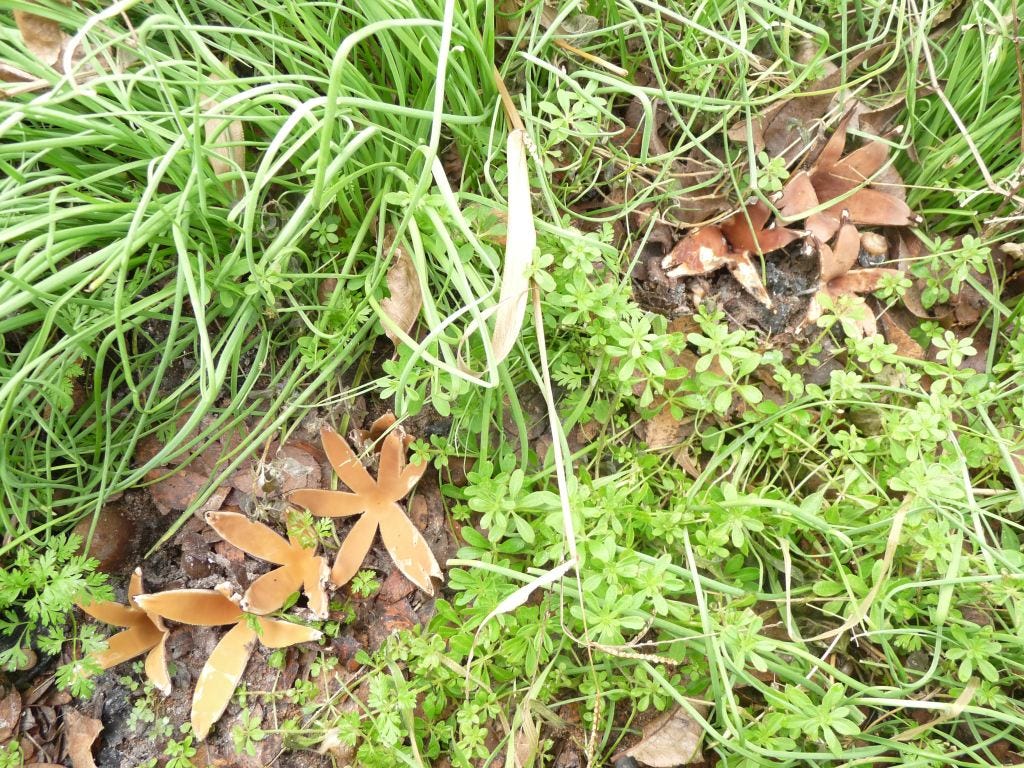
At any rate, the photos below aim to document, as near as possible, the life cycles of each individual fungal patch on my lawn. Not sure whether any lay person has done this before, but they sure did now.
PATCH 1 (near stepping path made out of rocks)
The only patch not on a visible stump — we surrounded it with wood blocks to mark its location — and seemingly one of the most fertile, both this season and the two previous years the fungus has shown up.
PATCH 2 (near decorative blue metal garden pig)
A meager litter off the corner of a small stump; new, as far as we know.
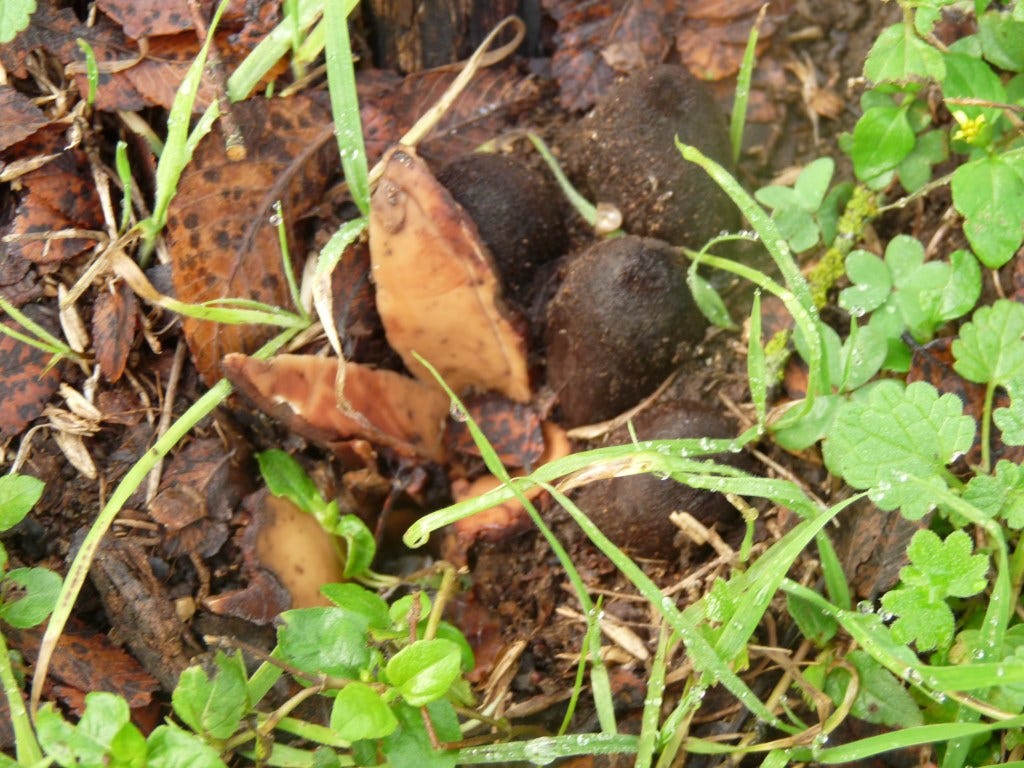
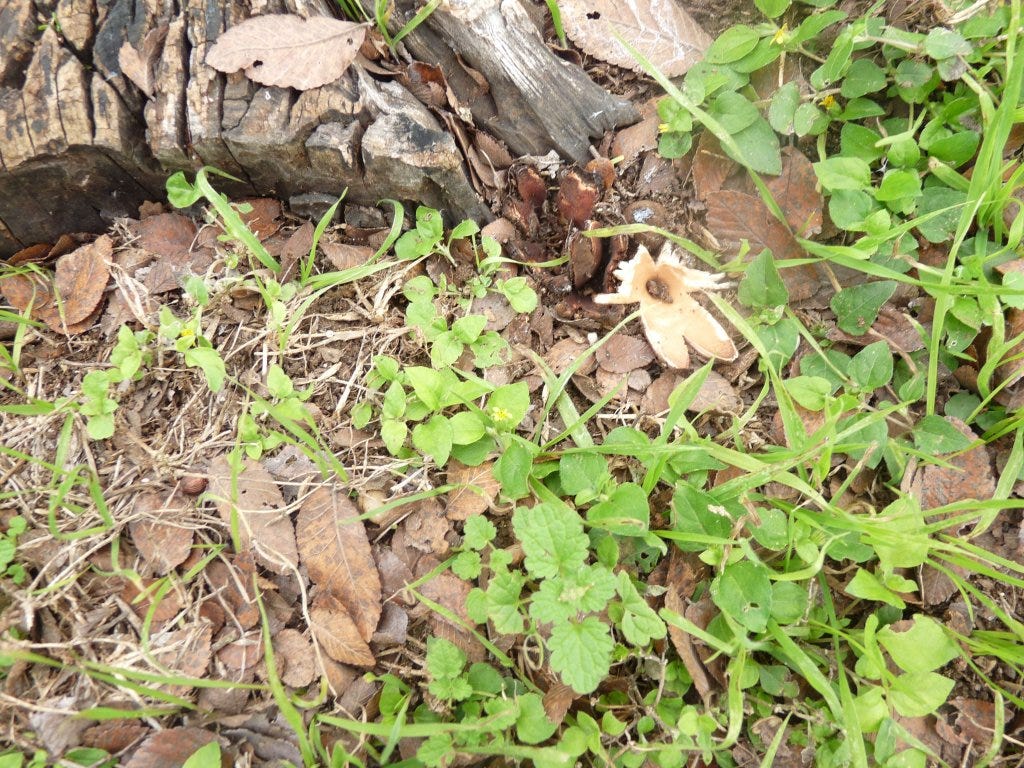
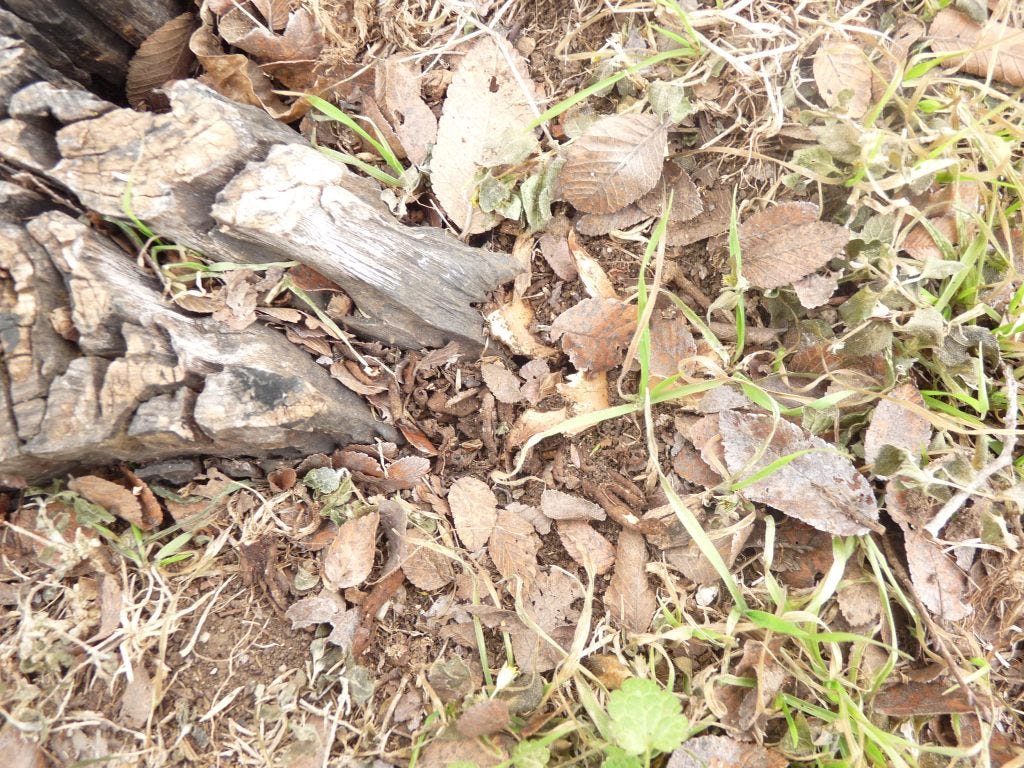
PATCH 3 (near area where we set up the firepit)
Surrounding a stump, and the first we noticed this year; they’ve grown in this location previously as well. But may have been damaged by somebody’s foot when we had friends over for a November bonfire.
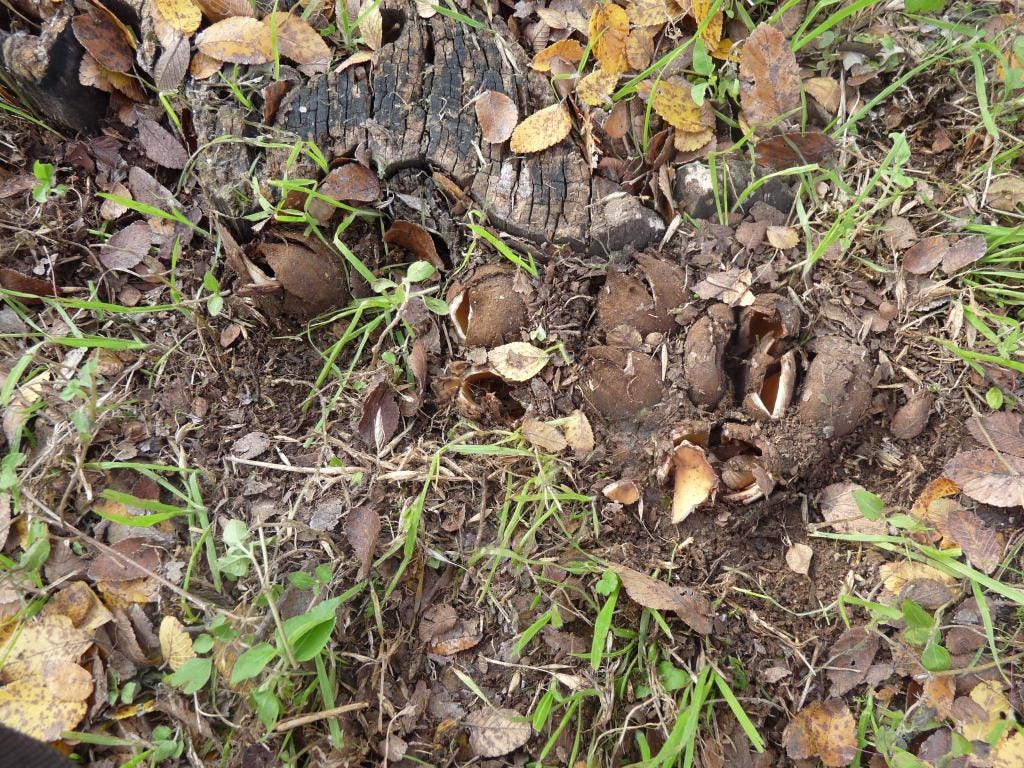
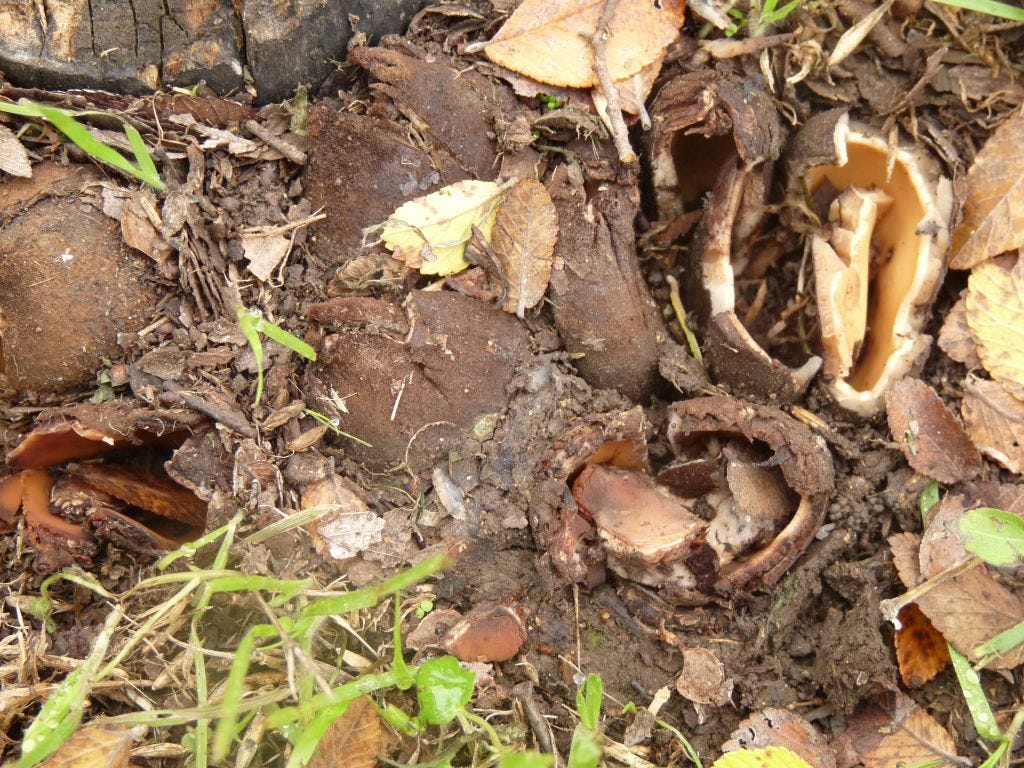
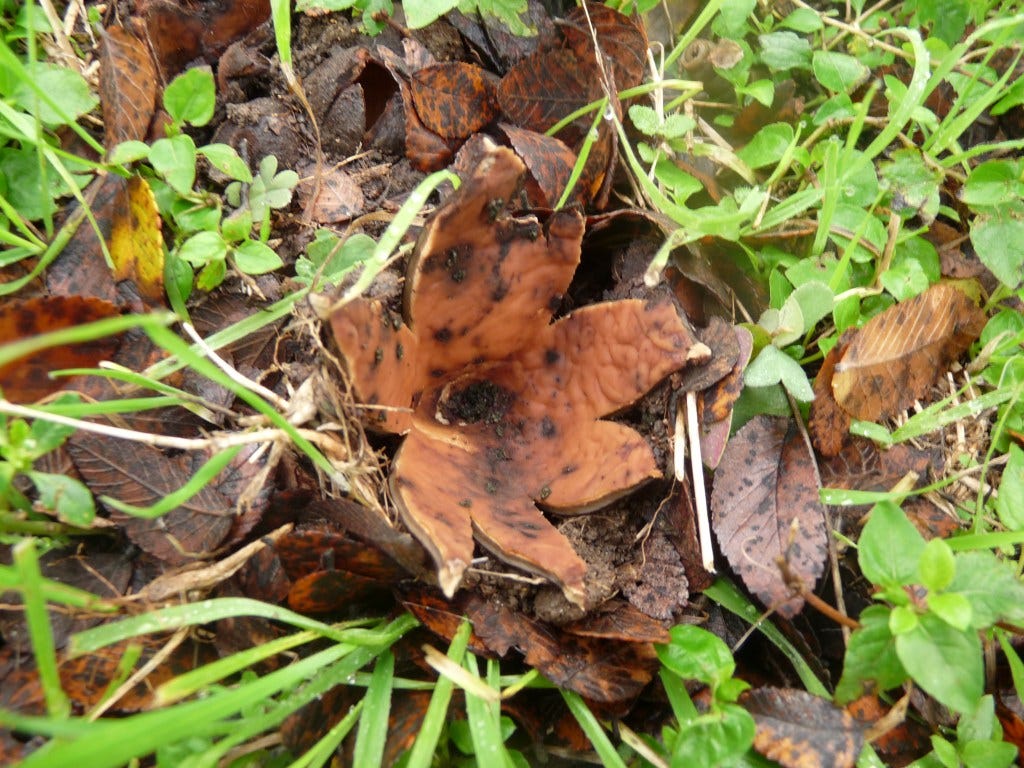
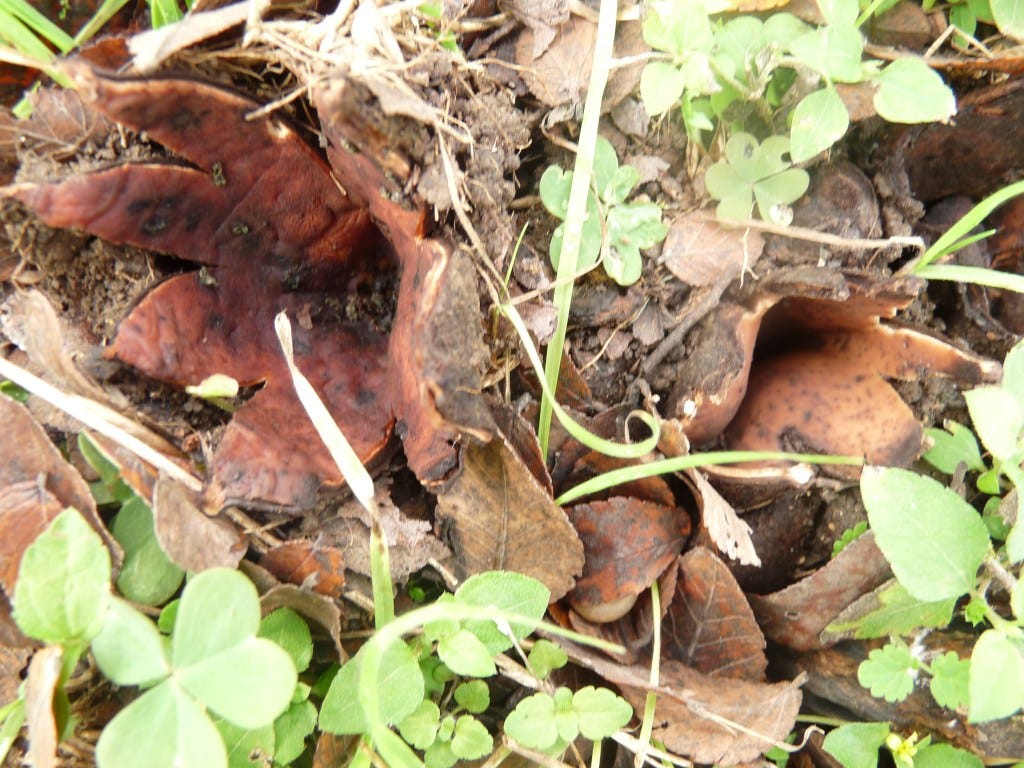
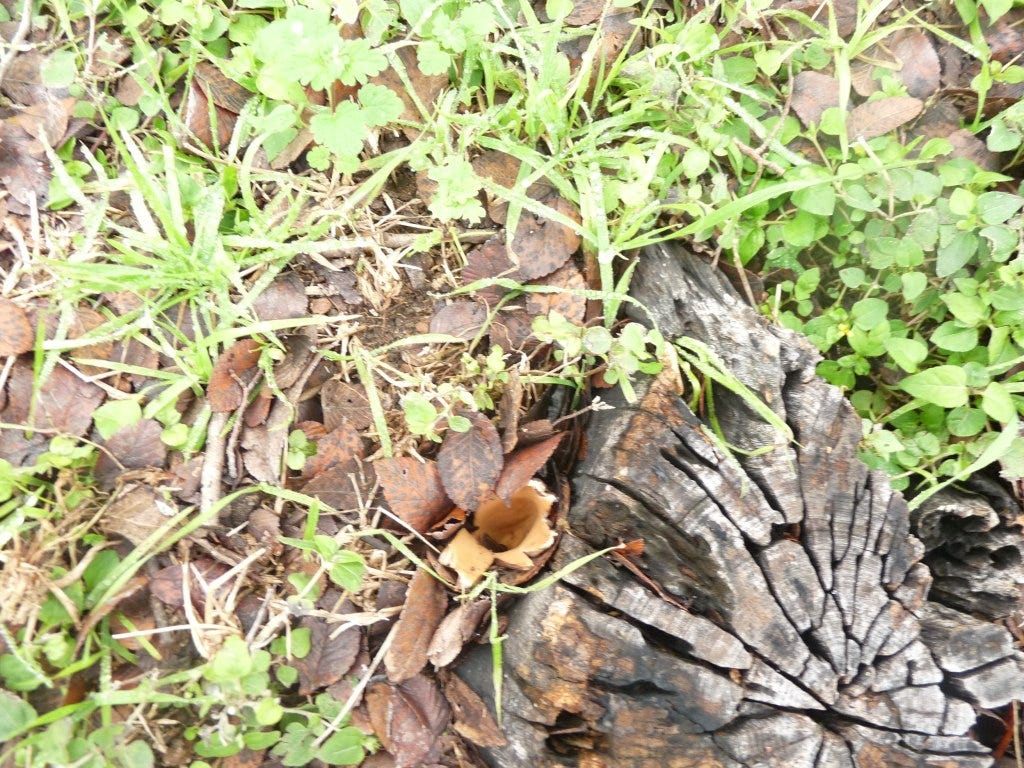
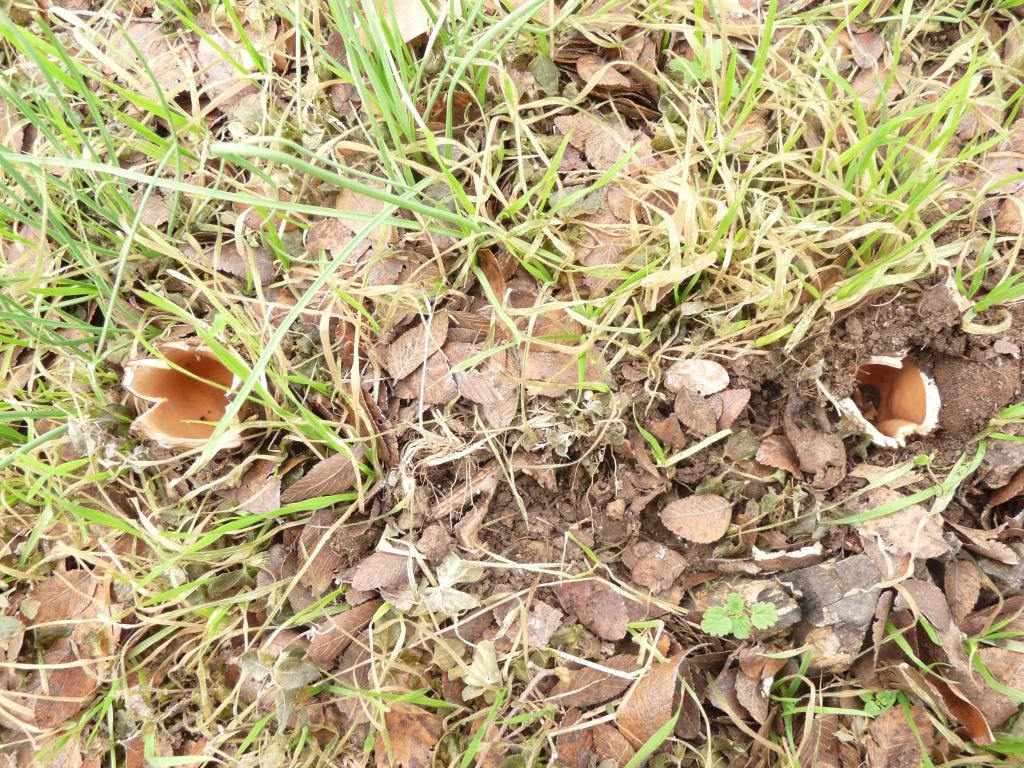
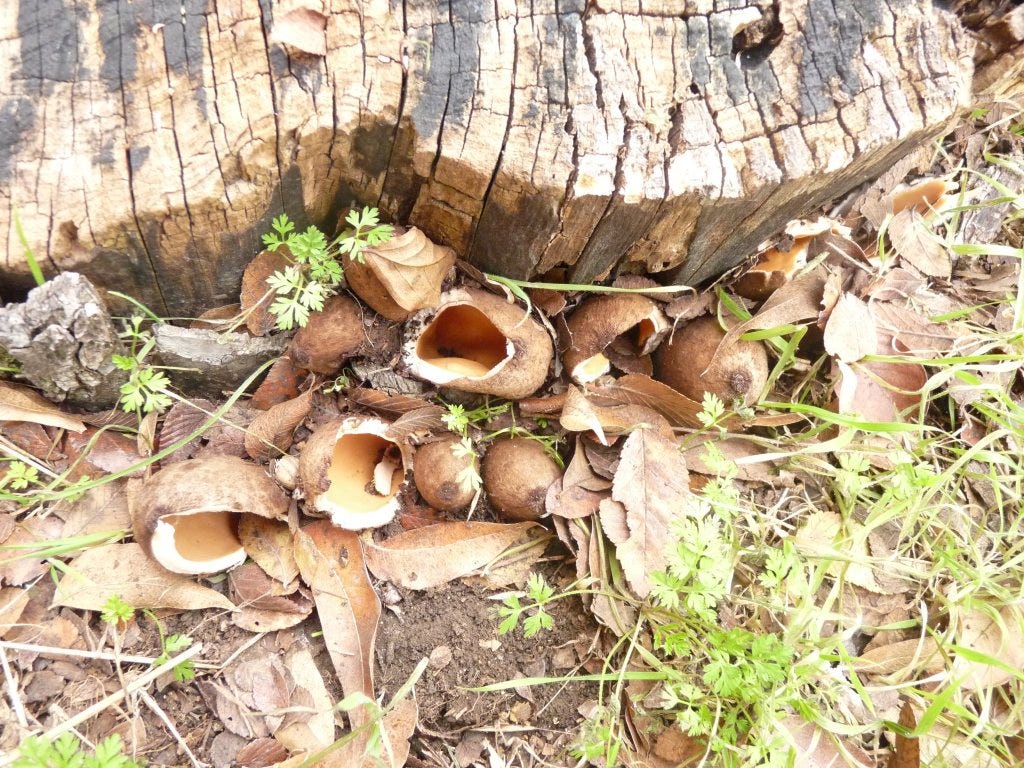
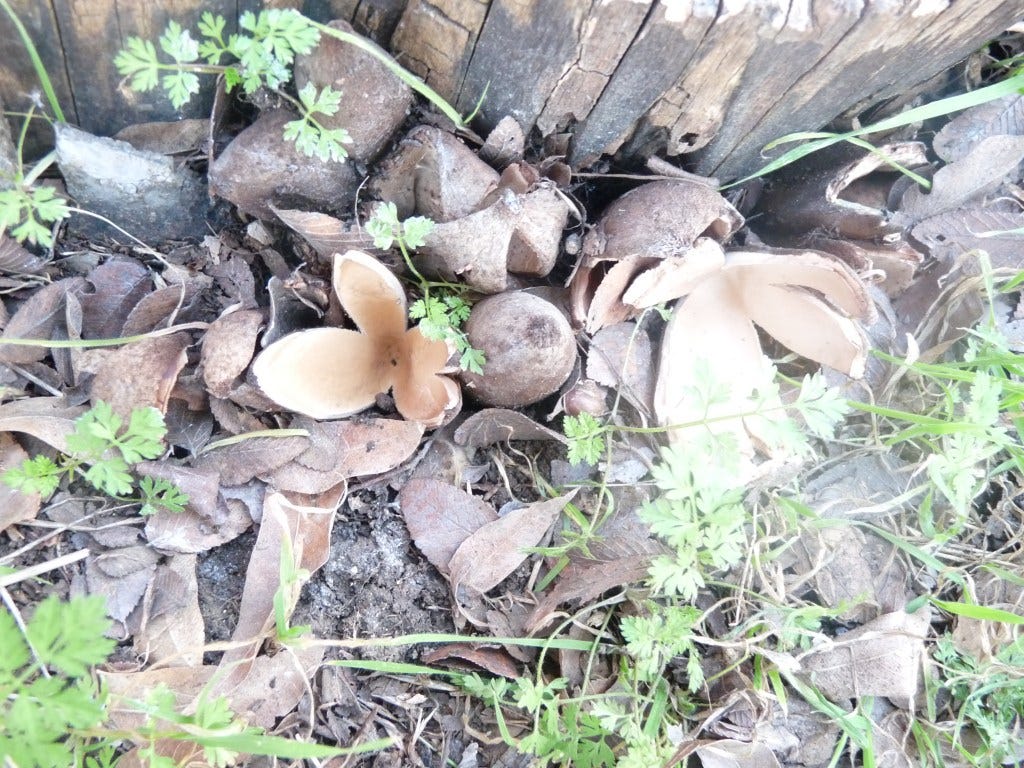
PATCH 4 (behind Lalena’s art and music studio)
Off one side of an old tree stump, long rotting with a hole in its center. Never noticed any here before, and by far the yard’s latest bloomers. I was starting to think they’d never open up, then December 30 came.
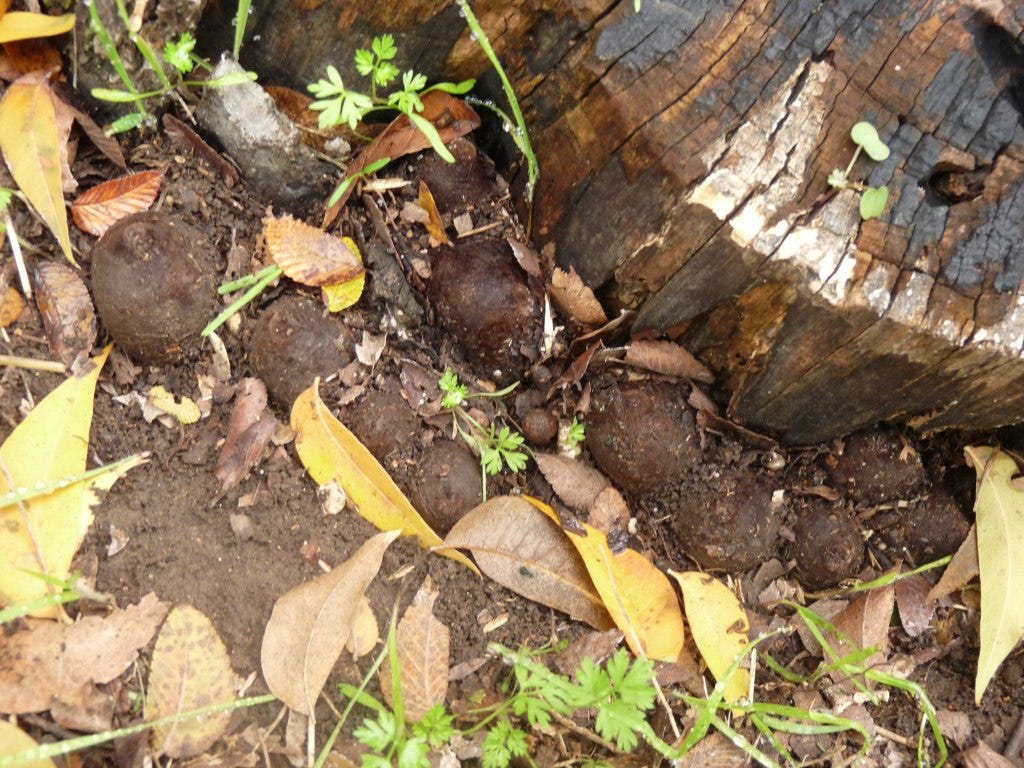
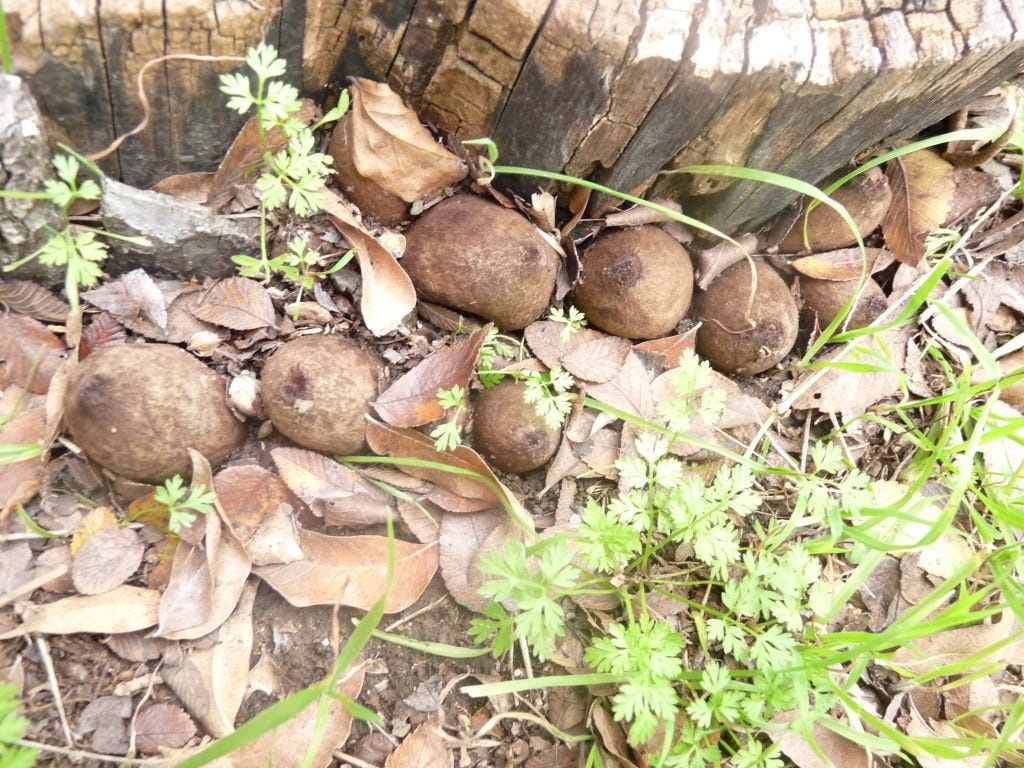
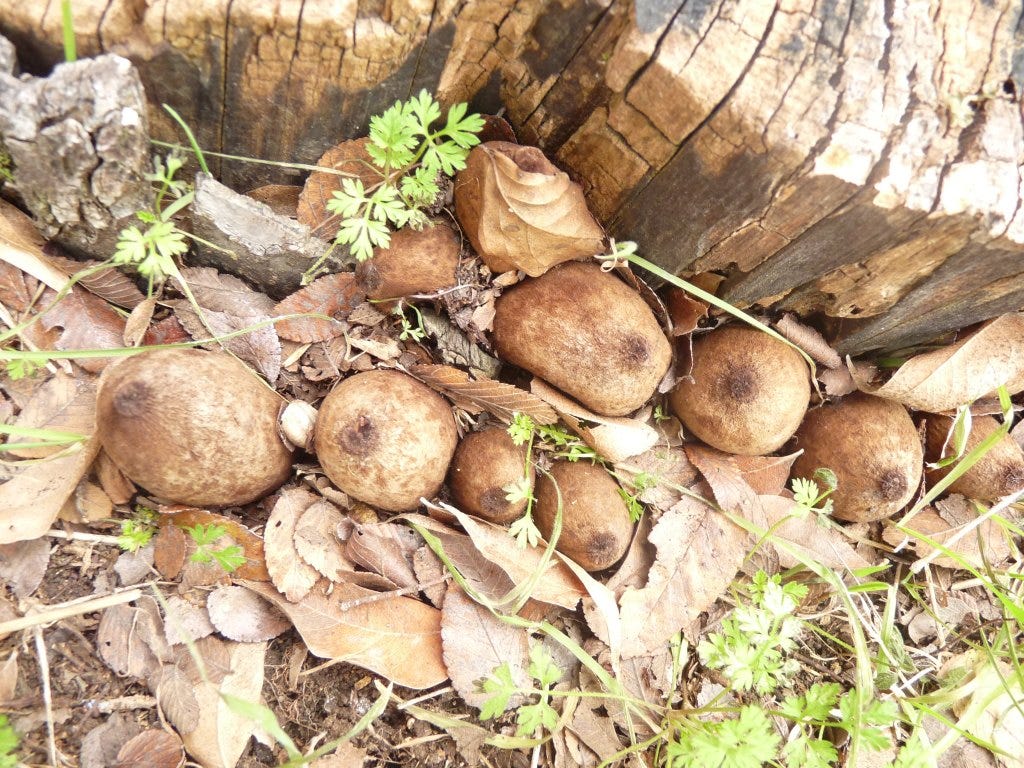
PATCH 5 (Near shed where the lawnmower resides)
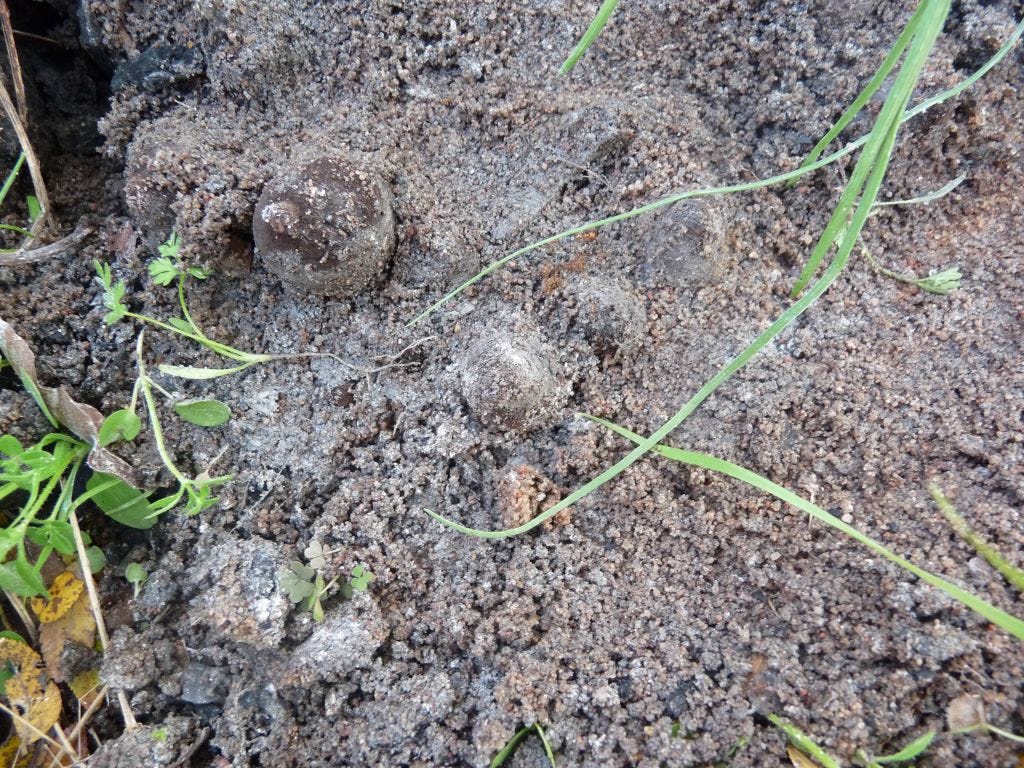
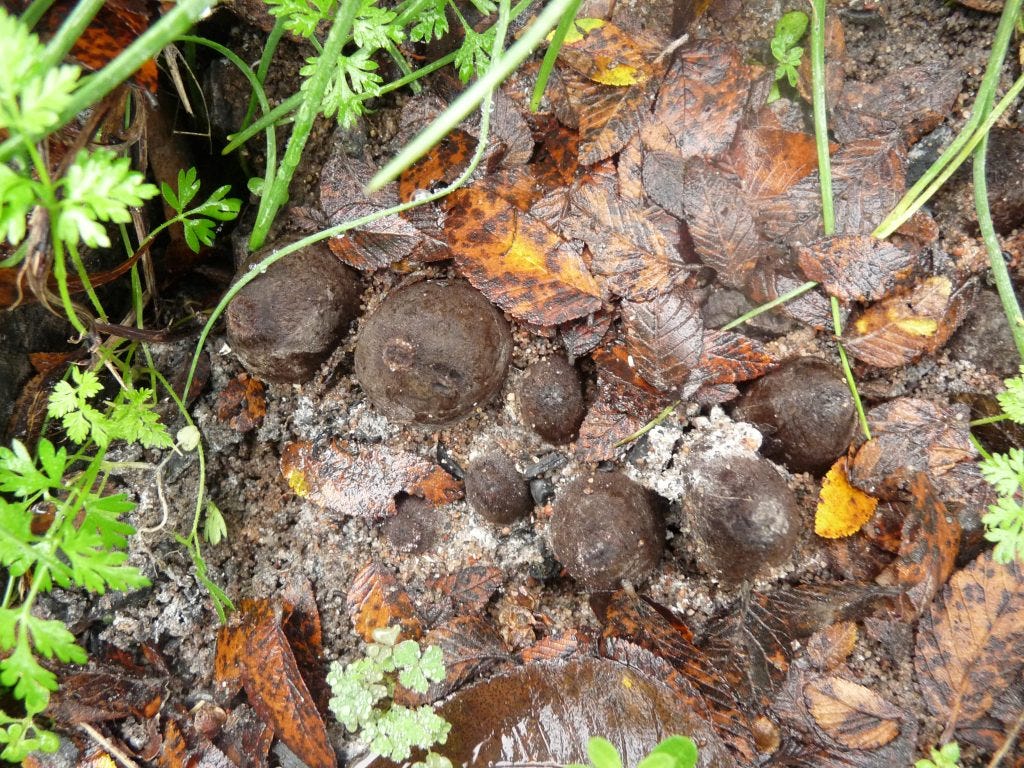
Easily the most abundant array, situated around an ancient stump and along a root extending from a still living (as far as we can tell) tree. Long a popular spot for other mushrooms, but not this kind before. Stars started sprouting up in three separate mini-patches, not always easy to tell apart after I photographed them but I did my best. In the past, as you might notice, I had dumped firepit ashes here to fill a hole.
Eliminated for Reasons of Space, 30 December 2022