
Contents Under Pressure
Blindfold Test #19

If anybody still out there can, off the top of their head, distinguish Jay & the Techniques (reviewed below) from Jay & the Americans from the Five Americans (namechecked below) from the American Breed — ’60s pop (-rock?) bands whose very real and in some cases substantial chart success came and went too early to register more than a blip in the annals of rock criticism or history — I salute you.
Between them, those four groups earn a grand total of one index entry in Rolling Stone‘s Illustrated History of Rock & Roll (Jay & Americans supposedly mentioned in the late Ed Ward’s Italo-American Rock chapter.) But when I go to page 162, damned if I can find even them. At least in Charlie Gillett’s The Sound of the City I see them on page 311.
Only other thing to add up here is that, had I known Kursaal Flyers were singin’ about slimmin’ not swimmin’ for the women, I would have mentioned Slapp Happy’s uncharacteristically goofy 1983 single “Everybody’s Slimmin’ (Even Men And Women.)” Coincidence??
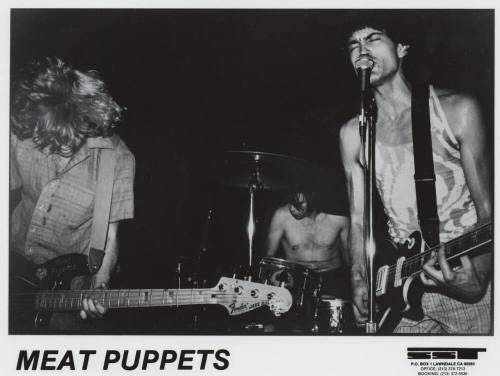
Meat Puppets “Big House” (from In a Car EP, 1981, and added to 2000 reissue of 1982’s Meat Puppets EP): Super crunchy, blurry shuffle, with rustic twanging trying hard to keep pace at slamdance tempo and pained vocals coated in Vaseline lost in the blur way back in the room. Very early Meat Puppets, when they were still basically a no wave band? Like one of those wooden 3-D puzzle cubes: How many odd noises tilted at crazy angles can you pack into a minute? 6.5.
Reddy Teddy “Shark in the Dark” (from Reddy Teddy, 1976; “Boston-based rock & roll band” [discogs]) Snotty Alice Cooper-like brat compares self to Robin Hood, hopes we don’t let him be misunderstood, over boogiefied guitars and an obligatory cowbell intermission. Could also be junior varsity Dolls or Mott — almost definitely from the post-glam/pre-punk mid ’70s, though the ’80s still had some bands (Hanoi Rocks for instance) who sounded kinda like this. City music, New York City probably. The chorus keeps starting upbeat, then wilting from the rain or air pollution or heroin. 6.5
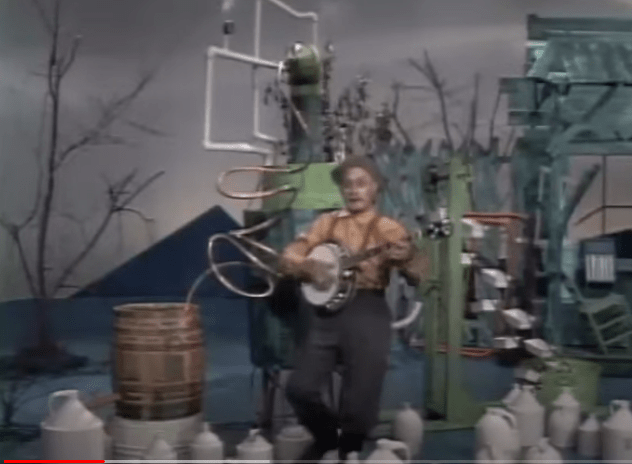
Grandpa Jones “Are You from Dixie“ (versions, some probably re-recorded, on Grandpa Jones Sings His Greatest Hits, 1958, Everybody’s Grandpa, 1967, Grandpa Jones Sings Hits From “Hee Haw”, 1969, and later collections; Niagara, Kentucky-born, later Ohio- and Arkansas-based bluegrass and old-time country banjo player and founding Hee Haw regular): Banjo strumming, almost Vaudeville, but the guy’s reminiscing about Dixie where fields of cotton beckon to him. Questionable minstrel-show yuck-it-up census taker querying if we’re from Aller-bamm or Care-oh-line, anywhere below the Mason-Dixon Line, I guess to make sure we’re on the right team. Vocal suggests a rocker trying (satirically?) to be a hillbilly, summoning nostalgia for “way back in ’89,” presumably the 19th Century one, which would still means post-bellum rather than ante- — years after Reconstruction ended, in fact. I suspect the song’s been around almost that long itself. Still, speedy and seemingly tossed off; maybe recorded live. 6.5
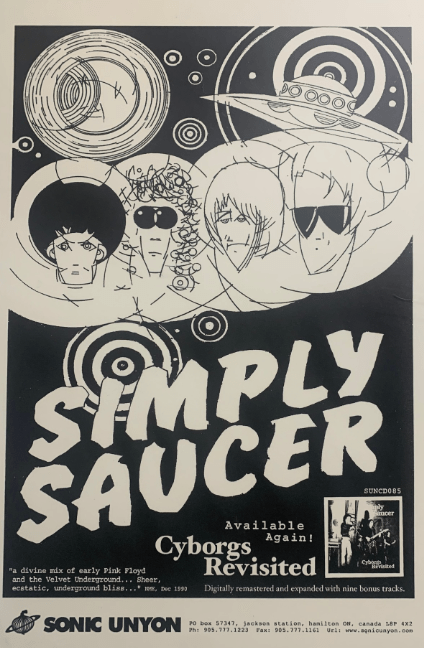
Simply Saucer “Here Come the Cyborgs Pt. I“ (1974 recording included on 1989 archival reissue Cyborgs Revisited; Hamilton, Ontario psychedelic proto-punk band): Oscillating electronics into a huge catchy hard rock riff, then chaotic noise and a likably unschooled vocal, intentionally ill-produced. The guitar is never again as clear as when it started, though the boogie does eventually return to an extent you wouldn’t expect in punk rock; eventually it’s a full-blown jam that doesn’t particularly go anywhere but comes as a surprise regardless. I’m thinking maybe somebody in the vicinity of the Pink Fairies. 6.5
Roni Griffith “Desire“ (single, 1981, and on Roni Griffith, 1982; Bobby Orlando-produced Birmingham, Alabama Hi-NRG disco singer and former Kid Creoled Coconut): Electronic beats and a lovely melody, somewhere between new wave dance and Italo disco. Cute girlie answered by breathier, more consciously sexy mature woman who rhymes “fiiire” with “desiiire,” promising to make me a man like Lola did to Ray Davies. Though actually I prefer the instrumental parts to the vocal. I hear two distinct synths, one each for pulse and tune, the latter of which winds around your fork like spaghetti. 7
Dave Barker & the Upsetters “Conqueror Version 3 (a/k/a Upsetting Station) ” (single, 1970, collected on Double Barrel [The Best Of Dave And Ansel Collins], 2002 and expanded 2006 reissue of 1970’s Dave Parker Meets the Upsetters; vocal half of Jamaican reggae duo Dave & Ansel Collins with the house band for dub pioneer Lee Perry’s recording studio): “This is the upsetting station recording,” a radio DJ seems to announce, “the number one station.” The singer repeatedly references the title of the Temptations’ “Runaway Child, Running Wild”; he sings super-sweet and soulful early reggae, not quite falsetto but the next step down, periodically chanting “uh-topp-uh-topp towwww,” squawking or squealing higher and louder as things progress. Dave and Ansel Collins, of “Double Barrel” fame, where they toasted the call letters “W-O-O-O”? Probably too slow, though, for ska or bluebeat. Open windows in the mix hint at dub without quite being dub per sé. Somehow it feels like an alternate version, a tentative B-side — which is what dubs often were. 7
Grauzone “Maikäfer Flieg“ (from Grauzone, 1981; “Neue Deutsche Welle/post punk band” from “Bern, in the German speaking part of Switzerland” [ discogs]): Factory machines open and close like pistons, a drill press, an oil derrick, or at least how those sound in my head. Above this repetitive effect, the volume of a funereal melody gradually increases. Incoherent voices mumble an incantation: “Obi-waan this Afree-kaan.” Voices get shuffled and obscured in the studio, even backwards masked, and subjected to dub-like reverb and echo. 6
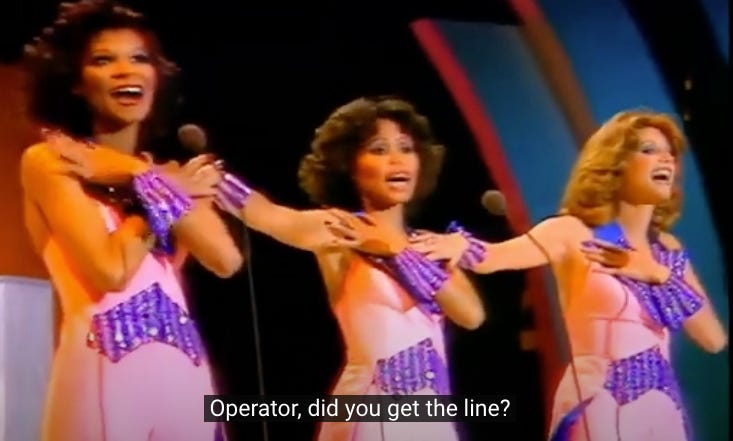
Silver Convention “Telegram” (single and on Summernights aka Golden Girls, 1977, and Best of Silver Convention, 1978, and other anthologies; Munich Eurodisco act vocalized by shifting trios of women and produced by Sylvester Levy and Michael Kunze): Happy ’70s soul bounce and winsome Abba-style Europop melody. “Stop! Dit dit datt datt dit….” — Morse Code, like in the Five Americans’ “Western Union” because they’re sending a telegram, which lyrics soon confirm. “Tonight he’ll be on his way, tomorrow he’ll be here to stay…I can’t wait another day.” It’s Silver Convention, a couple years after “Fly Robin Fly” and “Get Up and Boogie,” speaking English in German accents. So deciphering what they dictate to the operator isn’t always easy. 7.5
Washboard Wonders “Feather Your Nest” (78-rpm single B-side, 1936, collected on Washboard Wonders, 2009, under the artist name Dick Hartman’s Tennessee Ramblers; alter ego of mandolinist/singer/ bandleader Hartman’s Charlotte, NC via Rochester, NY/Pittsbugh country novelty/string/Western Swing band, also aka Hartman’s Heart Breakers): An old-timey hillbilly hoedown — or maybe a jug band, except maybe the jug is a kazoo. “Play your fiddle!!,” the hog caller instructs. “Let’s go boys!!” At which point the combo takes over, dancing in cowboy boots while they play their instruments, without missing a beat. Scratchy and underproduced, maybe even on purpose, and it ends with silly whoopee cushion or joy buzzer honks you’d expect from the Hoosier Hotshots or Spike Jones or Harpo Marx. 7.5
Thomas Leer “Gulf Stream“ (from Contradictions and Letter From America/4 Movements, both 1982; “minimal wave/synth-pop” [Wikipedia] artist from Port Glasgow, Scotland): A junior high science fair project comprising slow mysterious electronic sounds heading in different directions. I’m not quite sure what variables are being tested and presumably graphed. A Middle Eastern guitar (or possibly sitar) line winds through a rather woozy semi-instrumental, the vocals (“threethreethreethreethree….”) mostly seeming to be tapes randomly added in from somewhere else, as are sundry sonics driving in reverse gear or viewed through the looking glass. Does go on rather long, though I don’t expect that’d bother me much if I was reading or writing with it in the background. No discernible structure or narrative arc, but martial drums do briefly serve as “ending” punctuation. 6.5
Isotope “Crunch Cake“ (from Deep End, 1976; UK jazz-rock fusion band): Braniac underwater art-funk, maybe played by a jazz band or a jazz-punk ensemble like Material, rhythm section lurching through a recurrent motif. Another instrumental, possibly deserving the adjective “harmolodic” and definitely schooled by early ’70s Miles Davis. Some instruments seem electronic, but I’m more sure of an extremely plump bassline, drums stumbling ahead, occasional piano tinkling through. 7
Steve Miller Band “Gangster of Love“ (from Sailor, 1968, then The Best of the Steve Miller Band, 1970, and several subsequent anthologies): Some fella mumbling about being “a gangster, a gangster of love” — talking not singing, which I suppose makes this proto-gangsta rap even if the words don’t rhyme. Reminds me of George Thorogood’s spiel in “One Bourbon, One Scotch, One Beer,” though this is more likely early Steve Miller — and as a matter of fact, he just called himself “Stevie Git-tar Miller.” Plus of course in “The Joker” he said people call him the gangster of love, and presumably this song is the reason why. When he’s done chatting, he chuckles. 6
White Boy and the Average Rat Band “Maybe I’m a Fool” (from White Boy and the Average Rat Band, 1980; hard rock/heavy metal band from Toledo, Ohio via Richlands, Virginia) Much heavier, louder, more brutal, and just downright noisier, constructed around the kind of USDA prime guitar riff that’d sound fantastic even if it didn’t have a song attached. Accompanied here by a vocal that growls through the gravel like Jim Dandy Mangrum: “Baby I’m a foooool, and baby you are tooooooo, yeah.” First I thought Simon Stokes, then I decided on Edgar Broughton Band. Fast dirty hard rock, regardless; a psychedelic kind of proto-punk based around a post-Hendrix/Sabbath /Purple riff, or maybe two riffs. Alas, the drummer has some trouble keeping up. 7

Elizabeth (aka Jonathan King) “God Save the Sex Pistols“ single, 1977, later on Jonathan King’s 36 Greatest Hits – Loop Di Love, 1994 and King of Hits, 2001; London-born “singer, songwriter and record producer” whose “career in the music industry was effectively ended in 2001, when he was convicted of sexually abusing five teenage boys” [Wikipedia]): Prettier, more delicate than anything previous. A man talking in an upper-crust woman’s voice: “My husband and I would like to thank the Sex Pistols,” (s)he says, for bringing her name to the attention of young people. She says she wants to appeal to everybody all over the land, including little children and even punk rockers. The music is light classical pomp and circumstance, a regal theme that maybe I’d recognize right away if was British. And of course she’s supposed to be the queen, so this is quite daft. “The code word is dignity, smile at the band, it’s amazing what you can do with a wave of your hand.” The revenge of the royals, in other words: “We’ll still be around, long after they’ll be rejected.” Wonder if the BBC played it. 7
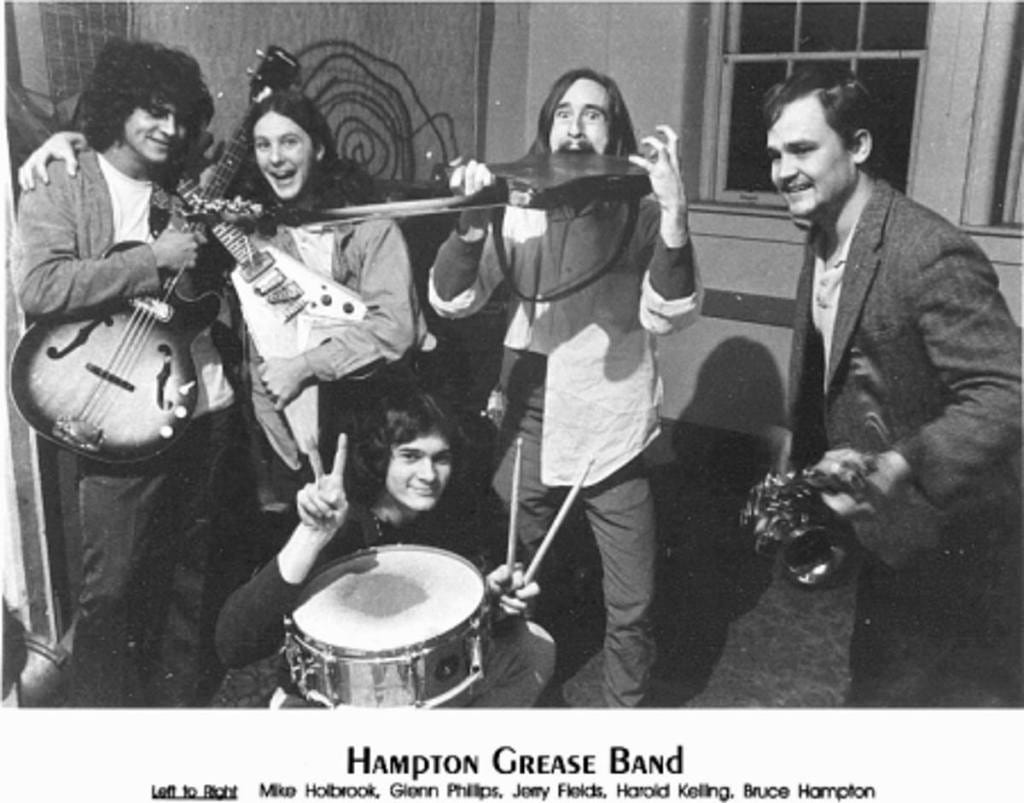
The Hampton Grease Band “Hendon: Spray Paint“ (from Music to Eat, 1971; Atlanta avant-garde blues-rock proto-jam band): “Spray paaaaaaaint, keep away the plane!”: maybe it’s about doing graffiti, and that’s why they instruct us to “keep out of reach of children”? Another frantic and crazed post-Beefheart (same category as post-Mangrum) screamer, yelling at strangers on the sidewalk about being “stoned!!” and “pulverizing George” and “contents under pressure”(at least that one has something to do with aerosol cans) and “food between the air” and (three times) “egg pie on you,” according to my notes. He mostly reminds me of Mark Stewart calling us all prostitutes in the Pop Group, though I’d also tag him as proto-pigfuck, halfway to Scratch Acid’s David Yow or Killdozer’s Michael Gerald. 6.5
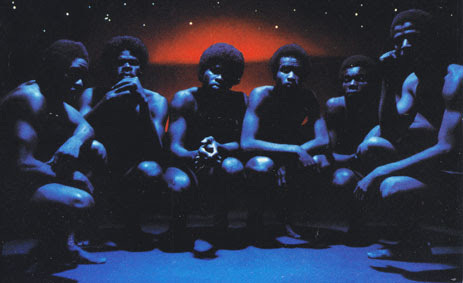
T-Connection “At Midnight“ (single and from T-Connection, both 1978, and on the BCM Germany The History Of The House Sound Of Chicago box set, 1988; funk and disco band from Nassau, the Bahamas” [Wikipedia]) “Look into my eyes, tell me what you see, do you see the possibilities?,” the singer seduces, “When the sun goes down, my fantasy goes wild.” I know this one — “At Midnight” by (I think) T-Connection — and I even have a history with it. Back around 1989, reviewing (probably on spec not assignment) the superb 12-vinyl-LP German import History of the House Sound of Chicago box, my favorite and most-played box set ever (a format I admittedly have very little use for), for The Village Voice (which didn’t wind up running the piece I suspect in part because I was way too irreverent about a scene that straight white hard rock fans with two left feet like me clearly had no business being irreverent about, so I’m pretty sure I published it in Jack Thompson’s Seattle fanzine Swellsville and eventually my second book instead), I set my sights on on this track, which showed up on a disc called “Tracks That Built the House”; i.e., earlier dance records that influenced ’80s Chicago house in some way. And I made fun of it, mainly because the singer’s nightclub pickup routine struck me as ridiculously, oleaginously, be-careful-not-to-get-any-on-you sleazy. Which is no doubt a big part of what house clubbers loved about it. T-Connection, I didn’t realize at the time, were a disco funk band who appropriately had a habit of avoiding clothes on their album covers. Anyway, 35 years later, it sounds terrific — And I suspect house DJs were fond of that piano break a ways in as well. 8
Flying Lizards “Lovers and Other Strangers” (single and on Fourth Wall, both 1981; avant-garde UK new wave collective led by Northern Ireland-born producer David Cunningham): After some swirling space rock, a British chap dishes a few asides, then a whistled hook almost turns into a kissing hook. “Lovers and other strangers, challenge other dangers,” an apparent young girl apparently says, switching “dangers” and “strangers” the second time around. She starts talking, first not in rhythm, then rhyming “really I tried” with “I’ll tell the truth, wish I had lied.” Her tone reminds me of Patty Donahue in the Waitresses, or maybe non-Downtown Julie Brown in “Homecoming Queen’s Got a Gun” (a song I’m fairly certain you couldn’t get away with nowadays, even where “I Don’t Like Mondays” or “Jeremy” are allowed.) Anyway, this is clearly weirdo art music as wacky ’80s new wave novelty music. When the male voice returns at the end, he doesn’t know what to do. 7
Japan “Ghosts“ (single and on Japan, both 1982, and Exorcising Ghosts, 1984; Catford, South London, “new wave/art pop/synth pop/glam rock” band [Wikipedia]): Little bells chime and otherwise tintinnabulate in the minimalist intro, whereupon enters a mannered, world-weary Bryan Ferry lounge lizard type. Detached from the material world, he commences to croon about “the ghost of my life, wilder than the wiiiind.” Once again, it sounds like there’s a physics lab behind him, and once again, I prefer the music to the singer. “Now the doubt inside my mind, comes and goes and leaves no ends,” he goes on, beating around the burning mulberry bush. “Just when I think I’m winning and I’ve broken every door, the ghost of my life, is wilder than befoooore.” Plinking xylophonic percussion and Eno-blip synths all through the track make this quite the Roxy Music imitation. I just wish it imitated Roxy’s fast music rather than Roxy’s slow music. 6
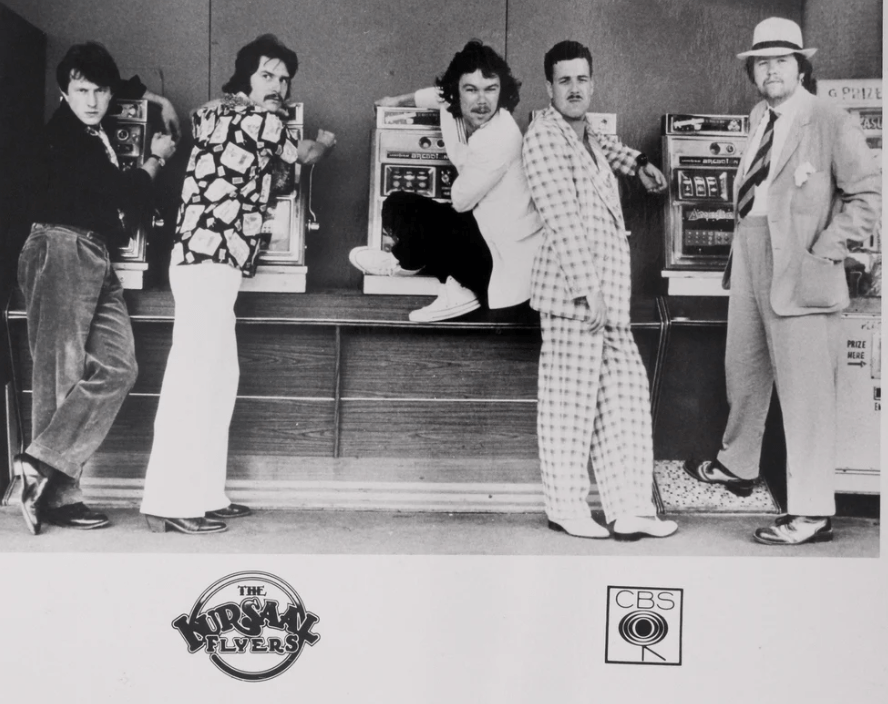
The Kursaal Flyers “Slimmin’ (for the Women)” (single B-side, 1976, collected on Little Does She Know [The Complete Recordings], 2020; Essex, UK pub-rock band): More relaxed murmurring and moseying, almost bachelor pad music, and this cad sees nothing wrong with spreadin’ himself around: “So I’m swimmin’ for the women in my life, my mistress and my girlfriend and my wife.” I gather this means to be funny, and it sort of is, not that I expect Dave Grohl to cover it any time soon. An attempt at soft ’70s AM radio afternoon rock, most spot-on when the guitar comes in. But even the mellowest ’70s gold wouldn’t have submerged the vocal so deep in the mix. 6
Cloud One “Disco Juice“ (from Atmosphere Strut, 1976, and on Spaced Out: The Very Best Of Cloud One, 2019; an alter ego of NYC “disco, soul and boogie producer, arranger, songwriter and musician” [discogs] Patrick Adams, who also recorded as Musique, Phreek, Universal Robot Band, and several other names): More disco, featuring a lady whispering occasional sweet nothings (and I do mean nothings) in our ear; for a while, from my vantage point, it just seems like rote monofunctional semi-orchestrated danceclub filler (and I do mean filler). Things start to pick up when a chorus of other ladies starts humming, or maybe you’d call it chanting, “doo d’doo doo doo doo d’doo” (that’s not quite it, really — our alphabet lacks letters to approximate the sounds they’re making). It’s a delightful little tune, sometimes offered by the ladies’ voices and sometimes by musical instruments. Eventually a sort of keyboard vamp, possibly more manual than automatic, takes over, and before you know it you’re pulled into its obsessive orbit. Risky changes appearing incrementally — — guitar line, dinky piano theme, increasingly bongofied drum beats — salvage the track, as does its potentially infinite pulse. 7.5
The Egyptian Lover “Egypt, Egypt” (from Egypt, Egypt EP, 1984, collected on Egyptian Lover 1983-1988, 2016; stage name of L.A. electro-funk producer Greg Broussard): More pistony percussives, this time formed from a woman’s breathing patterns in a way that recalls (or even predates?) Salt-N-Pepa’s “Push It.” But before long a Vocodered robot informs us this is “Egyptian Lover, Egyptian Lover baby” — Planet-rock funk from the West Coast, though with most of Soul Sonic Force’s mystery and beauty sadly extracted. The Lover of Egypt defines “Egypt, Egypt”as a “freaky, kinky nation,” at least partly thanks to its “female population.” He doesn’t really create a mythology like Afrika Bambaataa had with his Zulu nation, though I guess “Egypt is the place to be” tries — “Pyramids are oh so shiny (side voice: Egypt Egypt!) , the women here are oh so cute (Egypt Egypt!), the freaks are on the floor now dancing to beats that I compute (Egypt Egypt!).” At which point, inevitably, somebody plays “There’s a place in France where the women don’t wear pants,” or whatever its official name is. Vocals rhythmically mimic the synthesizers, panting or grunting in a borderline sexual manner. From what I’ve heard, every song Egyptian Lover ever did sounds exactly like this (including the sapphophilic fantasy he calls “The Alezby Inn,” a cringefest I wouldn’t have put past Prince back in those days either.) Turns instrumental, or rather, he forgot to flick off his machines’ switches so they just kept running for a while, no doubt an inspiration for Detroit techno to some extent. 6.5
Joe “Joey G” Grushecky ” Goodbye Steeltown” (single, 1984; collected on Joey G and the Brick Alley Band’s Goodbye Steeltown, 2017, and Houserocker: A Joe Grushecky Anthology, 2024; frontman of Pittsburgh heartland rock band the Iron City Houserockers): Opens like powerpop with fanfare, and…oh okay, this is gruff Joe Grushecky of the Iron City Houserockers, lamenting learning from the 6:00 news that Pittsburgh’s factories are all about to shut down. This is an American version of pub rock, four-square rhythm broken up by intermittent piano break and soul-sister backup, and Joey G’s America is one where generations of multi-ethnic immigrants crossed the ocean only to settle for a fresh start in the upper midwest’s urban rust belt, “the land of the free,” but now union cities like his beloved home town “lie empty as time goes marching by.” In other words, he’s still doing his junior Springsteen thing, but if anything he might be even more self-serious than his role model. As with T-Connection up above, this song and I go way back — I wrote a not particularly memorable “lick,” which is what the Village Voice used to call brief reviews of singles and EPs, when Grushecky first self-released it as a 7-inch 45. And I’m pretty sure I compared it favorably to Born in the USA, still fairly fresh itself at the time. It remains the only essential Grushecky I’m aware of since the Housebreakers split. And it’s pretty bleak: When you take away a man’s ability to work (JG’s gender stipulation, not mine), you make his life nothing but a joke and “around his neck you put a rope.” Death of despair, decades before it was called that. It’s meant to be anthemic, and it is (“Just remember hold your head high”), though I can’t quite say it grabs me the way the songs on Have a Good Time (But Get Out Alive), the ICH’s great second album from 1980, do. That record had choruses, hooks, and it really did rock the house. 7
The Grateful Dead “Morning Dew” (from The Grateful Dead, 1967, ad infinitum): Lazy hot afternoon in the sun Southern rock hippie choogle, actually reminds me of Marshall Tucker Band at the start. But this is “Morning Dew,” and I forget what woman folksinger made it famous earlier in the ’60s (Bonnie Somebody?) but I know Nazareth covered it as well. This is the Grateful Dead, the farthest thing from my specialty; I have no history with them at all, other than I’ve always admired Workingman’s Dead and my ex-brother-in-law from my first marriage had certain Deadhead proclivities. But I suppose maybe Nazareth were covering their cover? The lyrics are pretty dark — “I thought I heard a baby cry this morning…you didn’t hear no baby cry today,” “there’s no reason for you to be worrying about those people, you never see those people anyway,” “I thought I heard a young man moan this morning,” etc, — and the dirge of a melody’s a good match. Not sure whether this is one of the better examples of Jerry Garcia’s guitar explorations; I’d always heard Tom Verlaine for one was influenced by him, and never knew how true that was, or where to start. Anyway, he sounds good here. Still think I probably like Nazareth’s version better; they were one heck of a cover band. But it’s close, and this is indeed dark — that pipe organ is a definite plus. 7.5
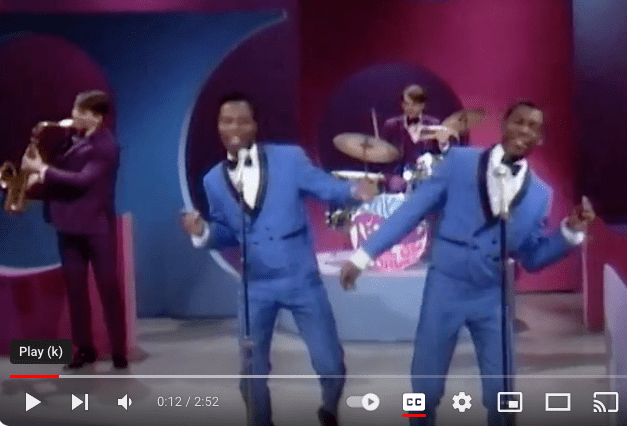
Jay & the Techniques “Hey Diddle Diddle” (from Apples, Peaches, Pumpkin Pie, 1967, The Best of Jay and The Techniques, 1995, and other anthologies; “inter-racial…soul pop” group from Allentown, PA [discogs]): Funky number with horn fanfare and a male Southern soul vocalist adapting nursery rhymes (which I’m pretty sure would qualify this for an Accidental Evolution chapter if I had heard it on time): “Hey diddle diddle, love me just a little,” “Little Boy Blue can’t be without you,” “like Little Jack Horner in his corner,” “Mary Mary don’t be contrary.” Excellent singing, excellent rhythm, gimmicky words that don’t exactly beg for repeat plays if you’re older than three. 6.5
Dub Sex “Tripwire!” (from Dub Sex EP, 1987, Splintered Faith, 1989, and Search for the Right Words, 2019; “indie rock band from Manchester, UK” [discogs]): Another detached vocal, kicking things off unaccompanied but then the noise starts banging like the roof’s falling in. High squeals reminding me of the Sweet join feral growlings join a veritable menagerie of zoological howls and cackles, not to mention “don’tslipdon’tslipdon’tslip” up to 10 or more at a time, which after “trip wiiiiiiiire” (which for some reason reminds me of a Fall song) changes instead to “Don’ttripdon’ttripdron’ttrip” 10+ times too. 6.5
Eliminated for Reasons of Space, 13 September 2024
Roni Griffith's "Desire" was *huge* in Montréal, like "Funkytown"/"I Love Rock and Roll" huge. I was paying zero attention to music at the time, but I was still aware of it, though I wouldn't know the title or the artist's name until a few years later. It was the kind of thing that boomed out of people's cars. I don't think I've ever heard anything else by Griffith, or even *read* about her until now. So thank you!
via facebook:
Clifford Ocheltree
Are You from Dixie“ dates from 1915. Originally recorded by Billy Murray, the best selling ‘pop’ artist before 1930 or so. Quite a few of his recordings became standards for early country artists. An excellent comp of his work on Archeophone. Also worthy of note, “Are You from Dixie“ was an exceptional comp on RCA in the late 80s of country brothers’ recordings. Nice to hear and contrast with the Everly Brothers.
Barrett Whitener
Clifford, that’s a superb comp, and I may have learned about it from you.
Clifford Ocheltree
“Gangster Of Love” is, of course, a cover of Johnny ‘Guitar’ Watson’s far greasier version.
Chuck Eddy
:: “One Scotch, One Bourbon, One Beer”: Amos Milburn
Edd Hurt
Nazareth definitely copied part of the Jeff Beck Group’s version of Morning Dew.
Jesse Ciucco Velo
That, was the most unbelievable opening! Beyond definition. My coffee came up through my nose with surprise and laughter. Thank you for reminding us to keep educating ourselves and to keep reading, and to keep sarcasm in our hearts and minds. Gracias Amigo💥
David Williams
Guess which two I saw while on acid (and I’ve never seen the Dead)
Chuck Eddy
Silver Convention and Grandpa Jones! Though I’d be very impressed if it was Hampton Grease Band. (Actually, I’m confident one was Meat Puppets.)
David Williams
Absolutely one was Meat Puppets and it was fantastic. The other was Grandpa Jones, if watching TV counts. Oddly enough, I was college friends with Col. Hampton’s younger brother!
Scott Bloomfield
Two of my favourite one-(album)-and-done acts there in Hampton Grease Band and Simply Saucer (whose inspirations included Hawkwind, Lou Reed, Pink Floyd and Sun Ra; and yeah I can hear Pink Fairies too.)
Scott Pellegrino
Finally an “8!” Chuck, regarding Jay and the Americans are you familiar with the fascinating “Only in America” history? I have the mentioned Drifters box set.