
Austin Ornithology

Austin’s favorite and/or least favorite bird is the grackle, basically a giant blue crow (or miniature blue raven, take your pick) best known for stealing people’s salsa chips, which I suppose serves people right for eating salsa chips. I’ve never taken a picture of any because why would I, though I do have a T-shirt (designed by my friend Jeff Crosby) featuring an otherwise imaginary “grackelope” (i.e., a cross between a grackle and an antelope, which is to say the pseudo-antelope known as a pronghorn, an mammal I’ve yet to see) perched atop a taco truck.
Last month for the first time I saw either a couple extremely cute hummingbirds or one extremely cute hummingbird a couple different times poking their straw-like snouts into a flower right outside the windowed doors next to which I am now sitting, hovering in mid-air as if they/it were/is defying gravity. But the second I tried to grab my phone to take pictures, the clearly bashful hummer(s) flew right off.
I’ve seen a couple roadrunners while walking in the woods on hot and dry days, but those things are speedy, as you’d expect from birds constantly chased by Wile E. Coyote and his Acme explosives. (Hairy and tapered coyote scat is quite common on the trails, but the only coyote I’ve caught on camera was on a residential street.) Haven’t managed to photograph any elusive red cardinals either, not that I’ve made a super concerted effort. Would very much like to, someday. Meanwhile, you will need to settle for the fine feathered fauna below.
***
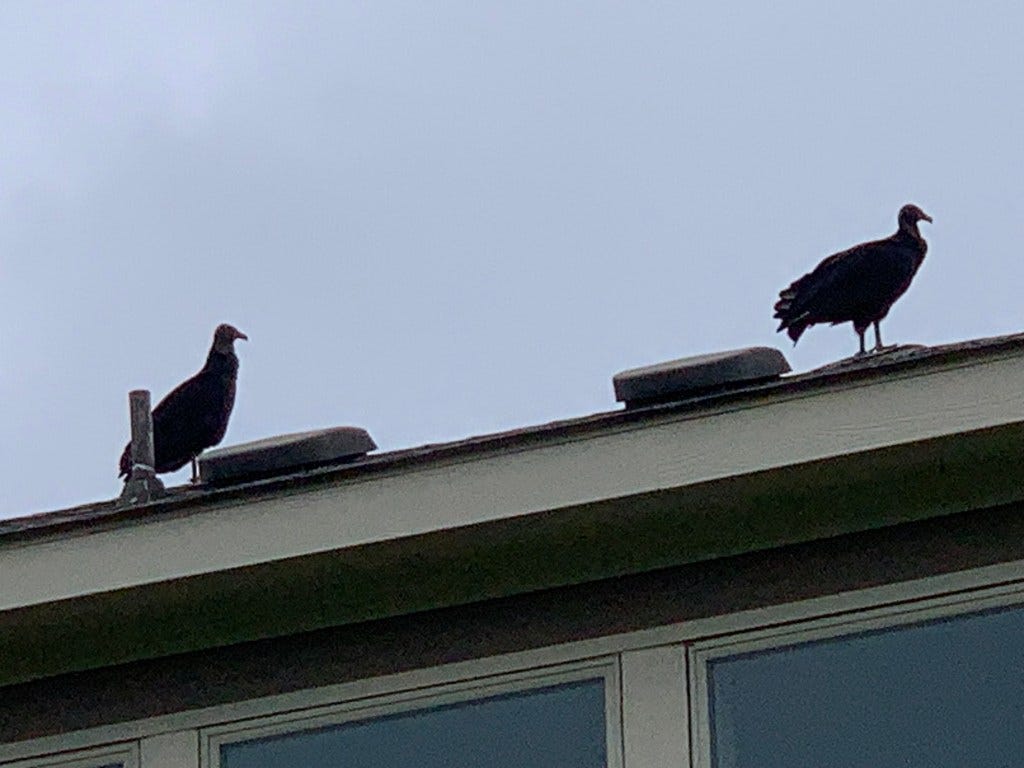
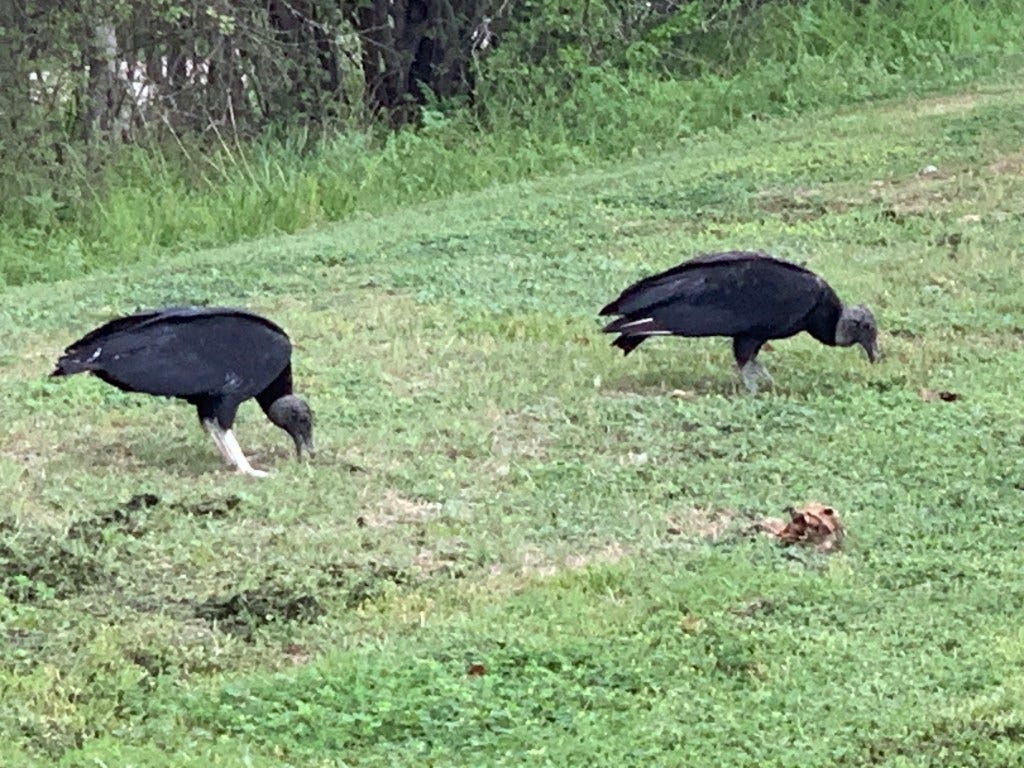
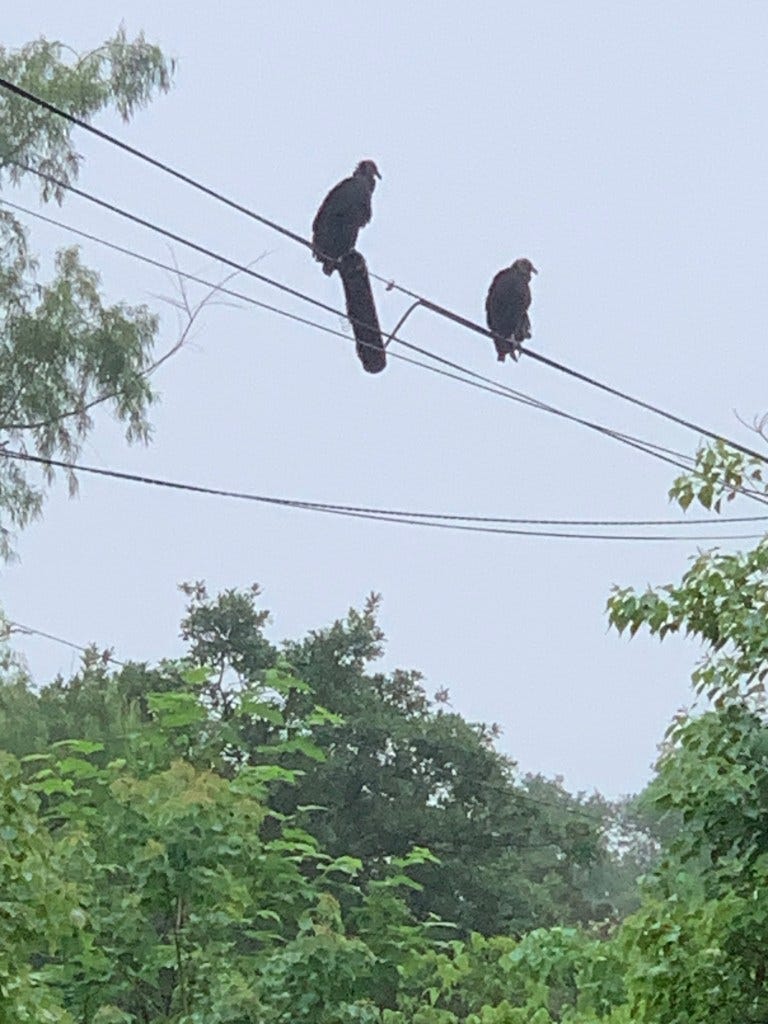
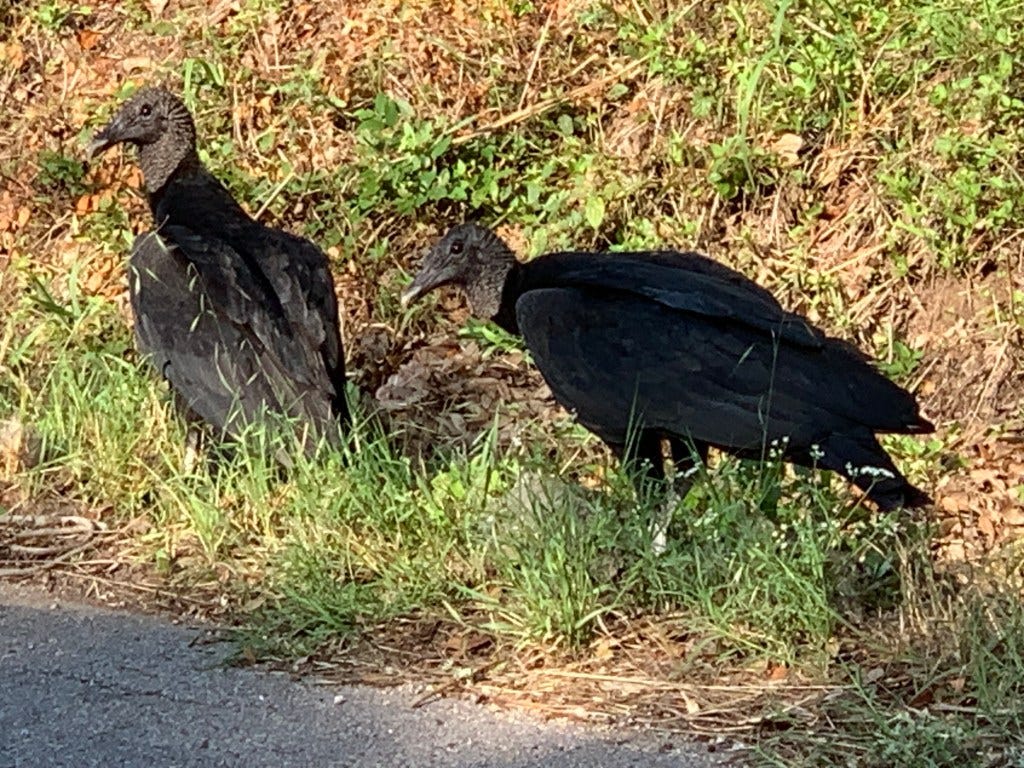
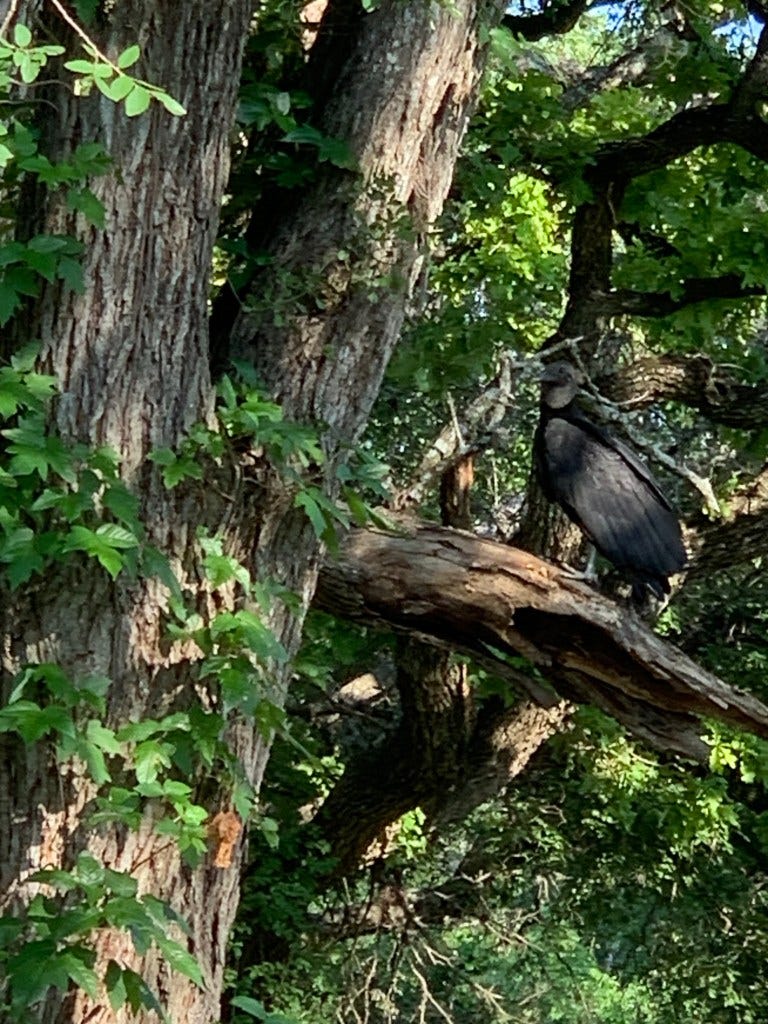
Black Vulture (Coragyps atratus): The most of these creepy creatures I’ve ever seen in one place at one time was, I swear, a couple mornings after Donald Trump was elected president in 2016 — maybe 15 of them, surrounding and scavenging a white-tailed deer carcass on the ground, a 10 minute walk from my house on a frigid November morn. I’m not superstitious, at all, but given that week’s world-historical calamity, it was impossible not to interpret it as an omen of some sort. Gave me the shivers for real. Hasn’t happened again in the eight years since (and hope it won’t again this November.) But I have seen less far less menacing vultures, simply living their lives. Wikipedia says they are also known as Mexican vultures, zopilotes, urubus, or gallinazos.
***
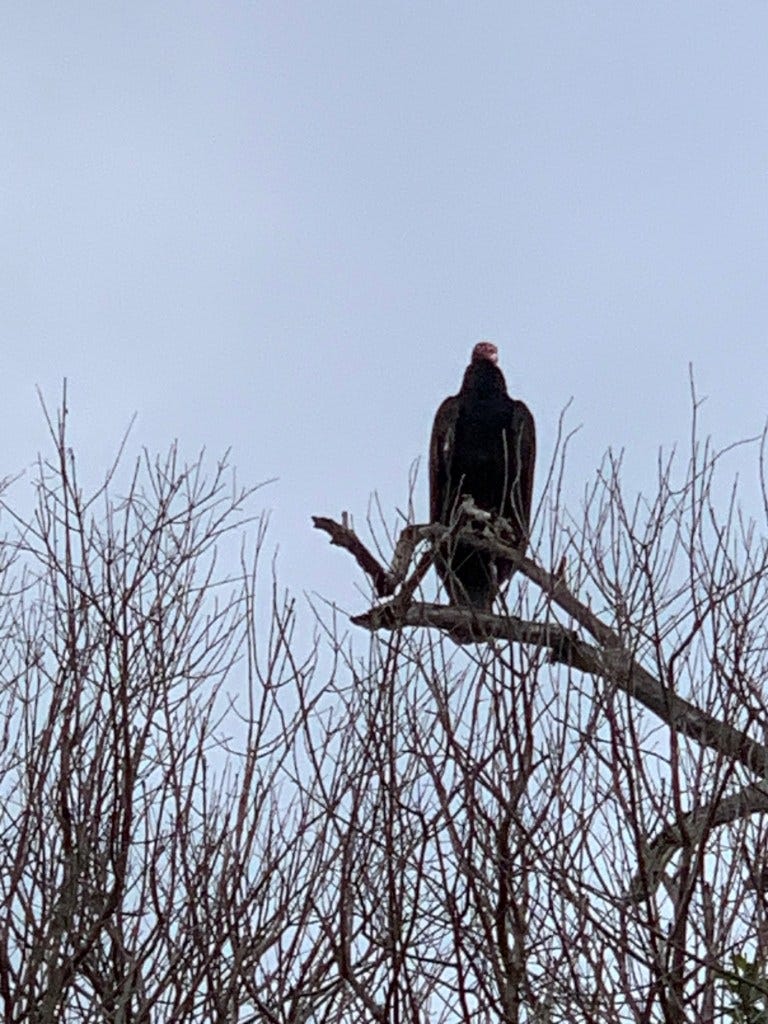
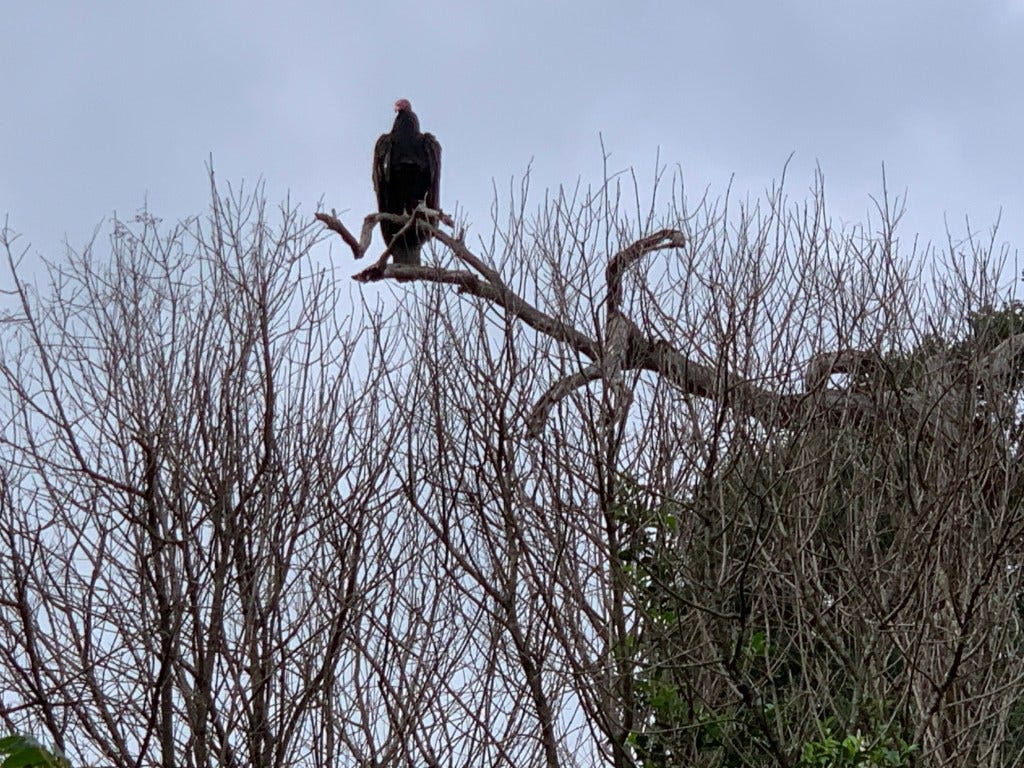
Turkey Vulture (Cathartes aura): Wikipedia calls these “the most widespread of the new world vultures,” but the pictures I see of them always show red heads where the black vulture pictures show black heads, and most of the photos I’ve taken seem to be the latter. Have seen a couple red-headed ones though. Apparently these are the ones that people sometimes call buzzards, or (duh) turkey buzzards, not because they prey on turkeys but because their heads resemble them. My photos of them look pretty gloomy, due to vultures and sky alike.
***
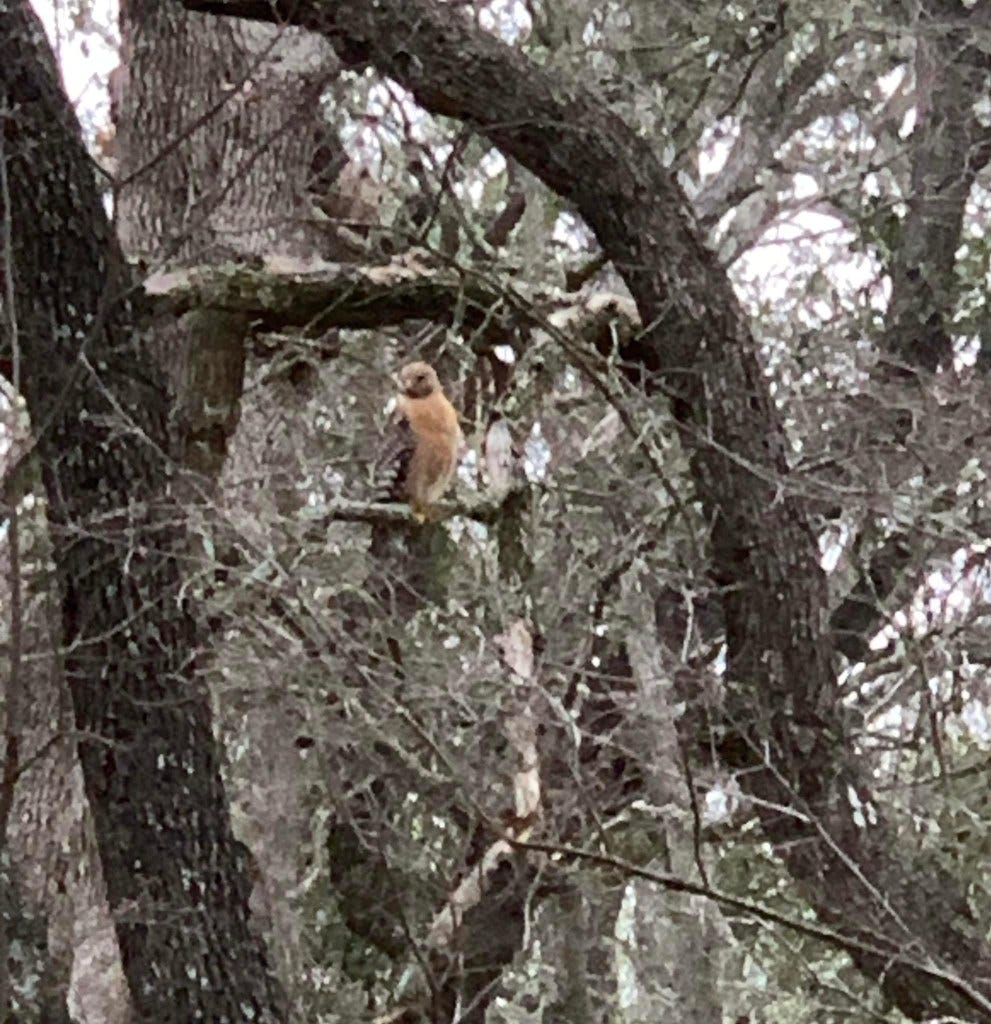
Cooper’s Hawk (Astur cooperii) Was lucky enough to catch this one on my morning walk; it leapfrogged between a couple treetops before landing on the one where I got this photo — on a 7.5-acre penmanship retreat property known as “the writing barn” — before high-tailing it out of there. Slightly smaller than red-shouldered hawks and several inches smaller than red-tailed hawks, also found in Central Texas.
***
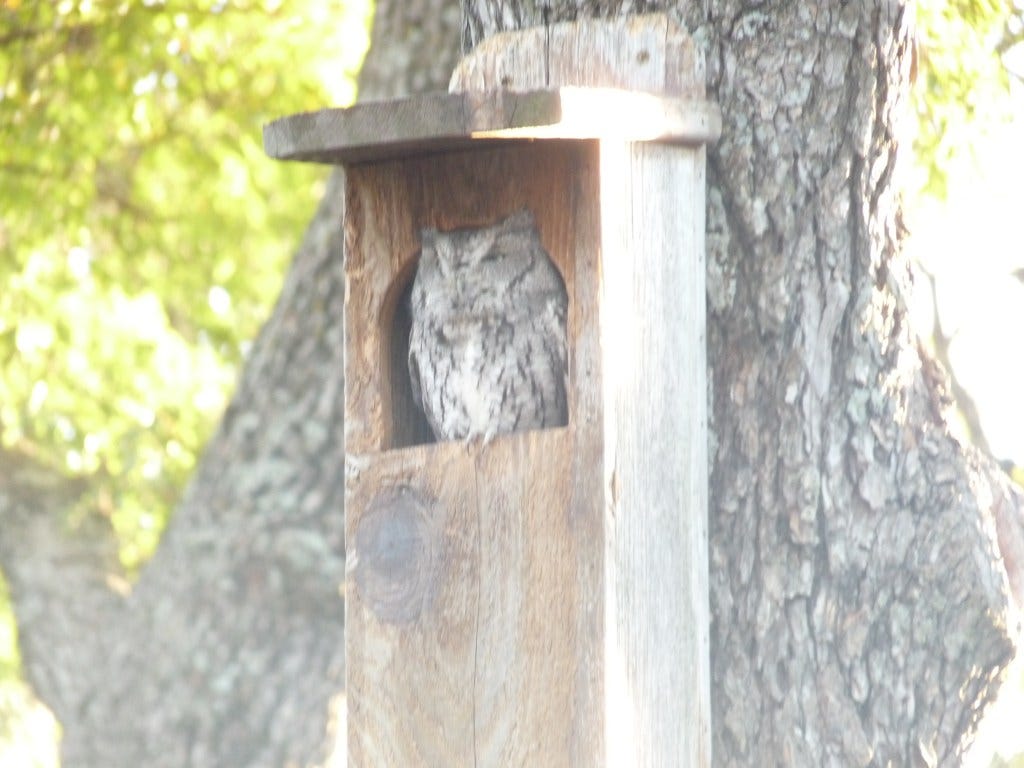
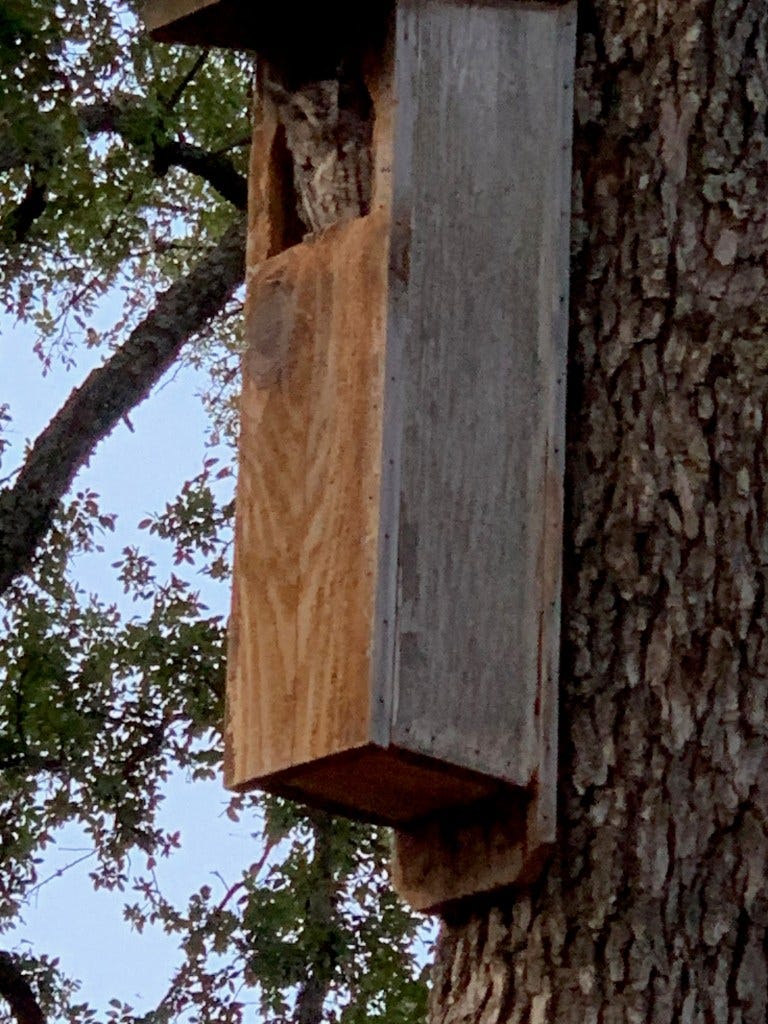
Eastern Screech Owl (Megascops asio): Okay, one last raptor. I’m honestly surprised I can only find a couple pictures of these, given that we’ve regularly had eastern screeches in our backyard since I bought my wife an owl house (and the installation thereof, maybe 20 feet up a cedar elm) for her birthday several Julys ago. We call our owl Olive, though we don’t know for sure whether the same Olive returns every fall and spring or a new Olive shows up. A couple times, she’s taken in a spouse and birthed even more adorable owlets. The house is said to protect her from much larger and predatory barred and great horned owls, which are too big to get in. Unfortunately, squirrels are not, but they’re more likely to be squatters when the dwelling is otherwise unoccupied. When Olive’s there, and you wait patiently at dusk, you can see her take flight into the evening, apparently on a hunt for food.
***
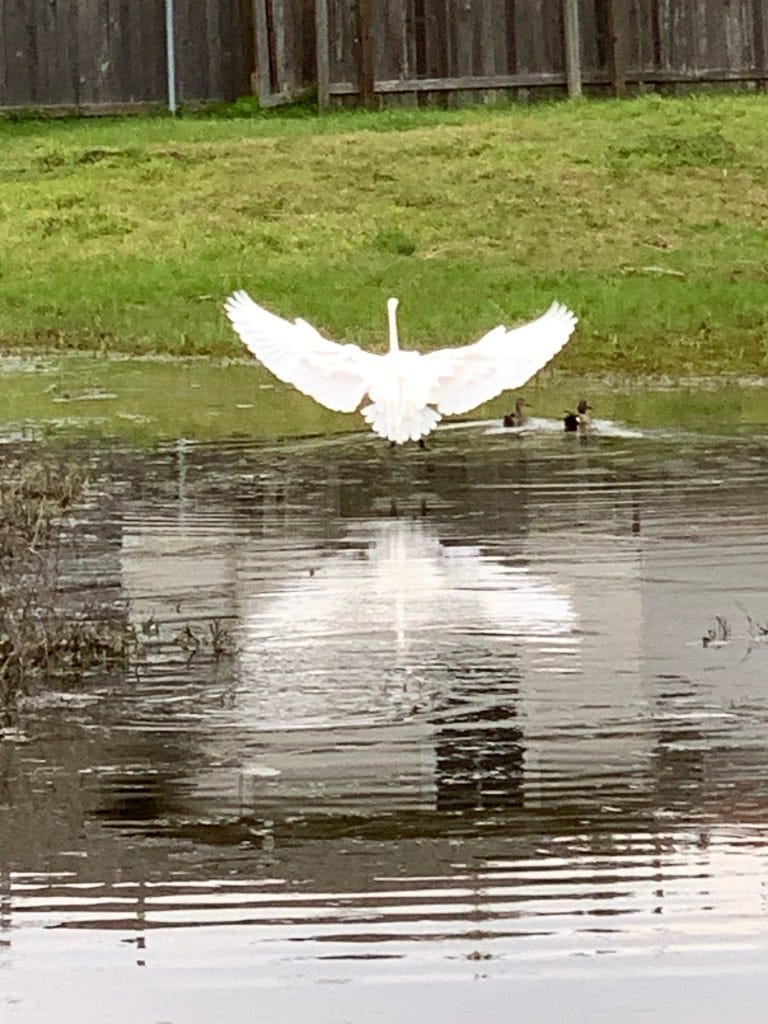
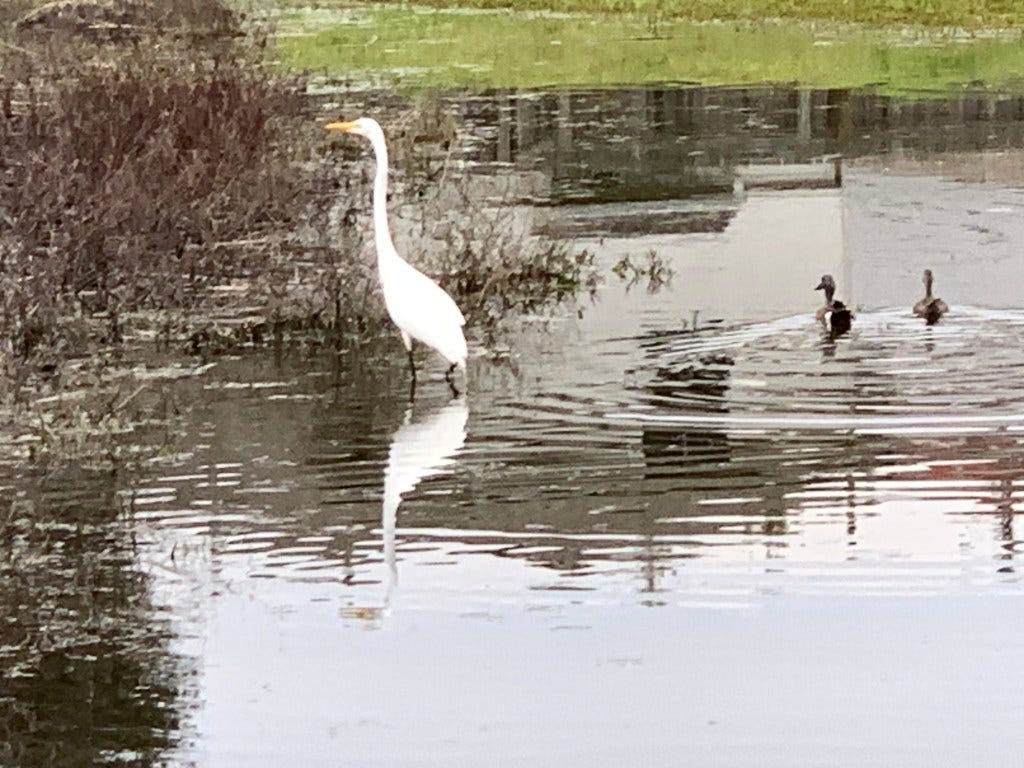
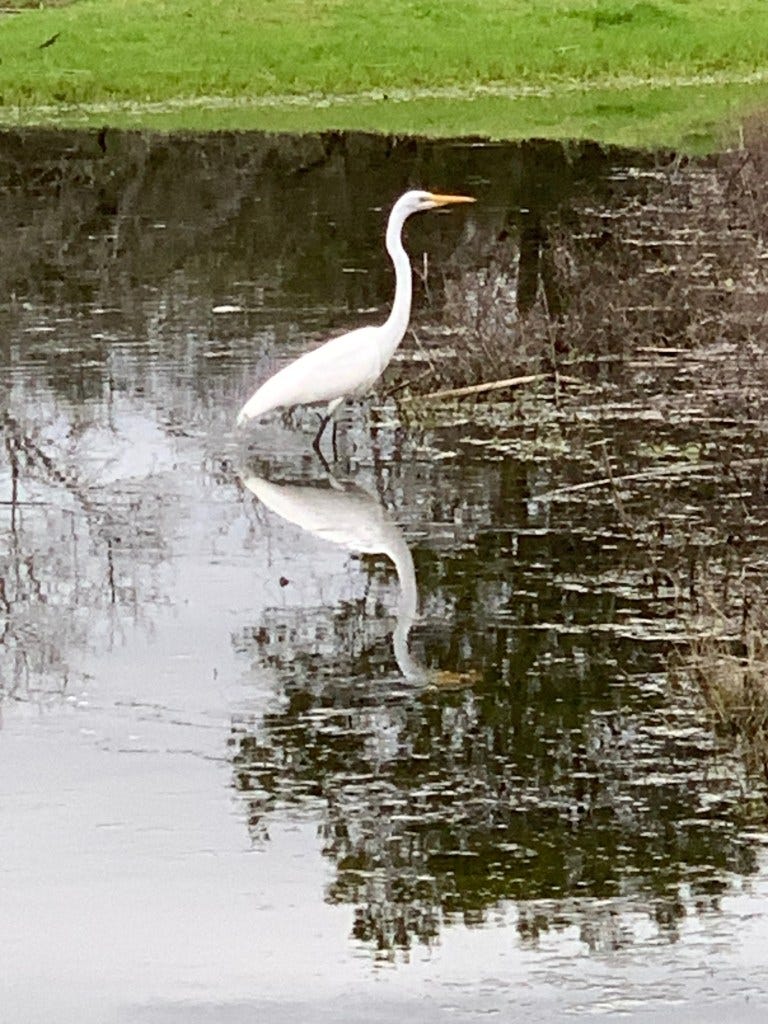
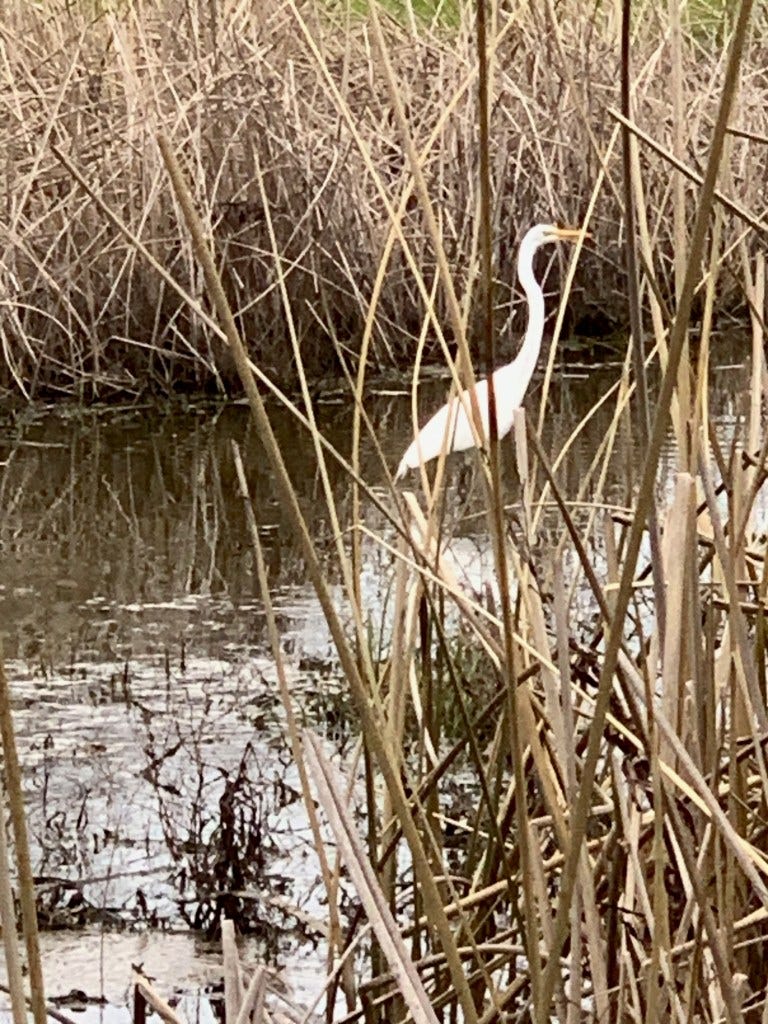
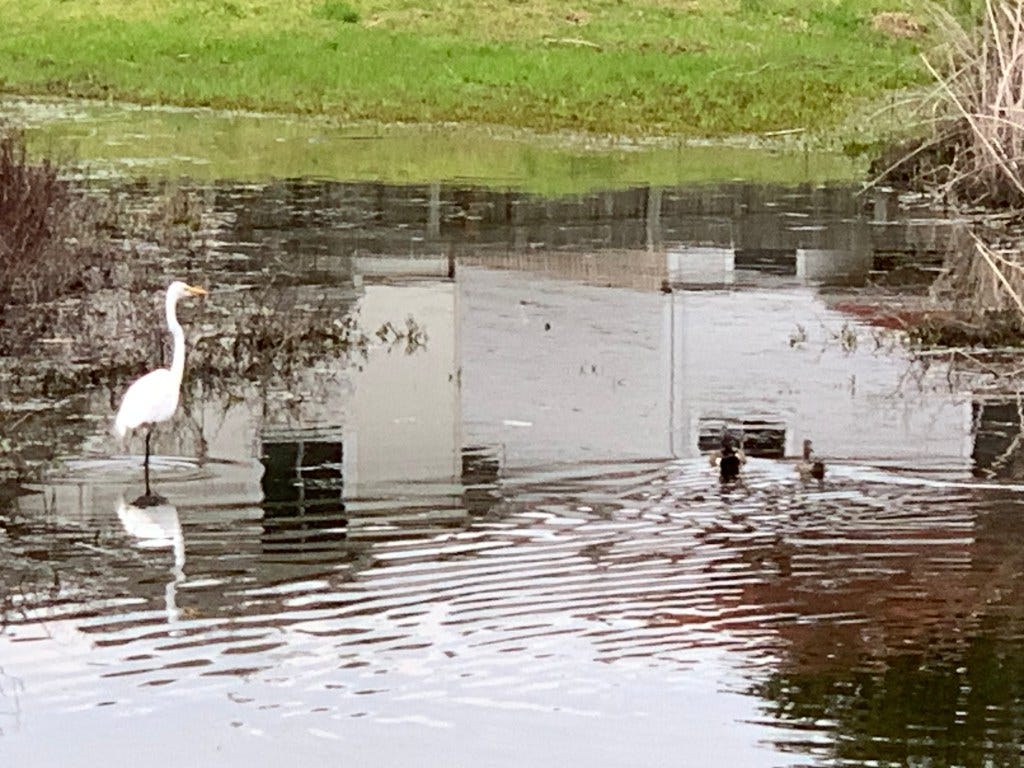
Great Egret (Ardea alba) I’ve posted about these wading shore birds before; seems like they’re pretty common around here if you visit the right body of water around the right time (unless they are smaller snowy egrets, but they look more greatish to me, thanks to their apparent absence of neck plumage). The sightings below occurred in or around either the East Boggy Creek Greenbelt in East Austin or Canterbury Lake (really a pond at most I’d say) in Deep South Austin.
***
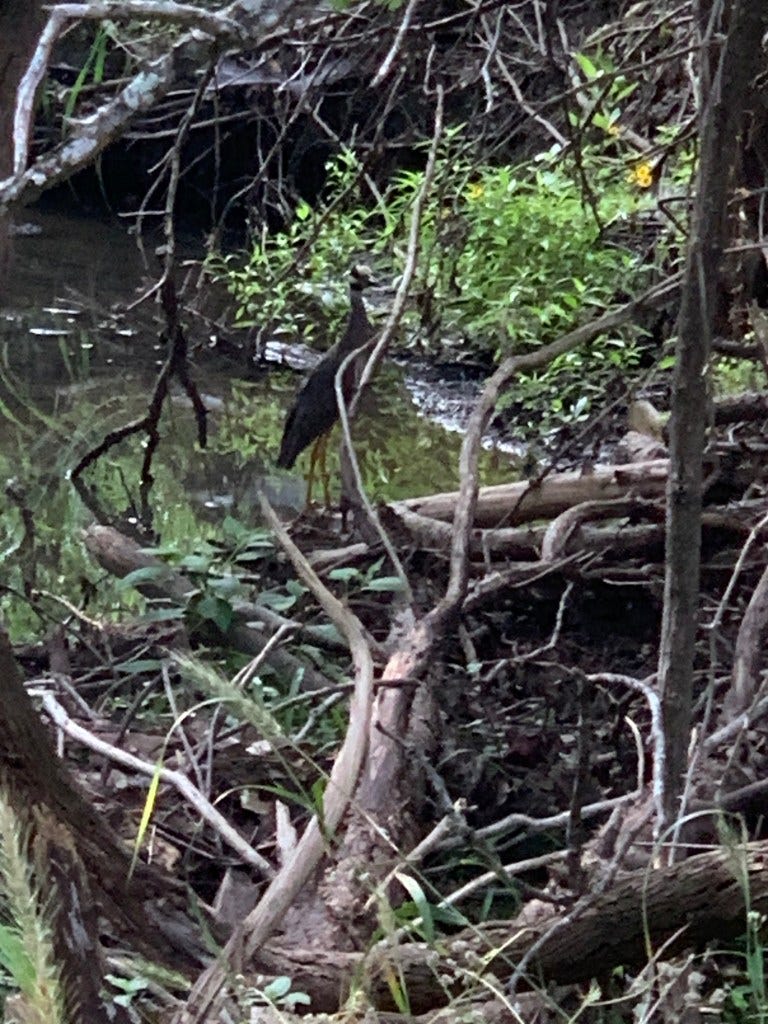
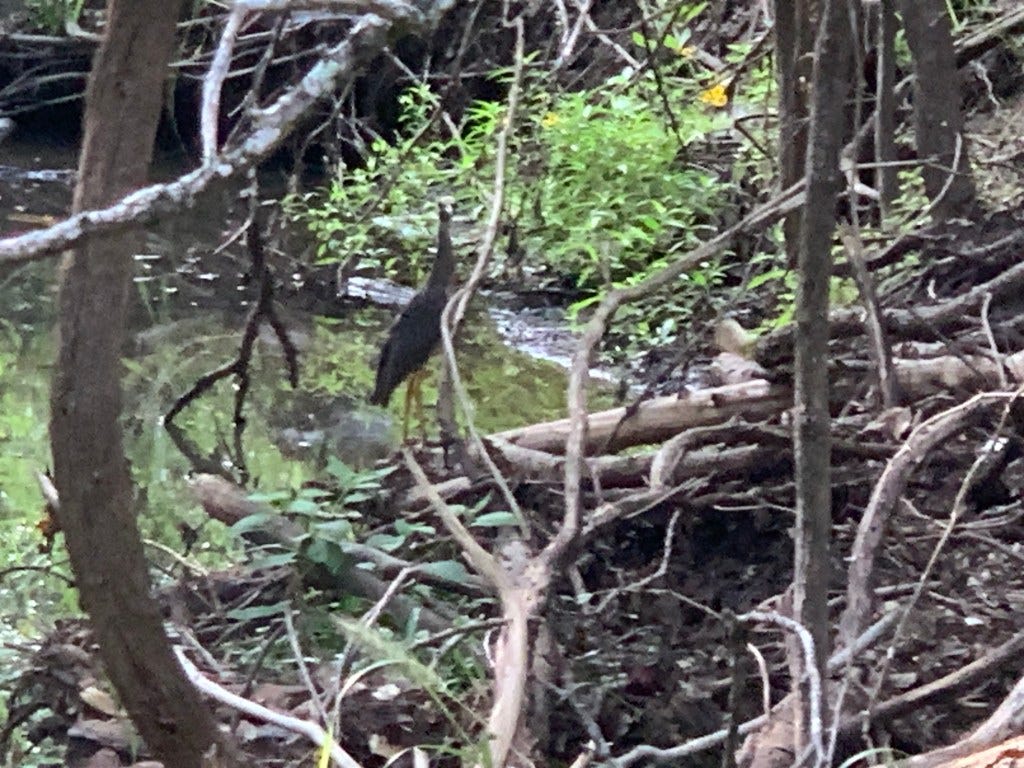
Yellow-crowned Night Heron (Nyctanassa violacea) Another shore bird, around the same size as snowy egrets but a foot and a half shorter than great egrets. One of at least three two-foot-tall-ish herons existing around this neck of the Texas woods, others being “Little Blue” and “Black-crowned Night.” I’ve seen these a few times since moving to Austin, but the first few times I didn’t have a smartphone yet. Pretty sure I witnessed this one along Mary’s Bum Uncle Trail, South Austin.
***
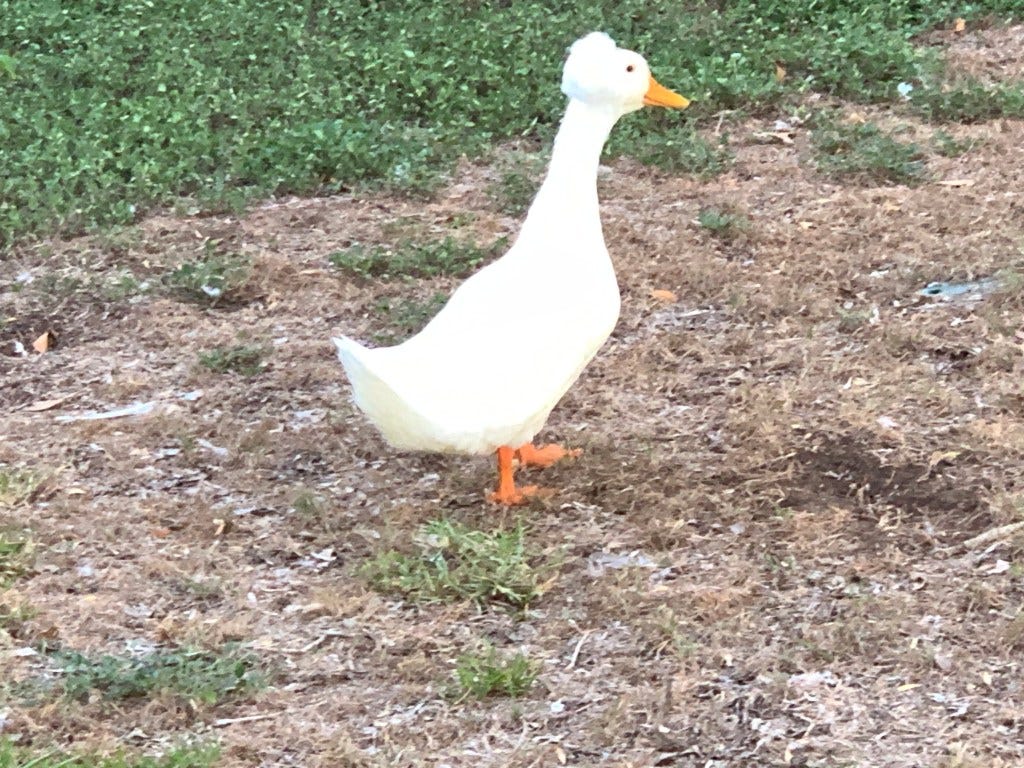
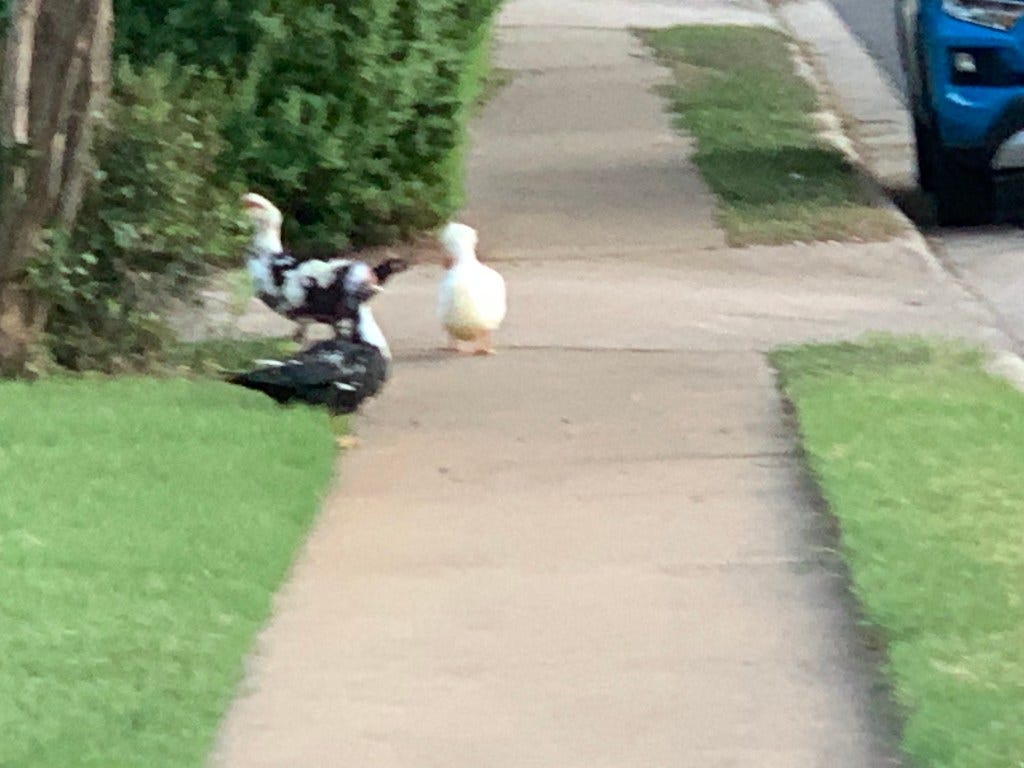
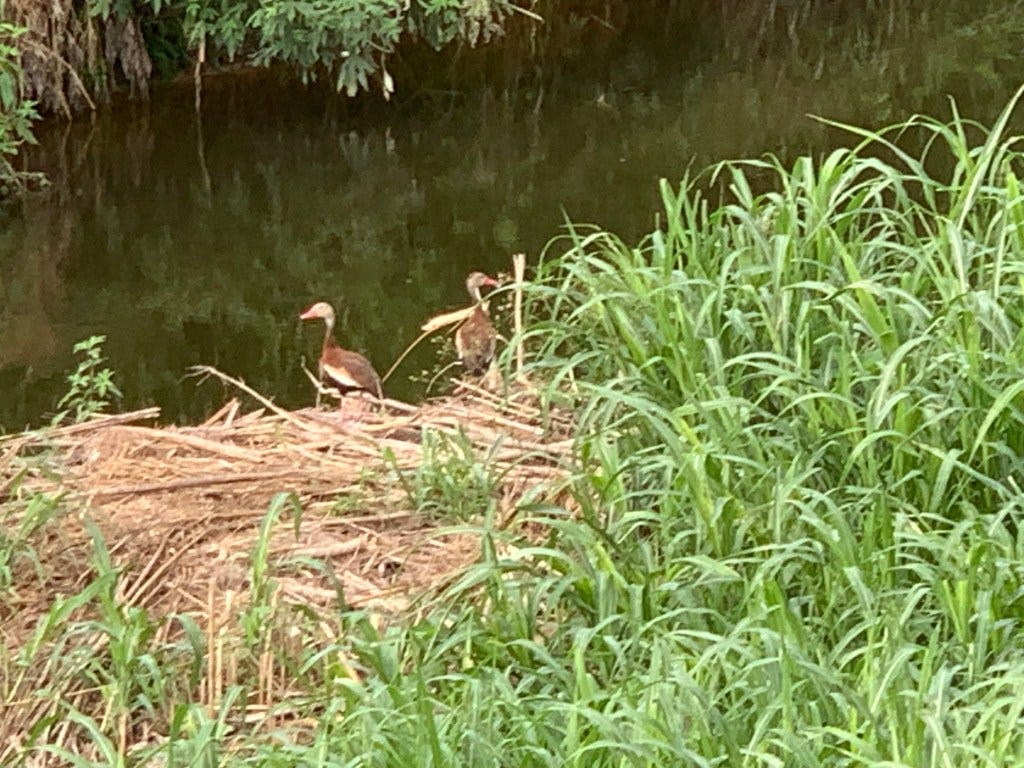
Black-bellied Whistling (Dendrocygna autumnalis), Muscovy (Cairina moschata), and Crested Ducks: Taking some wild guesses here, but bear with me. Let me see if I have this straight — Mallards are not the only species of wild duck in Central Texas, just the best known. I’m pretty sure the wild ones below are black-bellied whistlers, both due to coloring (“gray face, orange bill, brown above with white upper wing, black below” according to a foldable laminated pamphlet called Local Birds of Central Texas I’m pretty sure I picked up in the grocery line a while back), but because I’m pretty sure I remember hearing them whistle. The other two types here were photographed near a man-made pond whose generous duck population I assume was instigated on purpose as well. The red-masked ones appear to be Muscovy, a species in its own right, native from Texas’s Rio Grande Valley to Uruguay and Argentina, according to Wikipedia. Domestic ducks are a subspecies of Mallards and to a much more marginal extent Muscovies, and crested ducks (the kind with the fluffy white headpiece that at first I thought might be geese) are a domestic breed, transported from the East Indies to Holland and eventually apparently to elsewhere — not to be confused with the entirely different wild South American species also called crested ducks. Confusing, right?
***
***
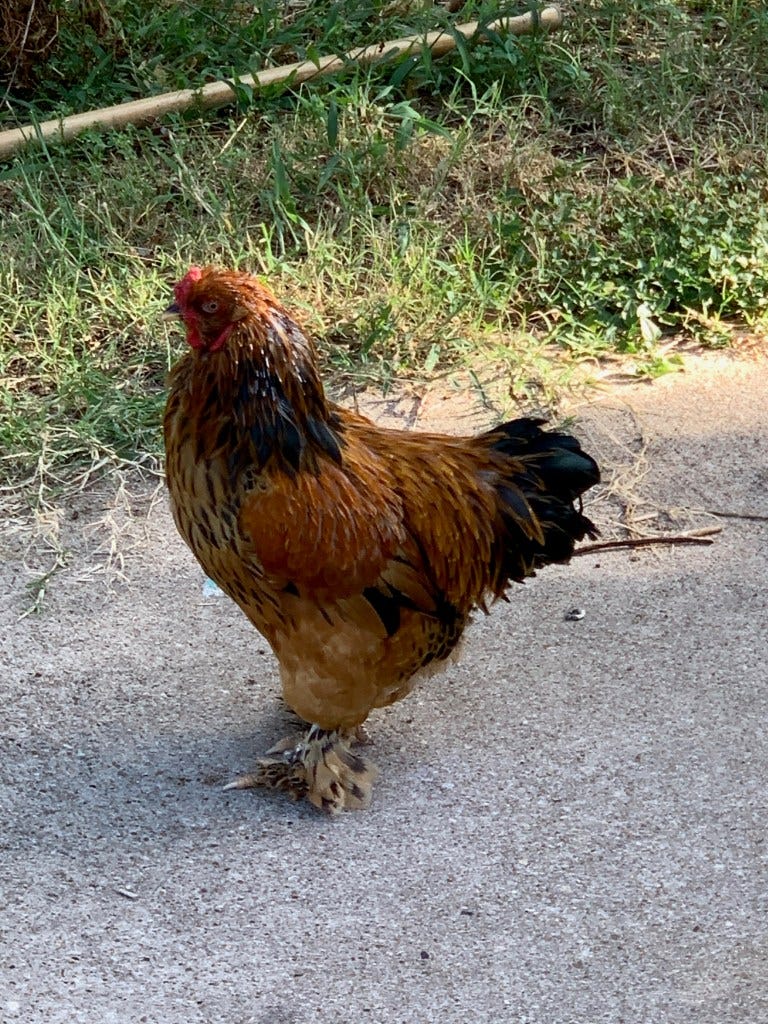
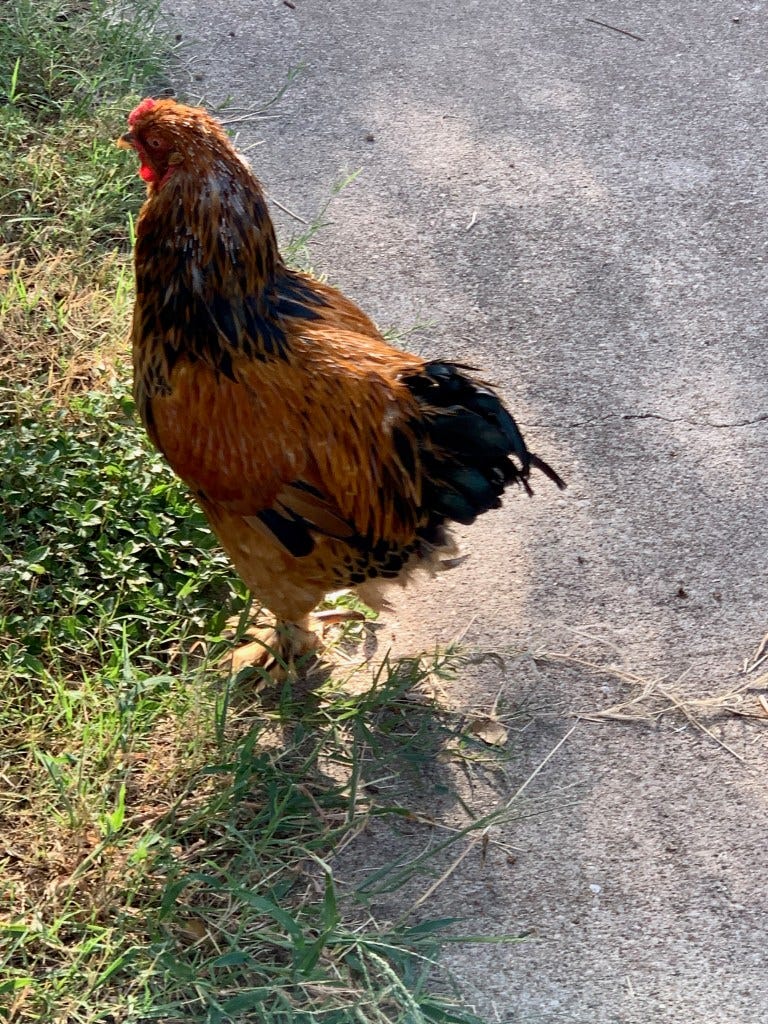
Chicken (Gallus domesticus): When I was a kid in the Michigan (and to a lesser extent Ohio and Pennsylvania) suburbs, I don’t recall any neighbors raising chickens in their yards. Now my grown daughter in Cleveland Heights has one named Henrietta, and it’s not uncommon to see them while strolling around streets near my house, or hear roosters cockle-doodling when I go to pick up the Times off my driveway first thing in the morning. The rooster below lives just a couple blocks away, and as far as I can tell it’s probably either a Rhode Island Red or its close cousin the New Hampshire. Super cute, no matter what it is.
***
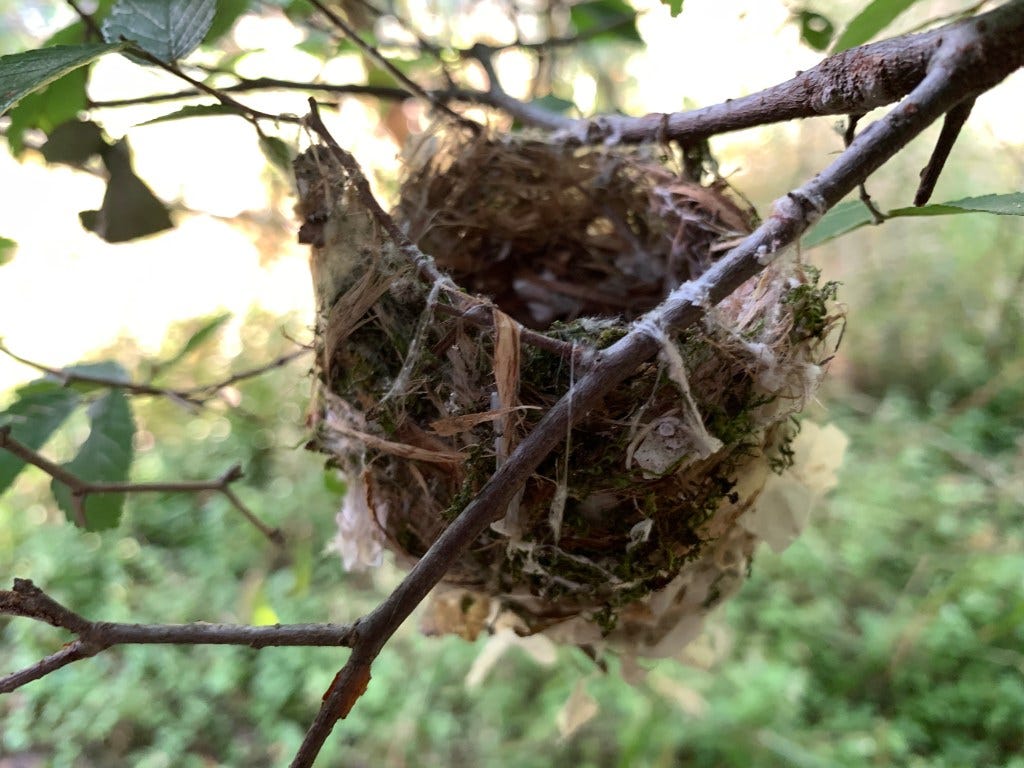
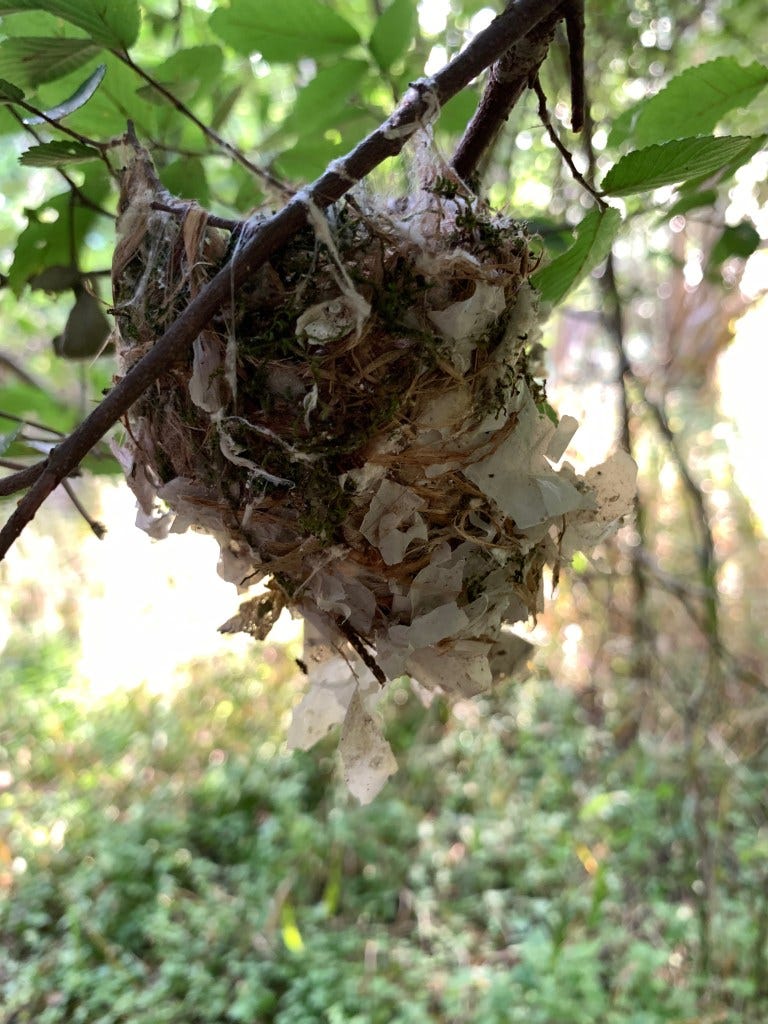
Finally, no idea at all what bird made this nest, which was about eye level (I’m 5’6″) and otherwise I never would’ve seen it. Cool, huh?
Eliminated for Reasons of Space, 23 August 2024