A Dozen Great 1984 Singles
From Bryan Adams, John Cougar, Teena Marie, Ratt, Lionel Richie, Diana Ross, six more!

All included in Rolling Stone‘s 100 Best Singles of 1984: Pop’s Greatest Year website feature, published on that year’s 30th anniversary. And though I wouldn’t sweaer to “pop’s greatest year,” no doubt ‘84 was up there. Not bad for albums either, as I recall.
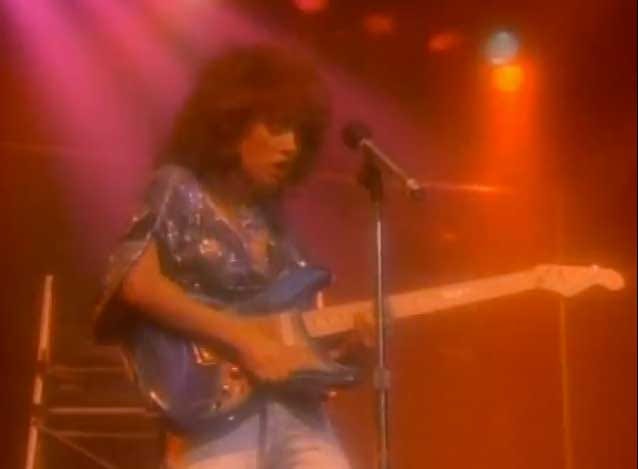
Bryan Adams, “Run To You”
Former glam-rocker/future schlockmeister from Canada, at his commercial and creative peak, borrows hard-popping six-string jangle from the Byrds via “Don’t Fear The Reaper.” He and perennial writing partner Jim Vallance even earmark the song for Blue Öyster Cult, who turn it down. So Adams keeps it for himself, parlaying a moral quandary about being Somebody Else’s Guy aching to feel her touch into his career’s most impassioned performance – even though the video suggests that who he’s cheating with isn’t another woman, but his guitar.
J. Blackfoot, “Taxi”
Once a member of thrice-pop-charting turn-of-the-‘70s Stax vocal quartet the Soul Children, and before that a teenage Tennessee State Pen inmate, Mississippi-born J. Blackfoot was already in his late 30s when he grabbed his biggest solo hit: Top 5 R&B if only No. 90 pop, and even then probably the last blues-guitared, catfish-and-cornbread-fed Southern soul to score so high on either chart. It came from a small-label album called City Slicker, which depicted Blackfoot as a country man navigating urban streets – here, trying to reach his baby across town before her new love does. Hitchhiking won’t cut it, so he whistles for a cab and pleads for the driver to take the freeway. Hope he made it!
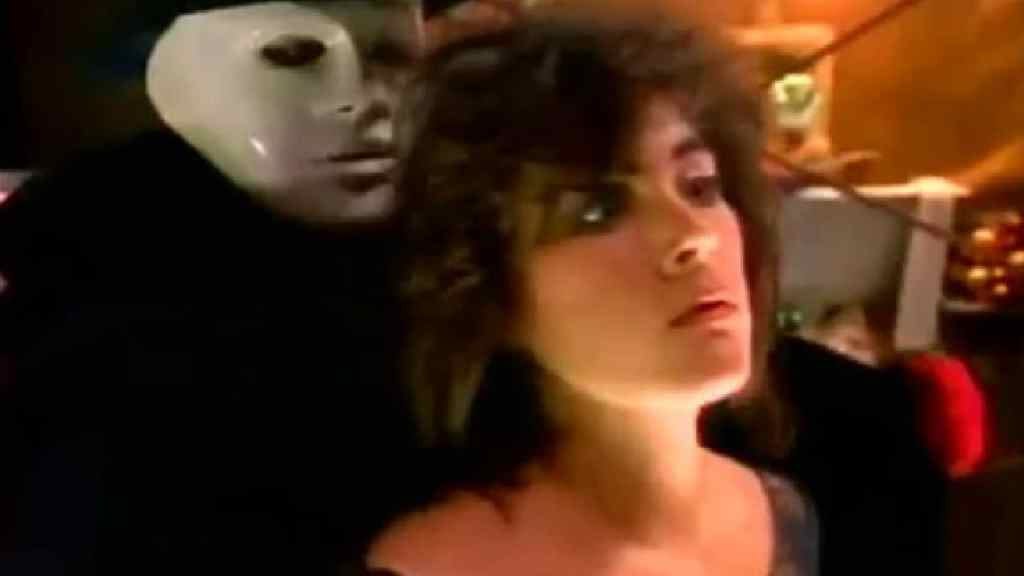
Laura Branigan, “Self Control”
Like this booming bridge-and-tunnel torch-dance diva’s even bigger “Gloria” two years before, “Self Control” was an English translation of an Italian pop hit. And though it scaled dance and adult-contemporary as well as pop charts, its sound was as much post-Benatar rock, and its mood goth without making an issue of it: Branigan “live(s) among the creatures of the night,” since when the light’s out it’s more dangerous. She’s nocturnal; maybe a witch. In the video, directed by William Friedkin of The Exorcist fame, she descends to the cellar from her bedroom to encounter an orgy of masked, nearly naked freaks and vampires. Especially given the song’s decadent Eurotrash past, debts to Joy Division’s “She’s Lost Control” hardly seem a stretch.
Robin Gibb, “Boys Do Fall In Love”
The blue-eyed-soul Bee Gee made his new wave move late, with stuttering, silly synth-pop that somehow echoed the then-emergent evolution of both Italodisco (it went top 10 in Italy) and Latin freestyle (it was shaped by a team of producers and players who’d just kicked off the genre with Shannon’s “Let The Music Play.”) Chirpingly cheerful about boys getting love on a Saturday night, yet sheltering a secret sadness that slips out whenever Gibb grabs angelic high notes, “Boys Do Fall In Love” can also be heard as a male mirroring of Cyndi Lauper’s “Girls Just Want To Have Fun.” And in its sci-fi video, set in A.D. 2184, people do futuristic things: wearing Devo glasses, for instance, and sliding CDs into a player.
Rebbie Jackson, “Centipede”
As sinuous and vocally self-assured as any Jackson family record not made or fronted by Michael, his squeal-prone eldest sibling’s first and highest hit was nonetheless written and produced by him. And his repressed, tormented sexuality runs all through its slithering electro-funk: “You crawled into the bathroom window, to bite him with your love,” like a smooth criminal — only here the metaphor is a creepy-crawly arthropod with way too many legs, a “hot” one for some reason, that in the final verse turns into a snake. On Rebbie’s album, she also covered Prince’s “I Feel For You,” only a week after Chaka Khan did. The Pointer Sisters had already done it two years before, actually, but Chaka won.
Teena Marie, “Lovergirl”
In three decades of charting r&b singles by this self-proclaimed “black artist with white skin” — 29 songs, total – only “Lovergirl” peaked higher on the pop than r&b countdown. That’s probably because, in addition to its typically atypical in-your-face-and-all-over-the-map rhythm-based blend of scatting, semi-rapping, robotic chanting, French words, and unwarranted proactive apologies for being “passé” and “old hat,” it was clearly a funk’n’roll move for the age of Prince, Michael, and Teena’s mentor Rick James, complete with half-minute guitar solo. That’s one kick-ass co-ed biracial band backing her in the video, too – Though, on record, Lady T was just as capable of playing almost all those instruments herself.
John Cougar Mellencamp, “Pink Houses”
Adding “Mellencamp” meant the Coug was taking his greasy small-town Midwest populism seriously now. As with Springsteen’s to the east, his lyrics left themselves open to misinterpretation and appropriation by all stripes – that interstate running through the old black man’s front yard inevitably lured eminent domain-obsessed Tea Party types. But Reaganomics made the simple man paying for the bills and pills that kill timely regardless, and the Hoosier bard’s band – anchored by drum god Kenny Aronoff — made folk-rock kick like three-chord frat-rock. In decades since, artists from Leather Nun (“Pink House,” 1986) to Kenny Chesney (“American Kids,” 2014) couldn’t leave the archetype alone.
Nena, “99 Luftballons”
At the height of Germany’s anti-nuclear movement, two years before Chernobyl left radiation across the nation and six before reunification, West Berlin Neue Deutsche Welle cuties imagine how “neunundneunzig” balloons floating over the Wall might turn the Cold War hot. In the B-side’s English translation, its title seemingly referencing 1956 French art-film short The Red Balloon, “the war machine springs to life” and the city turns to dust – a/k/a the abandoned post-atomic wasteland tomboy singer Nena strolls across in the video. Her musicians gave martial Kraut-rock a synth-funk bubblegum bounce, and the German version barely missed topping ugly America’s imperialist pop chart regardless.
Ratt, “Round And Round”
Junky, trashy, downright ratty, these Hollywood rodents’ first and biggest smash was as close as hair-metal got to garage punk – Which might explain why, before Atlantic picked them up, they’d put out a debut EP on an indie label whose other acts were the Alley Cats and Surf Punks. “Out on the street, that’s where we’ll meet,” pouty Stephen Pearcy starts, ready to rumble, and before long the compact crunch, circular structure and tuneful twin-guitar breaks are framing confessions of self abuse. In the video, Milton Berle – uncle of a band manager – dresses in drag, making the world safe for glam metal’s own cross-dress routine.
Lionel Richie, “Stuck On You”
The ex-Commodore grew up in Tuskogee, Alabama hearing the Grand Old Opry, and his ‘70s band’s “Easy” and “Sail On” had a subliminal rural tinge, so it’s no shock that he’d eventually try country – even, per the 45 sleeve, a cowboy hat – on for size. Early ‘80s Nashville hitmakers like Earl Thomas Conley, Razzy Bailey and Ronnie Milsap had singing styles steeped in r&b, so Richie’s timing was right: 1984 was also the last of 19 years that Charlie Pride hit the country top 10. A down-home countrypolitan arrangement, toasty-cozy crooning, and heading-back-home theme out of “Midnight Train To Georgia” helped “Stuck On You” go top five pop, top 25 country and top 10 r&b: Has any single done that since?
Diana Ross, “Swept Away”
Propelled by backup vocal, guitar solo, and production from Daryl Hall while Arthur Baker keeps the multi-layered machine-funk percussion up to date, the supreme Supreme makes her last great single – And also simultaneously one of her hardest rocking and most oceanic. After a whisper-spoken intro about a dream tryst on an island beach, her singing turns Middle East-exotic, then the fling floats out to sea since “nothing lasts forever” even if “the rise and fall is endless.” So she just rides the torrential current, cooing, flirting, growling, admonishing: In the 12-inch version, for well over seven minutes.
Tommy Shaw, “Girls With Guns”
Shaw had begun guitaring for heartland AOR pompers Styx in 1975, right when they were losing their early heavy metal cred, but in the next few years he nonetheless wrote their most rocking radio standbys – “Blue Collar Man,” “Renegade,” “Fooling Yourself” – not to mention 1981’s “Too Much Time On My Hands,” their most new wave one. His only real solo hit took off from the latter: Buoyed by a band of Brits including Wings drummer Steve Holley, its giddy, boinging enthusiasm and uplift oddly could have fit right in on Bad Religion’s soon-disowned powerpop bubbleprog masterwork Into The Unknown the year before. Plus, it’s about tough girls!
rollingstone.com, 17 September 2014